

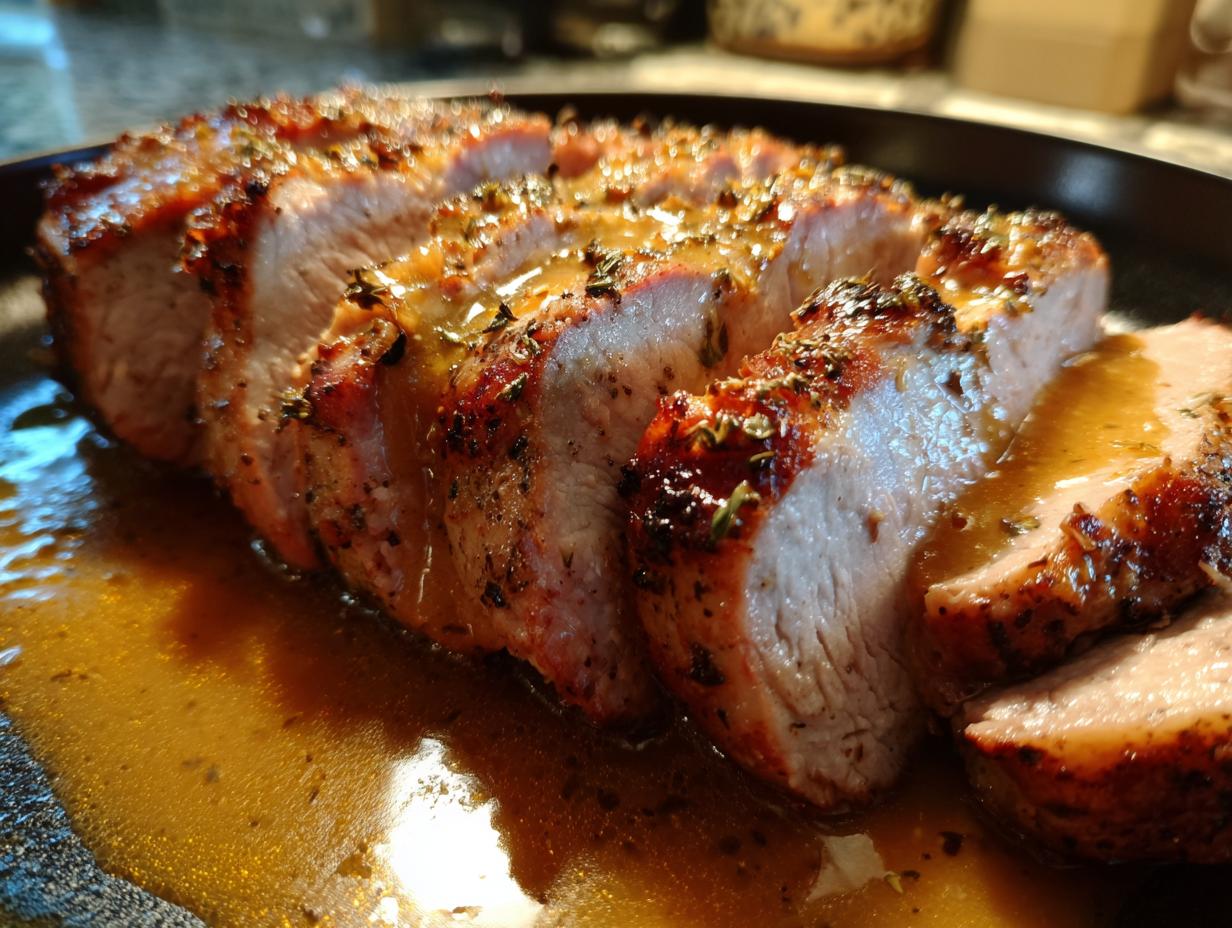
Oh, I know the struggle of the Sunday roast. You want something that feels special, but honestly, after a long week, who has time for complicated sauces or tricky techniques? When I was learning the ropes in professional kitchens, I focused on one principle: the simplest techniques often yield the best results, especially with humble cuts like pork. That’s why this recipe for a pork loin roast changed everything for me. It’s utterly foolproof, providing that beautifully tender, juicy pork loin centerpiece you dream about, but it requires almost zero fuss. Seriously, this is so easy it deserves a spot in your rotation for a Tuesday night, yet it looks elegant enough for your next big Sunday roast recipe.
- Why This Juicy Pork Loin Roast is Your New Weeknight Dinner Staple
- Ingredients for the Perfect Pork Loin Roast
- Step-by-Step Instructions for Oven Roasted Pork
- Creating a Simple Pan Sauce Gravy for Your Pork Loin Roast
- Tips for a Perfect Sunday Roast Recipe Every Time
- Storage and Reheating Instructions for Leftover Pork Loin Roast
- Frequently Asked Questions About This Pork Loin Roast
- Estimated Nutritional Information for Pork Loin Roast
- Share Your Experience Making This Easy Pork Dinner
Why This Juicy Pork Loin Roast is Your New Weeknight Dinner Staple
I bet you think a gorgeous roast like this takes hours of hovering in the kitchen. Nope! That’s what makes this recipe a game-changer for any busy night. You get all the payoff of a centerpiece meal without sacrificing your evening. Trust me, this easy pork dinner is about to become your go-to when you need something impressive fast.
- Minimal Ingredients: We’re only talking about olive oil, salt, pepper, garlic powder, and thyme. That’s it for the flavor!
- High Consistency: Because the steps are so straightforward, you end up with a consistently juicy pork loin every single time you make it.
- Perfect for Any Day: It transitions seamlessly from a quick weeknight meal to a more formal Sunday gathering.
Quick Prep for Your Oven Roasted Pork
The clock starts ticking on our total time, but honestly, the prep work flies by. We’re talking ten minutes, max. Once you pat that roast dry—which is super important, don’t skip that step!—you mix your spices. Since you’re just rubbing the oil on and then sprinkling the dry mixture everywhere, there’s no tedious chopping or marinating involved. Just a quick press to make sure that glorious seasoning sticks, and boom! It’s ready for the oven.
Ingredients for the Perfect Pork Loin Roast
For an extraordinary pork loin roast, we rely on simplicity and quality. When you don’t clutter the meat with a dozen ingredients, you really let the flavor of the pork shine through. I always try to grab a bone-out roast when I can for easier carving later, but honestly, whatever you find works beautifully! Remember, this recipe is designed to be stress-free so you can focus on enjoying your meal.
- 3 lb pork loin roast, bone out
- 1 tablespoon olive oil
- 1 teaspoon kosher salt
- 1 teaspoon black pepper
- 1 teaspoon garlic powder
- 1 teaspoon dried thyme
- 1 cup chicken broth (this is for the sauce later, not for coating the meat!)
- 1 tablespoon cornstarch (also for that quick sauce, don’t skip it!)
Ingredient Notes and Substitutions for Pork Loin Roast
If you don’t have dried thyme, rosemary works wonderfully here too, just use about 3/4 teaspoon since it’s a bit stronger. Also, if your store only has bone-in pork loin, grab it! It adds a little extra flavor, but recognize that you’ll need to add maybe 10 to 15 minutes more cook time since the bone takes longer to heat through. For the broth, if you’re out of chicken broth, using vegetable broth is a perfectly fine swap for making that simple pan sauce gravy to pour over everything.
Step-by-Step Instructions for Oven Roasted Pork
Alright, buckle up, because here is where the magic happens for this oven roasted pork. Getting a beautiful crust and keeping the inside tender is all about managing the heat in stages. First things first: get that oven humming! We preheat to a nice, hot 400 degrees Fahrenheit. A hot start is essential; it helps sear the outside quickly, locking in those juices we are trying to protect for that ultimate juicy pork loin experience.
Once the oven is hot, you set your seasoned roast right in the pan. We blast it with that high heat for 15 minutes. After that initial sear, we back off the gas, dropping the temperature down to 350 degrees Fahrenheit. This is the slow and steady part where the roast cooks through gently without drying out. I’ve seen so many cooks just walk away at this point, but you need to keep an eye on it, checking that temperature regularly.
Achieving the Correct Pork Loin Internal Temp
This is the most important instruction in the whole recipe hierarchy, so please listen closely! You absolutely must use a decent meat thermometer here. Don’t guess! Stick that shiny thermometer right into the very thickest part of the roast. If you have an underlying bone, try to aim the tip just beside it, but don’t let it touch the bone, or you’ll get a false reading, and that will undo all our hard work.
We are pulling this baby out when it hits 145 degrees Fahrenheit. That’s the magic number; that’s your finished pork loin internal temp for safety and texture. However, here’s the pro tip I learned working crazy restaurant hours: pull it out *just* before it hits 145°F—maybe at 143°F—because the roast keeps ticking up in temperature even after it leaves the oven. That carryover cooking is real, and it ensures the center stays perfectly pink and juicy, not grey and dry.
The Essential Resting Period for Your Pork Loin Roast
Once it’s off the heat, you might be tempted to carve it immediately. Don’t do it! If you slice too soon, all those wonderful juices we fought so hard to keep inside will just flood out onto your cutting board. That’s the opposite of a juicy pork loin!
So, immediately wrap that roast up loosely. I just use a little piece of foil shaped like a loosely tented cave over the top. Don’t seal it tight, or the outside will steam and get soggy. Let it sit there, untouched, for a solid 10 to 15 minutes. This resting time lets the muscle fibers relax and reabsorb all those delicious juices. When you finally slice into it after this break, the meat will be tender beyond belief. You can check out more details on why resting works so well over on our About page, where Julian talks about his culinary journey.
Creating a Simple Pan Sauce Gravy for Your Pork Loin Roast
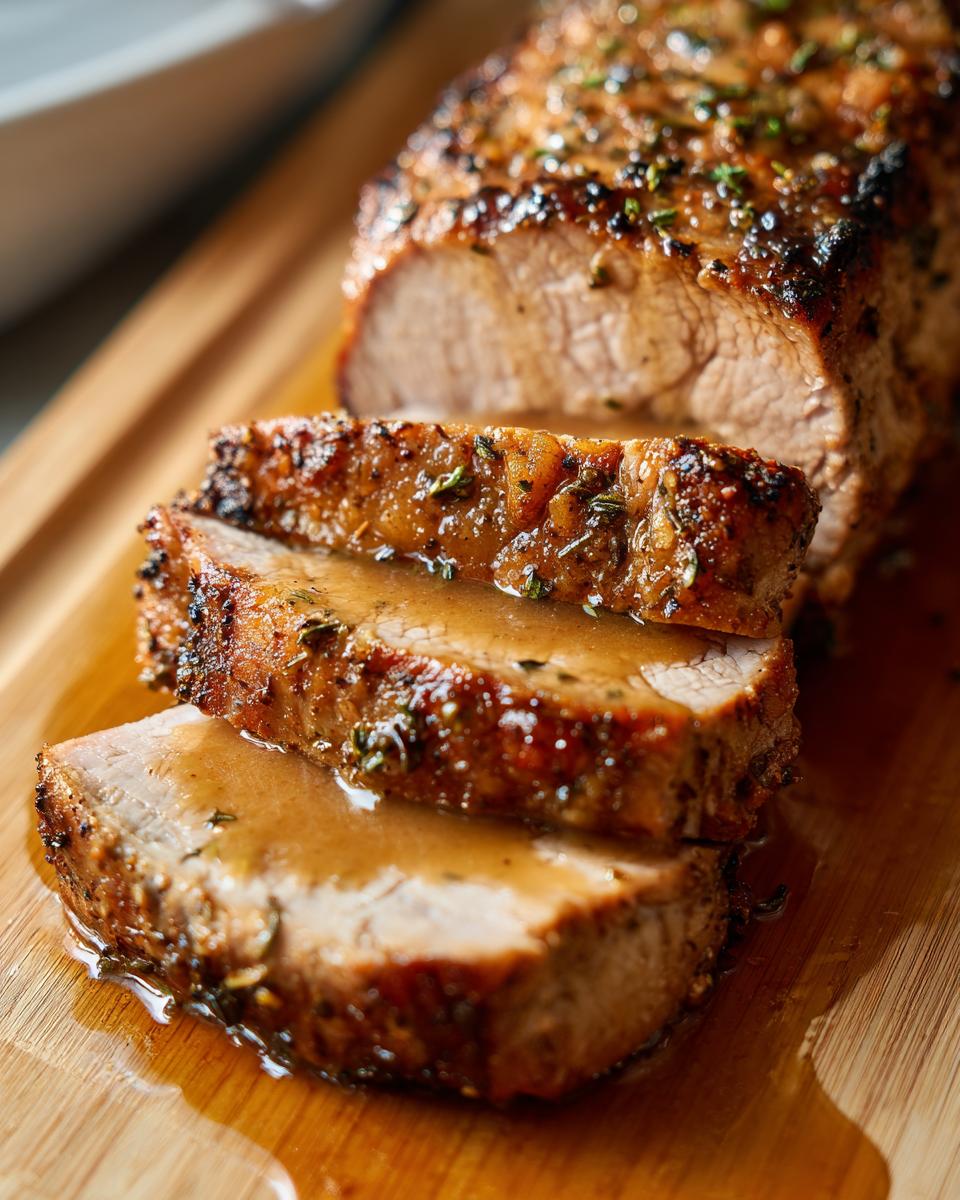
Okay, you’ve rested your beautiful oven roasted pork, and now you peek into the bottom of that roasting pan. Don’t shake your head at those little brown bits stuck to the bottom—those are pure gold! That’s flavor, my friends, and we are absolutely going to turn it into a fantastic pan sauce gravy. This whole thing comes together in about five minutes while waiting for the roast to finish resting, making it the perfect addition to this easy pork dinner.
First, you need to move that roasting pan right onto the stovetop burner. Set the heat to medium. You are essentially deglazing the pan here. Take a wooden spoon or a spatula and gently scrape up every single brown spot—those are called fond, and they are the base of all amazing gravy. Don’t be shy; get them loosened up!
Next, pour in your cup of chicken broth. Let it bubble up and simmer for a minute or two, making sure all those tasty scraped bits dissolve into the liquid. Now, for the thickening part, we use a cornstarch slurry. Never dump dry cornstarch straight into hot liquid, or you’ll end up with a gooey, lumpy mess that nobody wants!
Instead, take a tiny glass or cup and whisk your tablespoon of cornstarch together with just two tablespoons of *cold* water until it looks totally milky and smooth. Seriously, whisk until you can’t see any dry powder anymore. Then, while your broth is simmering gently, pour that slurry in slowly while stirring constantly. Keep stirring, and you will watch that sauce magically thicken up just enough in a minute or two. Taste it—maybe add a tiny pinch of salt if needed—and that’s it! You have a professional-tasting pan sauce gravy ready to drizzle over every slice of your perfectly juicy pork loin.
Tips for a Perfect Sunday Roast Recipe Every Time
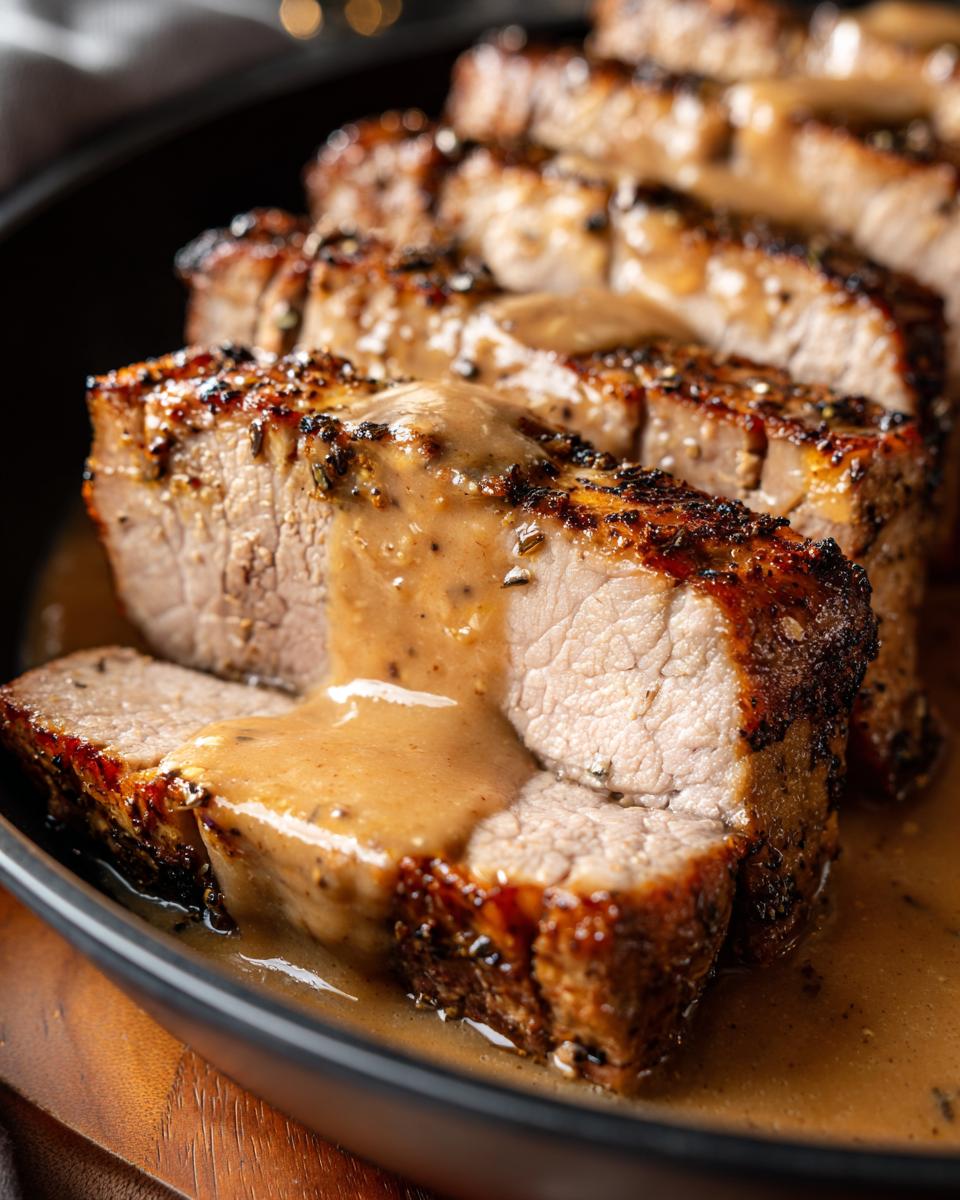
We’ve covered the essential steps to get this pork loin roast into the oven perfectly, but since we are aiming for that absolute best, most reliable sunday roast recipe, let me share a few little insights Julian picked up over the years. These aren’t complicated; they just show the meat a little extra respect, which is really what home cooking is all about—showing care through the process.
First big tip: Do not put refrigerated meat straight into a hot oven! I know we’re aiming for an easy pork dinner, but trust me on this one. Take the 3 lb pork loin roast out of the fridge about 45 minutes before you plan to rub it down and start roasting. Letting it come closer to room temperature ensures even cooking. If the outside is cold when it hits the heat, the outside cooks too fast while the center stays cold, messing up our beautiful pork loin internal temp target.
Next, think about your pan. You can use a heavy roasting pan, which is great, but if you want maximum crust development on the bottom and sides, try using a sturdy, oven-safe cast iron skillet instead. Cast iron holds heat incredibly well and gives you even better searing when that 400-degree blast hits it. Plus, cast iron pans are the absolute best for developing all those intensely flavorful brown bits when you start making your pan sauce gravy afterward!
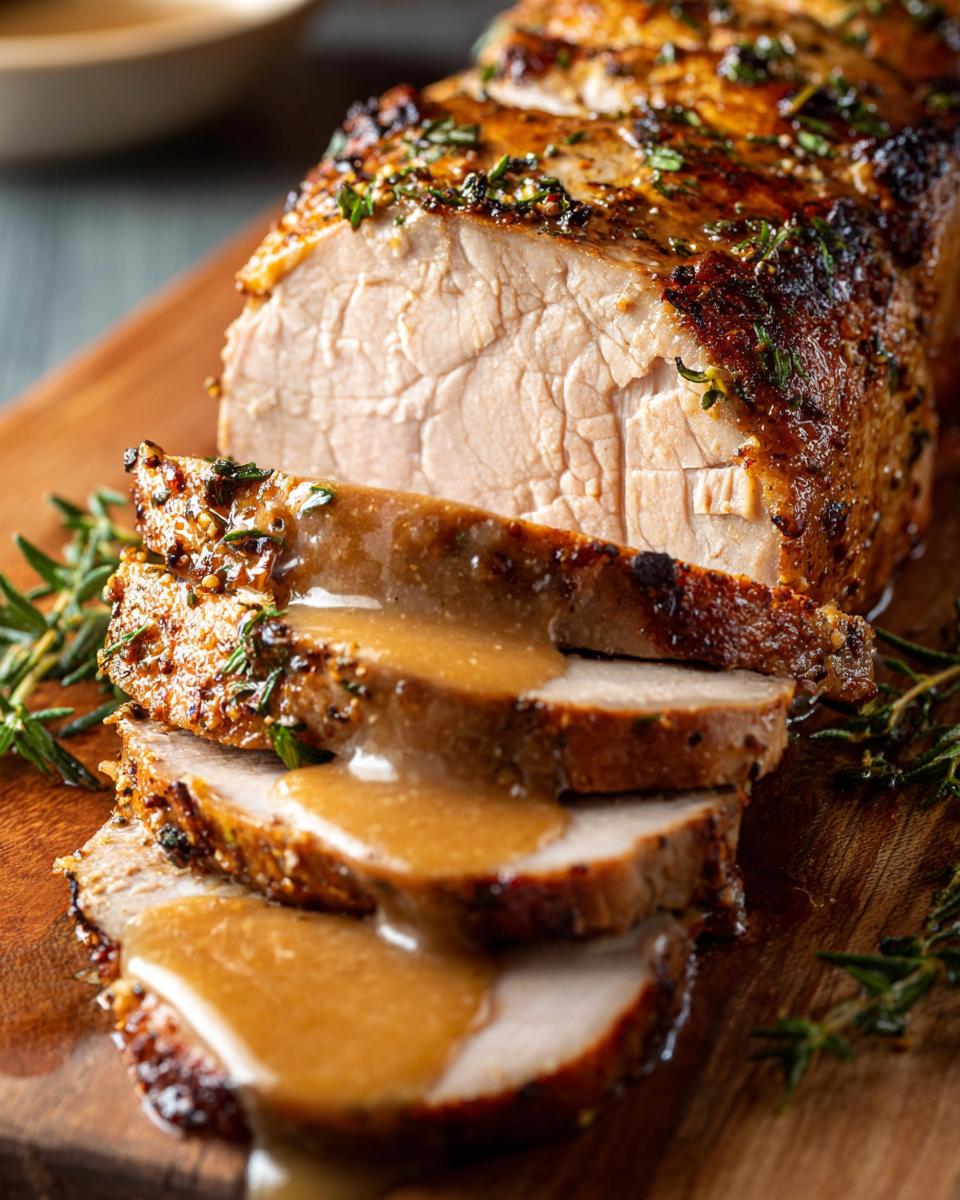
Another thing I always do, especially if the roast looks a little uneven in thickness—which they usually are!—is to ‘trim’ it visually. By tucking any thin ends underneath the main body of the roast before you tie it (if you truss it) or place it in the pan, you create a more uniform shape. This lets the roast cook at a more consistent rate, which is key to guaranteeing that moist interior you love in a juicy pork loin.
Finally, when you start seasoning, really work that dry rub in with your fingers! Don’t just sprinkle it lightly. You want that salt, pepper, garlic powder, and thyme mixture to adhere well because that forms the flavorful exterior crust that contrasts so nicely with the tender meat inside. Take your time pressing it on there—this little bit of attention transforms a standard roast into a truly memorable pork loin roast.
Storage and Reheating Instructions for Leftover Pork Loin Roast
You’ve nailed the roast, and now you somehow have leftovers! That’s the sign of a truly successful pork loin roast, right? The incredible thing about this recipe is that the juicy pork loin quality actually holds up really well if you store it correctly. If you’re not going to eat it all right away, you need to treat those leftovers right so they don’t turn into dried-out shoe leather in the fridge.
First things first: save that extra pan sauce gravy! You’ll need it later. Once the roast has cooled down completely—and I mean completely cool—slice up whatever portions you plan to eat over the next few days. Pop those slices into a really good airtight container. If the pan sauce gravy is leftover, keep that in a separate small container. You can usually keep pork leftovers safe in the fridge for about three to four days. If you need longer, this meat freezes like a charm!
Now, reheating is where people often go wrong, turning that beautiful, tender meat into sawdust. But we aren’t going to do that! When you reheat the slices, you need moisture, and that leftover gravy is your superhero here. Never microwave a slice naked; it gets tough instantly.
Instead, pop your slices into a small, oven-safe dish. Spoon just a thimble-full of that saved pan sauce gravy over the top of them—just enough to lightly coat the bottom of the dish. Cover the dish tightly with foil. If you don’t have foil, use a lid that seals well. You’re essentially creating a little personal steam environment for each slice.
Place that covered dish into a low oven—think 300 degrees Fahrenheit max. Heat it slowly until the pork is warmed through. Since you’re warming it gently with added liquid, it reabsorbs that moisture and stays incredibly tender. It’s the perfect way to enjoy your oven roasted pork leftovers, tasting almost as good as the first time you carved it!
Frequently Asked Questions About This Pork Loin Roast
I get so many messages asking for little clarifications on this recipe, and that’s totally fair! Cooking a big roast can feel intimidating, even when the recipe is simple. I always want to make sure you feel completely confident when you put this in the oven. Here are some of the little questions I hear most often about getting that perfect, juicy pork loin every time.
What is the best oven temperature for a juicy pork loin roast?
This is how we ensure we get that incredible flavor and texture without drying out the meat! We use a quick two-stage cooking process. You start everything off HOT—a full 15 minutes at 400 degrees Fahrenheit to get a nice sear and build that crust on your oven roasted pork. Then, immediately reduce it down to 350 degrees Fahrenheit for the remainder of the cook time. That lower temperature lets the inside cook evenly without losing all its moisture. It’s the best way to manage the heat for a stunning pork loin roast!
Can I cook this pork loin roast from frozen?
Oh, gosh, please don’t try this one from frozen! I know sometimes life throws you a curveball and you realize dinner needs to be on the table five minutes ago, but with a big roast like this, starting frozen is just asking for trouble. By the time the center thaws enough to start cooking through evenly, the outside will be totally overdone and dry. You’ll have no way of accurately hitting that 145 degrees Fahrenheit sweet spot for the pork loin internal temp, and you’ll never get that beautiful crust we talked about.
How do I make sure my pan sauce gravy is smooth?
This is the secret to turning your wonderful drippings into that silky pan sauce gravy instead of a lumpy disaster! The trick is the cold cornstarch slurry. Always, always mix your cornstarch—one tablespoon—with about two tablespoons of *ice-cold* water first. Whisk it until it’s completely dissolved and looks like milky water. You have to whisk it separately before you even think about adding it to the hot chicken broth simmering in the pan. That cold liquid prevents the starch granules from clumping up immediately when they hit the heat. If you do it that way, you’ll have the smoothest sauce guaranteed! If you need to look into our kitchen policies, you can check out our Privacy Policy here.
Estimated Nutritional Information for Pork Loin Roast
When we’re making an easy pork dinner like this oven roasted pork, I always feel good knowing it’s straightforward and offers decent protein without a ton of fuss. It’s funny how we focus so much on flavor and texture, but taking a peek at the numbers is helpful too, even if we aren’t counting every single calorie!
Here is the general nutritional breakdown for one standard serving size for this recipe. Remember, because we are using such simple ingredients—just the pork, seasoning, and a little bit of fat for cooking and sauce—it’s a solid choice for a hearty meal.
- Serving Size: 4 oz cooked meat
- Calories: 280
- Protein: 40g
- Fat: 12g
- Saturated Fat: 4g
- Carbohydrates: 2g
- Sugar: 1g
- Sodium: 350mg
- Cholesterol: 100mg
Now, I have to add my standard little disclaimer here, because you know I like to be totally honest about everything. These numbers are just estimates based on the specific ingredients listed—like the exact cut of pork loin and the amount of oil used for rubbing and searing. If you use a bone-in roast, or if you decide to double up on the garlic powder (which is never a bad idea, in my opinion!), the exact numbers will shift a little bit. But generally, this provides a fantastic, high-protein base for your sunday roast recipe or weeknight dinner!
Share Your Experience Making This Easy Pork Dinner
Well, that’s it! You’ve got the whole secret now to turning out a stunning, juicy pork loin roast that tastes like you spent the entire afternoon fussing over it. Since we started this journey back when I was learning how much care goes into even the simplest food, I truly hope this recipe brings that same feeling of accomplishment to your table. Whether this was your first time trying an oven roasted pork or if you’re a seasoned pro making your regular sunday roast recipe, I want to hear all about it!
Please, take a moment after you carve into that tender meat to leave us a rating. It really helps future cooks know that this method for an easy pork dinner really delivers on its promise of moisture and flavor. Did the pan sauce gravy turn out perfectly? Did your family ask for seconds?
If you snap a picture of your beautiful roast, share it! We love seeing our recipes out in the real world. And hey, if you hit a snag—maybe your thermometer was acting up, or you had a question about how long to rest the meat—don’t hesitate to reach out. We built Julia Meal to be a supportive place, and sometimes we all need a little help troubleshooting. You can always get in touch with us directly by visiting our Contact page anytime. Happy cooking, and I truly hope this pork loin becomes a fixture in your home!
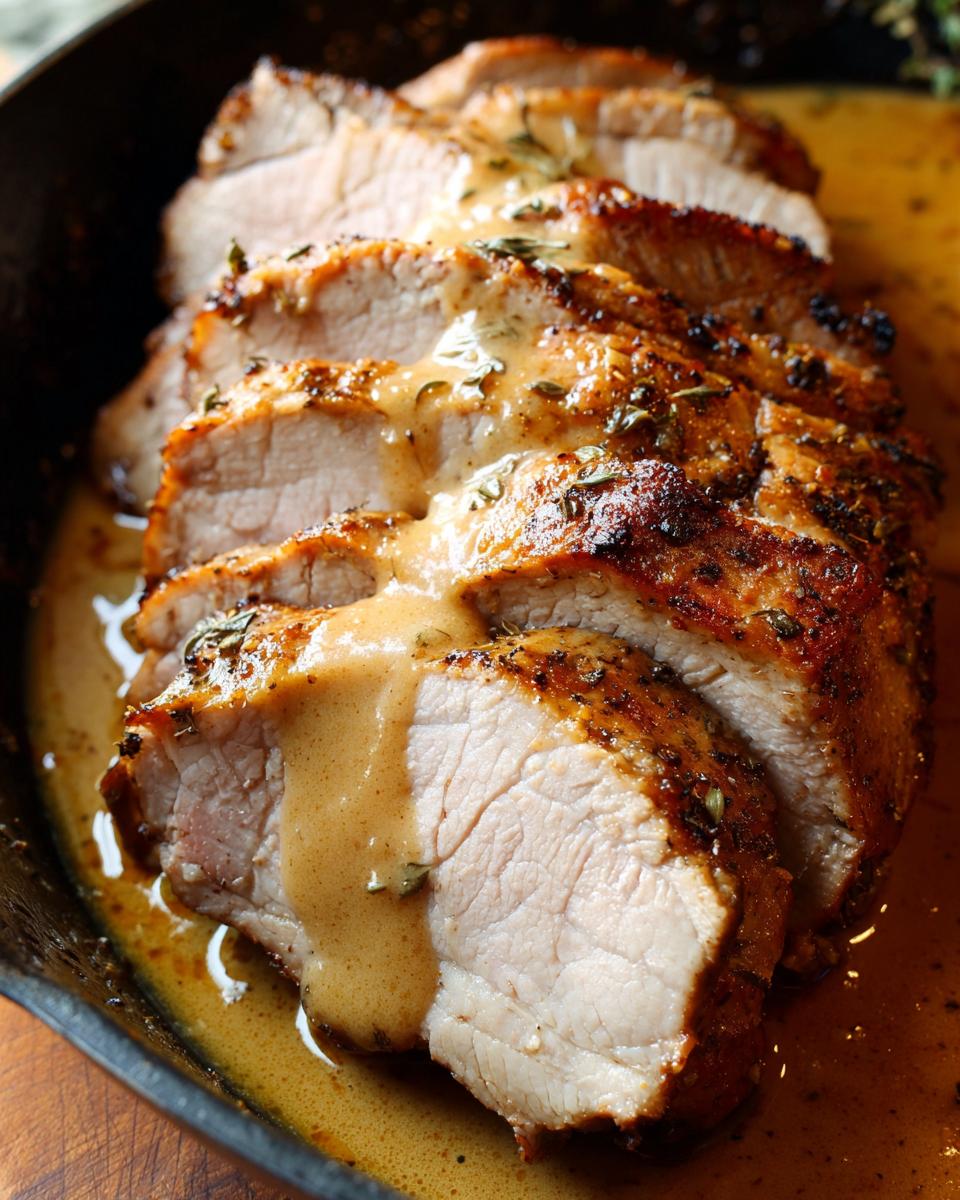
PrintJuicy Oven Roasted Pork Loin Roast

A simple recipe for a tender, juicy pork loin roast cooked in the oven, complete with instructions for a quick pan sauce.
- Prep Time: 10 min
- Cook Time: 75 min
- Total Time: 85 min
- Yield: 6 servings 1x
- Category: Dinner
- Method: Roasting
- Cuisine: American
- Diet: Low Fat
Ingredients
- 3 lb pork loin roast, bone out
- 1 tablespoon olive oil
- 1 teaspoon kosher salt
- 1 teaspoon black pepper
- 1 teaspoon garlic powder
- 1 teaspoon dried thyme
- 1 cup chicken broth (for pan sauce)
- 1 tablespoon cornstarch (for pan sauce)
Instructions
- Preheat your oven to 400 degrees Fahrenheit.
- Pat the pork loin roast dry with paper towels.
- In a small bowl, mix the salt, pepper, garlic powder, and thyme.
- Rub the olive oil over the entire surface of the pork loin.
- Sprinkle the seasoning mix evenly over the pork loin, pressing it gently into the meat.
- Place the seasoned pork loin in a roasting pan or oven-safe skillet.
- Roast for 15 minutes at 400 degrees Fahrenheit.
- Reduce the oven temperature to 350 degrees Fahrenheit and continue roasting until the internal temperature reaches 145 degrees Fahrenheit, about 15 to 20 minutes per pound.
- Remove the pork from the oven when it reaches 145 degrees Fahrenheit internal temperature.
- Tent the roast loosely with foil and let it rest for 10 to 15 minutes before slicing.
- To make the pan sauce, place the roasting pan over medium heat on the stovetop. Scrape up any browned bits from the bottom of the pan.
- Pour in the chicken broth and bring to a simmer.
- In a small cup, whisk the cornstarch with 2 tablespoons of cold water until smooth.
- Whisk the cornstarch slurry into the simmering broth. Cook, stirring constantly, until the sauce thickens slightly.
- Slice the rested pork loin and serve with the pan sauce.
Notes
- Use a meat thermometer inserted into the thickest part of the roast to check for the correct internal temperature.
- Resting the meat allows the juices to redistribute, resulting in a more tender roast.
- For extra flavor, you can rub the roast with mustard before applying the dry rub.
Nutrition
- Serving Size: 4 oz cooked meat
- Calories: 280
- Sugar: 1
- Sodium: 350
- Fat: 12
- Saturated Fat: 4
- Unsaturated Fat: 8
- Trans Fat: 0
- Carbohydrates: 2
- Fiber: 0
- Protein: 40
- Cholesterol: 100