

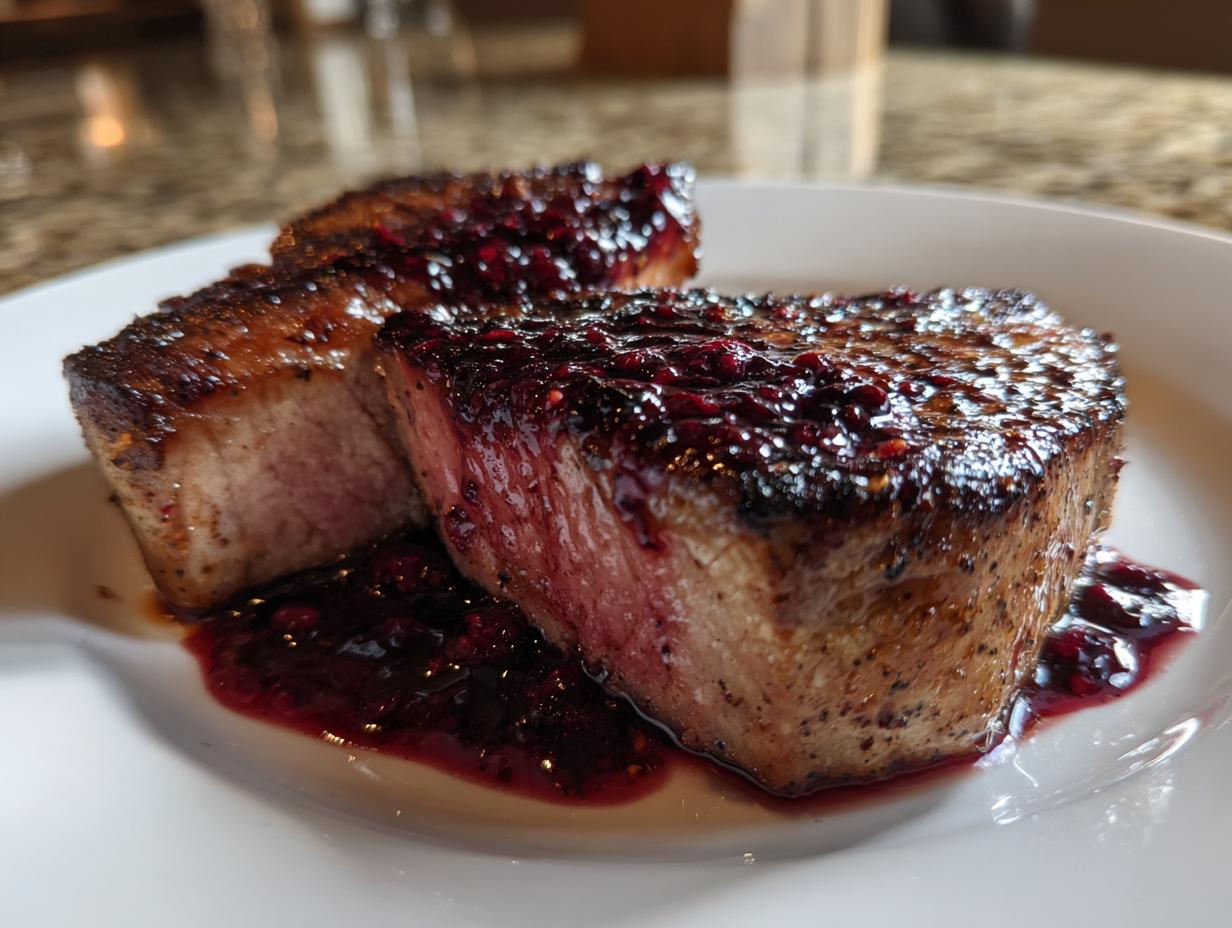
If you’re tired of the same old boring weeknight dinners, let me show you how to kick things up a notch without spending hours over the stove. I truly believe that incredible food shouldn’t require a reservation, which is exactly why I developed this approach to raspberry balsamic glazed pork chops. This recipe takes simple pan-seared pork chops and elevates them instantly with a sweet, tangy, and intensely flavorful reduction sauce.
It’s my philosophy here at Julia Meal: we take techniques usually reserved for fine dining and pack them into recipes that fit perfectly into your busy schedule. We believe those quick weeknight dinners should still feel special. When you smell that sharp, fruity aroma filling your kitchen, you’ll realize that making restaurant style pork chops at home is easier than you ever imagined. Seriously, get ready for applause at your next dinner table.
- Why You Will Love These Raspberry Balsamic Glazed Pork Chops
- Ingredients for Restaurant Style Raspberry Balsamic Glazed Pork Chops
- Equipment Needed for Perfect Raspberry Balsamic Glazed Pork Chops
- Step-by-Step Instructions for Pan Seared Pork Chops Glazed
- Tips for Success with Your Tangy Pork Chop Recipes
- Ingredient Notes and Substitutions for Sweet and Savory Pork Chops
- Serving Suggestions for Raspberry Balsamic Glazed Pork Chops
- Storage and Reheating Instructions for Quick Pork Chop Dinners
- Common Questions About Making Gourmet Pork Chop Recipes
Why You Will Love These Raspberry Balsamic Glazed Pork Chops
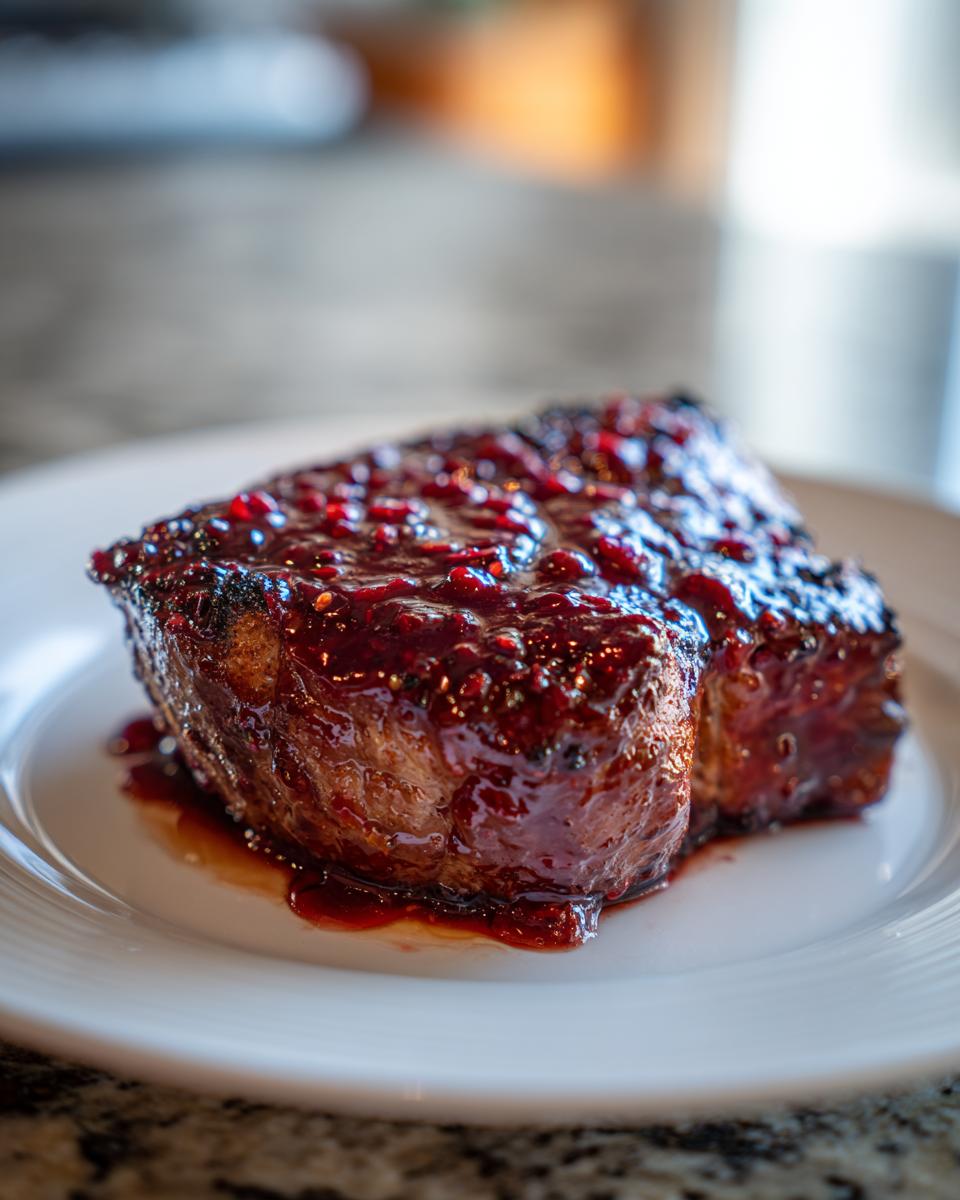
These aren’t your grandma’s dry, sad pork chops—unless she was a culinary secret agent! When I put this recipe together, I wanted something that tasted like it came from a fancy spot downtown but took less time than takeout. Trust me, these chops deliver on every promise.
- The Flavor Bomb: It hits that perfect sweet and savory pork chops spot! The tartness of the raspberry cuts right through the richness of the pork, and that balsamic vinegar adds serious depth.
- Gourmet Feel, Zero Fuss: You get a gorgeous, glossy finish that screams gourmet pork chop recipes, but it’s really just a quick pan sear followed by a simple stovetop sauce.
- Incredibly Quick: We’re talking 30 minutes total time! This makes it one of my go-to quick pork chop dinners when I need to impress someone fast.
- Perfectly Juicy Pork: By searing first and finishing to the absolute correct internal temperature (145°F, remember?), you lock in all those amazing juices. No more dry meat!
- You Mastered the Glaze: Learning how to make a balsamic reduction sauce for meat is a game-changer. This raspberry version is incredibly straightforward.
- Great for Leftovers: If you manage to have any leftovers, they store beautifully, making for an excellent lunch the next day.
Ingredients for Restaurant Style Raspberry Balsamic Glazed Pork Chops
Listen, the secret to getting that restaurant style success is using the right building blocks. Don’t skimp on the balsamic vinegar here—it’s the backbone of that incredible tang, so grab one you actually like the smell of! Everything else is pretty standard, but precision matters when we’re working this quickly.
Here’s what you need to pull together these stunning tangy pork chop recipes:
- The Pork Chops: You’ll need 4 nice thick chops. I prefer bone-in because I think they stay juicier, but boneless works fine too! Make sure they are about 1 inch thick. That thickness gives us time to sear them beautifully before finishing them off.
- For Searing: 1 tablespoon of good olive oil (for the pan), 1 teaspoon of salt, and a half teaspoon of freshly cracked black pepper. Keep that seasoning simple; the glaze does the heavy lifting flavor-wise.
- For the Raspberry Balsamic Glaze: This part is non-negotiable! You need 1 cup of raspberries—they can be fresh or frozen, no worries if you’re using last summer’s haul! Then, grab a half cup of good quality balsamic vinegar (seriously, the better the vinegar, the deeper the flavor). You need 2 tablespoons of brown sugar to balance that tartness.
- For Finishing: Finally, whisk in 1 tablespoon of cold butter right at the end. This gives the sauce that amazing glossy sheen, rather than just being thin vinegar. If you’re feeling fancy, grab 1 sprig of fresh rosemary to infuse some earthiness while it simmers!
Equipment Needed for Perfect Raspberry Balsamic Glazed Pork Chops
You don’t need a whole array of gadgets for this one, which is part of why I love it so much for a quick weeknight pork chops meal. We are focusing only on the essentials that guarantee we get that beautiful sear and the perfect internal temperature. Forget complicated setups; we’re keeping this close to the stovetop.
Here is the short list of what you absolutely need on hand before you start seasoning those chops:
- An Oven-Safe Skillet: This is crucial if you have thicker chops (over 3/4 inch). We start them searing on the stovetop for crust, then move the whole wonderful thing into the oven to finish cooking gently. If you don’t have one, just use a regular heavy-bottomed skillet for searing, and then transfer the chops to a separate baking dish before putting them in the oven.
- A Small Saucepan: While you can technically make the glaze in the same skillet after searing (I often do!), having a separate, smaller saucepan means you can monitor the reduction temperature without worrying about scorching any meaty bits left over from the sear.
- Tongs: You know I always tell you to handle meat gently, but tongs are the best tool for flipping those chops halfway through searing to get that even, golden-brown crust on both sides.
- A Reliable Instant-Read Thermometer: This is my non-negotiable tool for any protein, especially pork. Getting those perfect pan seared pork chops glazed means stopping the cooking precisely at 145°F—no guesswork allowed!
- A Whisk or Wooden Spoon: You’ll need this for stirring the glaze while it reduces so those berries break down evenly and the sugar dissolves completely.
That’s it! A few simple tools for achieving amazing results. I promise, having a good skillet makes all the difference in getting that gorgeous crust we’re aiming for.
Step-by-Step Instructions for Pan Seared Pork Chops Glazed
Okay, this is where the magic happens! Get your act together, because timing is everything when you’re aiming for those perfect pan seared pork chops glazed. The whole process, from seasoning to plating, is shockingly fast, so make sure your cutting board is clean and your skillet is ready to go.
Preparing and Searing the Pork Chops
First things first: the pork chops need to be completely dry. I mean bone-dry! Grab paper towels and pat every molecule of moisture off them on both sides. If they’re damp, they steam, and we want a hard, golden crust, not steamed meat. Once dry, generously season both sides with your salt and pepper. Don’t be shy now!
Next, get that olive oil scorching hot in your oven-safe skillet over medium-high heat. When the oil is shimmering—not smoking, but definitely shimmering—lay those seasoned chops in carefully (watch out for splatter!). Sear them hard for about 3 to 4 minutes per side until you get a gorgeous deep brown crust. Seriously, let them sit until they release easily from the pan. If your chops are over an inch thick, pop the whole skillet into a 400°F oven for maybe 5 to 8 more minutes until they hit 145°F internally. Pull them out, cover them loosely with foil, and let them just rest. They need that rest time!
How to Make Raspberry Balsamic Glaze
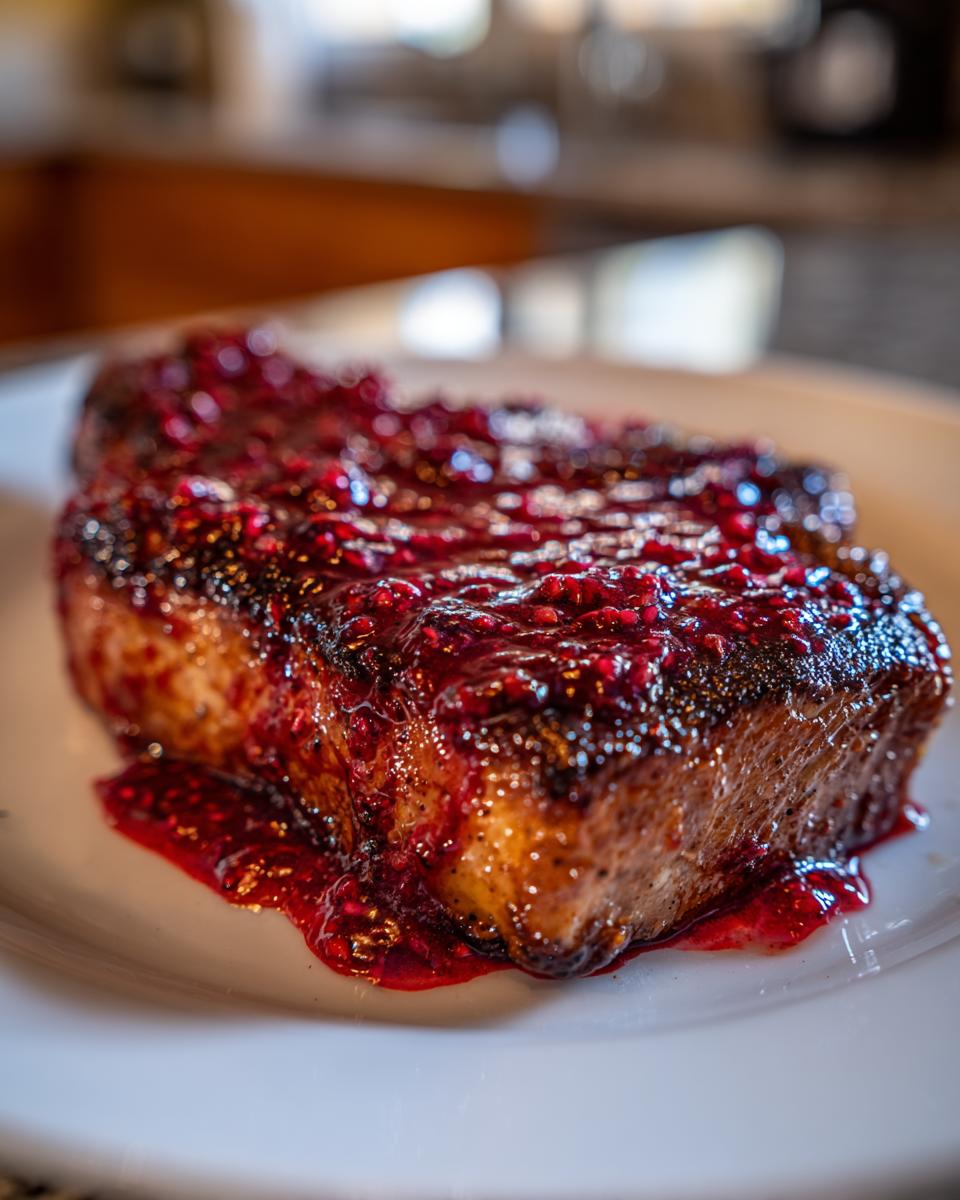
While those beautiful pork chops are resting (and trust me, they need the time!), we make the centerpiece: the glaze. Toss the raspberries, that half cup of balsamic vinegar, and the brown sugar into a small saucepan—or use the same skillet if you wiped out most of the browned bits. Bring that mixture up to a gentle simmer over medium heat. Keep stirring it occasionally, and gently mash those berries down with your spoon as they soften up. We’re cooking this down until it’s reduced by about half—you’ll know it’s ready when it clings to the back of your spoon, that’s the proper balsamic reduction sauce for meat density we want. If you added that rosemary sprig, pull it out now; it’s done its job!
Finishing and Glazing the Raspberry Balsamic Glazed Pork Chops
The final touch for a truly beautiful, glossy sauce is fat. Take the pan off the heat—this is important, we don’t want boiling butter—and immediately swirl in that tablespoon of cold butter until it melts completely smooth. That richness is what pulls the sauce from being merely tangy to being totally luxurious. Once your chops have rested for a good five minutes—no cheating!—drizzle that warm, thick raspberry balsamic glaze all over the top of each chop. Serve it immediately while everything is hot and glossy!
Tips for Success with Your Tangy Pork Chop Recipes
Even though this recipe is incredibly reliable, I learned a few tricks over the years that guarantee your chops come out like a dream every single time. Cooking pork involves a bit more precision than, say, chicken breast, but honestly, paying attention to three minor points makes all the difference between good and “wow, Julian, you have to make these again!”
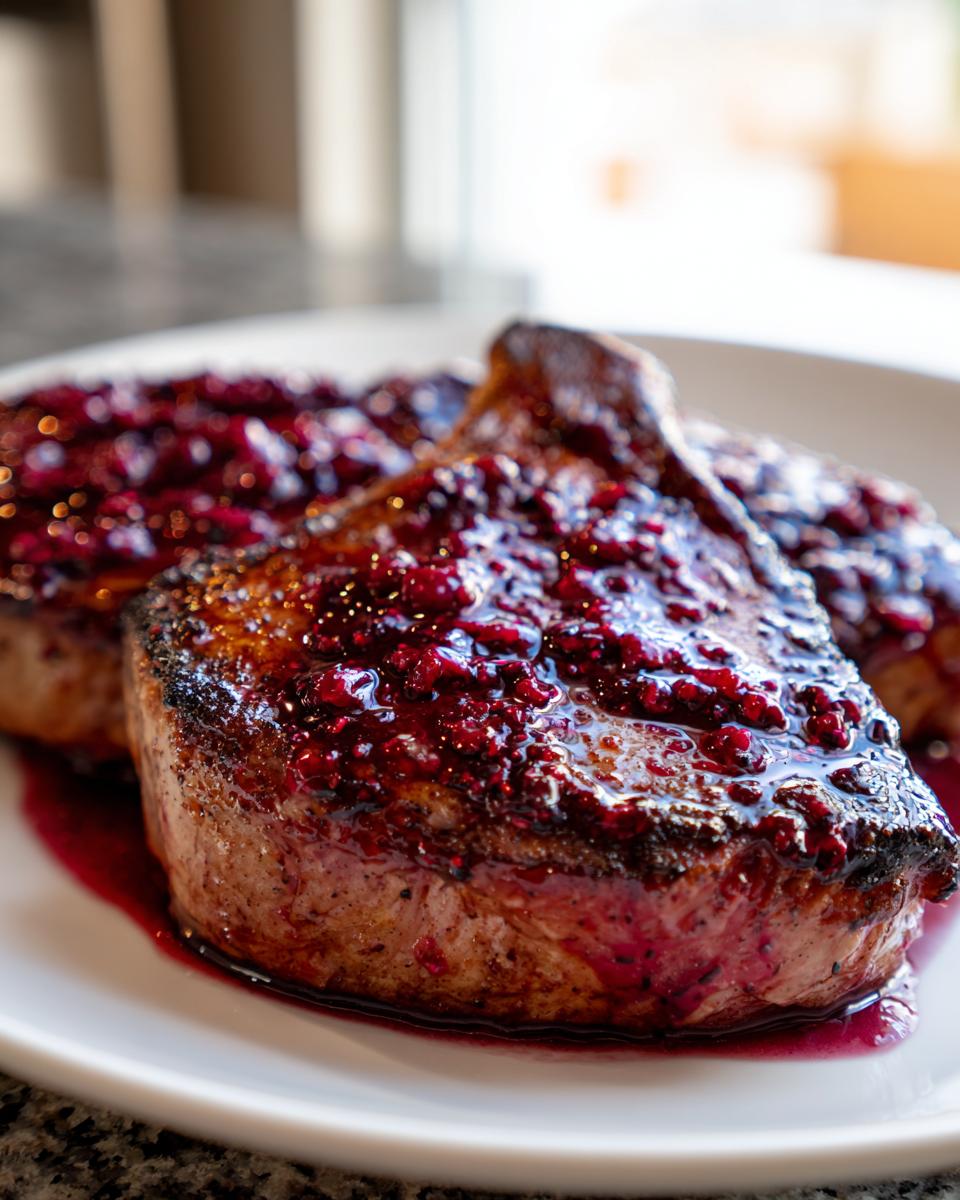
The first big thing is related to our beautiful, thick glaze. If you prefer a super smooth, polished sauce—the kind you usually only see in high-end steakhouses—you’ll need to do a quick strain. That’s why I listed it as an optional step in the notes. After you whisk in the butter, carefully pour the whole raspberry balsamic glaze through a fine-mesh sieve placed over a clean bowl.
Use the back of a spoon to gently push the liquid through. This removes all those seeds, leaving behind a silkier sauce that coats the meat gorgeously. It’s an extra minute of work, but if presentation is important to you, this step seals the deal on making these tangy pork chop recipes look professional.
My second, maybe most important, tip for any sweet and savory pork chops endeavor is to trust your thermometer, not your clock. I cannot stress this enough! Pork chops can go from perfectly tender to tragically dry in about 45 seconds if you aren’t careful. The USDA safe temperature for pork is 145°F, and that is what we are aiming for, exactly.
When you check the temperature, stick the probe into the thickest part of the chop, making sure you aren’t touching bone, as the bone holds heat differently and will give you a false high reading. Because the chops continue to cook slightly after they leave the heat (that’s called carryover cooking), you should pull them off the stove or out of the oven when they read about 142°F. They will coast right up to that perfect 145°F while they rest—and that resting time is non-negotiable!
Finally, a note on the sear: if you notice the sauce in the pan starting to burn or smoke heavily before the chops are fully cooked, slow down that heat immediately! A good sear happens relatively quickly; if you have to crank the heat too high, it means your chops might be too thin, or you’re rushing the process. Keep that skillet temperature consistent for that lovely golden color.
Ingredient Notes and Substitutions for Sweet and Savory Pork Chops
The beauty of this recipe, much like many of the best fruit reduction sauces for mains, is its inherent flexibility. While I insist on the classic pairing of pork and raspberry in my version, you absolutely do not need to panic if your fridge is short a few berries or if you’re out of brown sugar. Cooking this way—with intuition alongside measurements—is key to keeping things fun at home!
When we talk about these sweet and savory pork chops, remember it’s the balance of sweet, tangy, and savory that matters most. If you adjust one element, you might need to nudge another slightly. Keep that in mind as you swap things out!
Let’s talk about the fruit first. If you don’t have raspberries on hand—or maybe it’s not peak berry season—blackberries work spectacularly well! They have a similar texture when mashed and broken down in the sauce, offering that necessary tartness. Even frozen cherries, chopped finely before simmering, can give you a gorgeous, dark glaze. Just be aware that cherries might make the sauce naturally sweeter, so you may want to cut back on that brown sugar slightly.
Speaking of the sugar, if you’re trying to skip refined sugar, maple syrup is a fantastic substitute for the brown sugar in the glaze. Maple syrup adds a lovely, woody note that complements balsamic vinegar like they were made for each other. If you swap it in, start with 1 tablespoon and taste after the sauce has reduced. You might find you don’t need the full two tablespoons of sweetener!
Now, on to the protein itself: bone-in versus boneless. This mostly impacts your cooking time, especially if you’re using the oven method I suggested. Bone-in chops, around an inch thick, generally take about 2-3 minutes longer to reach that perfect 145°F internal temperature compared to their boneless counterparts of the same thickness. The bone acts as an insulator, slowing down the heat transfer slightly. If you’re using thinner chops—say, only a half-inch thick—you can usually skip the oven entirely and finish them entirely on the stovetop. Just watch them like a hawk during that last minute under the heat! Because they cook faster, you’ll want to get that glaze going right away so it’s ready the second they come off the heat.
Serving Suggestions for Raspberry Balsamic Glazed Pork Chops
Honestly, once I get that gorgeous, glossy raspberry balsamic glazed pork chops sauce spread across the plate, I get so excited I almost forget to make a side dish! But you absolutely need something creamy or green to balance out that intense sweet and tangy punch. Think of the glaze as a bold main flavor—we need supportive players that won’t fight it for attention, but rather soak up those complex juices.
When I’m cooking these for a special impressive dinner recipes for two or a family meal, I always lean toward simple preparations that let the pork shine. Here are the pairings that I use again and again:
The Starch to Catch the Sauce:
- You absolutely must have something creamy, folks. A bed of something soft is what makes those juices feel decadent. My top choice is always creamy, buttery mashed potatoes. They are the perfect vessel. If you want the absolute best, check out my guide on making creamy mashed potatoes—the secret is using warm cream, not shocked cold milk!
- If you want something a little more upscale but still easy, go for soft, slow-cooked polenta. It takes just a little stirring, and the mild corn flavor is a beautiful platform for the fruit and vinegar.
- For a lighter starch, a quick-cooking orzo pasta tossed lightly with olive oil and maybe a sprinkle of Parmesan cheese works really well. Avoid heavy or sweet starch sides here; we need neutrality.
The Vegetable Counterbalance:
Because the glaze is so rich, you need something green and slightly bitter or earthy to scrub your palate clean between bites.
- Roasted Asparagus is my number one go-to vegetable side here. Toss the asparagus spears in just a pinch of salt and olive oil, roast them quickly until they are crisp-tender—still with a little snap! Their slight earthiness is the perfect foil to the glaze.
- Green Beans, lightly blanched and then quickly sautéed with a tiny bit of garlic, are also great. Don’t overcook them; we still want them bright green and vibrant.
- If it’s something heavier you’re craving, a simple side of creamy, sautéed spinach works too, though it can sometimes feel a bit too rich alongside the creamy potatoes.
When you plate this up, put down a scoop of those potatoes or polenta first, lay the glazed pork chop right on top, and then stand a bundle of bright green asparagus next to it. It looks like it came right off the table at an upscale bistro, and you made it in under 30 minutes. Isn’t that the best feeling?
Storage and Reheating Instructions for Quick Pork Chop Dinners
Now, unless you’re hosting a huge crowd, you might actually end up with leftovers of these amazing quick pork chop dinners. That’s a good problem to have, honestly, because they are fantastic warmed up the next day, but you have to treat the pork and the glaze differently. If you just toss them together in a microwave, you’ll end up with tough meat and a gluey sauce, and nobody wants that!
When it comes to leftovers, remember that the pork chop itself is the most sensitive part of the meal. My rule for pork is always to try and eat it within three days, max. Store the chops and the leftover glaze in completely separate, airtight containers in the refrigerator. Keeping them apart ensures the meat doesn’t get soggy from sitting in the sauce overnight.
Here’s how I handle reheating them so it tastes almost as good as the first night:
Reheating the Pork Chops:
- I never, ever recommend the microwave for reheating pork chops if you can help it. Microwaving heats them too quickly and turns them rubbery. You want gentle heat that brings the internal temperature back up slowly.
- The absolute best way is to use the oven. Preheat your oven to a very low temperature—about 275°F (135°C). Place the chops in a small, oven-safe dish and add just a teaspoon or two of water or chicken broth to the bottom of the dish. You definitely want to cover that dish tightly with foil. This creates a little steamy environment that rehydrates the meat gently.
- Let them warm slowly for about 10 to 15 minutes, checking the temperature until they reach about 130°F. They’ll continue cooking slightly after you pull them out, bringing them back up just shy of that perfect 145°F mark without overshooting it. This method keeps them tender, which is essential for enjoying those easy lunch meal prep leftovers!
Reheating the Leftover Glaze:
The sauce is much easier! Because the glaze is sugar and vinegar based, it will thicken up considerably—maybe even solidify—once it chills. Just scoop the required amount into a tiny saucepan over low heat, stir frequently, and it will thin right back out into that glossy, pourable topping we love. You might need a tiny splash of water or balsamic vinegar if it seems too thick, but usually, just gentle heat does the trick.
When serving the reheated meal, skip pouring the sauce over the meat right away. Instead, spoon the warm, glossy raspberry balsamic glaze generously over the warm, tender pork chops right before they hit your plate. This separation trick is the real secret to making sure even leftovers deliver on that promise of sweet and savory perfection!
Common Questions About Making Gourmet Pork Chop Recipes
It’s funny, every time I share one of these slightly elevated recipes, people immediately start asking practical questions, and honestly, I love it! That means you’re already thinking about how to make these gourmet pork chop recipes work seamlessly for your own dinner table. Here are the things I get asked most often when people make the leap from standard weeknight fare to these incredible sweet and savory pork chops.
Can I make the raspberry balsamic glaze ahead of time?
Absolutely, and I highly recommend it if you’re planning on having guests! Making your easy raspberry sauce recipe ahead of time is a huge stress reliever. Once it cools down, it becomes very thick, almost jam-like, because of the sugar and the fruit pectin. Just store it in a sealed jar in the fridge. When you’re ready to serve, reheat it gently on the stovetop over low heat, stirring constantly until it loosens back up to a perfect drizzling consistency. You can even add a teensy splash of water or another tablespoon of balsamic if it seems too concentrated after reheating.
What if I don’t want to use the oven for these pan seared pork chops glazed?
If you’re strictly committed to stovetop-only cooking, you definitely can, but you have to be more watchful! This works best if your pork chops are thin—say, 3/4 inch or less. For thinner cuts, sear them for 4 minutes per side on medium-high heat. Once the first side is golden, flip them, drop the heat down to medium-low, cover the pan immediately, and let them steam/cook through for another 4 to 6 minutes. The lid traps the heat and helps them cook evenly to temperature without burning the exterior. You still need that thermometer, though, because thin chops cook deceptively fast!
What internal temperature is officially safe for pork chops now?
This is a big one, and the guidelines have thankfully changed over the years! Forget what you might have heard about needing to cook pork until it’s chalk-white and dry. The current, safe temperature for whole cuts of pork, including these chops, is exactly 145°F internal temperature, followed by a three-minute rest. Checking for 145°F ensures maximum safety while keeping the meat tender, plump, and juicy. If you pull them off the heat at 142°F, the resting period will easily carry them the rest of the way to safe perfection!
Are there any other fruit reduction sauces for meat that work similarly?
Oh, yes! This technique of sweet, tart fruit plus balsamic is truly versatile. If you’re looking for more inspiration for other chicken and pork recipes with fruit, try subbing the raspberries for blackberries or even sliced plums in the late summer. The method of simmering with balsamic and sugar remains the same for a fantastic fruit reduction sauce for meat. Just be conscious of the natural sugar content; plums might need a bit less added sugar than berries do!
Print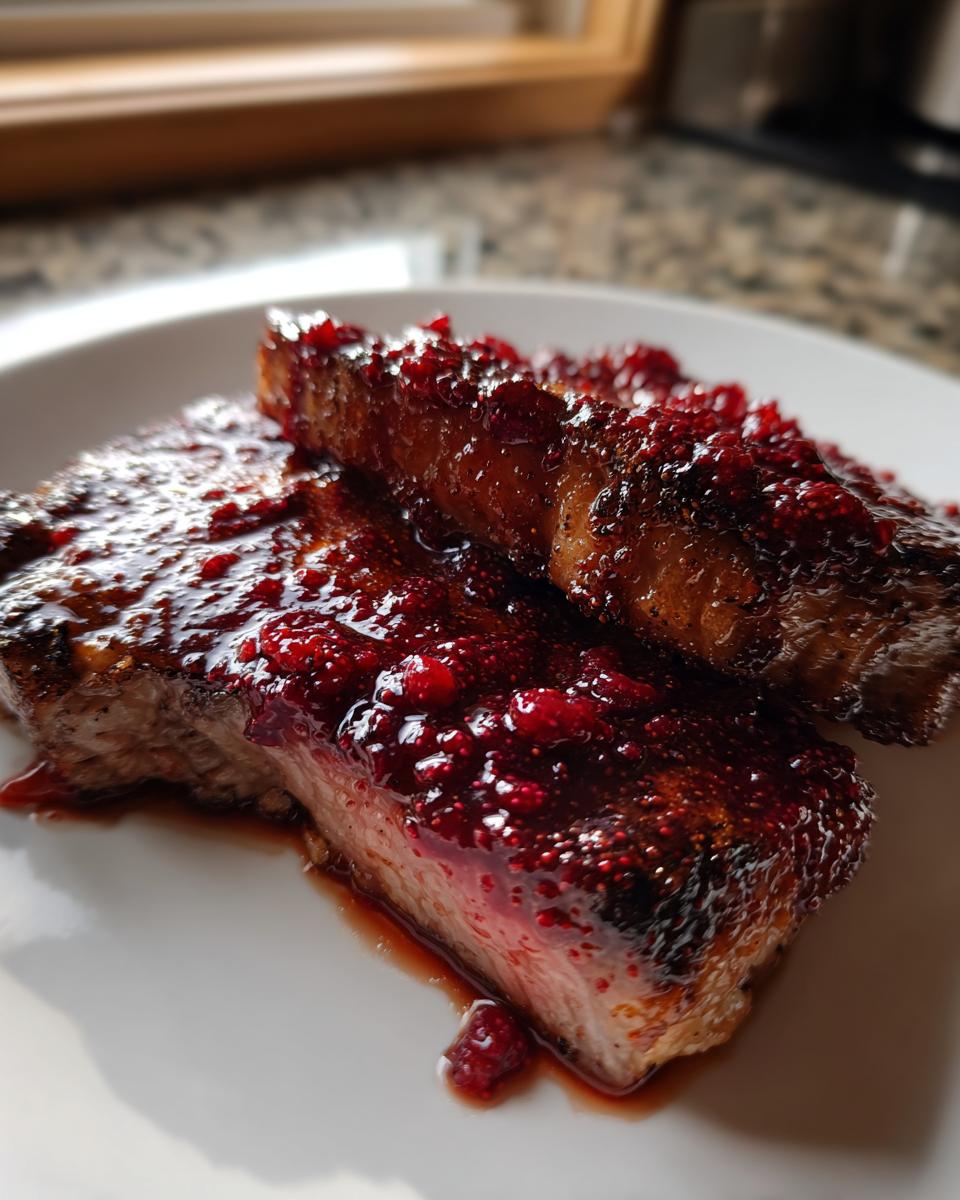
Raspberry Balsamic Glazed Pork Chops
Create restaurant style pork chops with a sweet, tangy raspberry balsamic reduction sauce. This recipe uses simple pan searing for juicy results.
- Prep Time: 10 min
- Cook Time: 20 min
- Total Time: 30 min
- Yield: 4 servings 1x
- Category: Dinner
- Method: Pan Searing and Baking
- Cuisine: American
- Diet: Low Fat
Ingredients
- 4 bone-in or boneless pork chops (about 1 inch thick)
- 1 tablespoon olive oil
- 1 teaspoon salt
- 1/2 teaspoon black pepper
- 1 cup fresh or frozen raspberries
- 1/2 cup balsamic vinegar
- 2 tablespoons brown sugar
- 1 tablespoon butter
- 1 sprig fresh rosemary (optional)
Instructions
- Pat the pork chops dry with paper towels. Season both sides evenly with salt and pepper.
- Heat the olive oil in a large, oven-safe skillet over medium-high heat until shimmering.
- Sear the pork chops for 3 to 4 minutes per side until golden brown. If your chops are thick, transfer the skillet to a preheated 400°F oven and bake for 5 to 8 minutes, or until the internal temperature reaches 145°F. Remove chops and set aside to rest, covering loosely with foil.
- While the chops rest, prepare the glaze. In the same skillet (or a small saucepan), combine the raspberries, balsamic vinegar, and brown sugar.
- Bring the mixture to a simmer over medium heat, stirring occasionally. Cook for 8 to 10 minutes, gently mashing the berries with a spoon as they soften.
- Continue to cook until the sauce has reduced by about half and coats the back of a spoon. This is your balsamic reduction sauce for meat.
- Remove the skillet from the heat. Stir in the butter until melted and smooth. If using, add the rosemary sprig for 2 minutes, then remove it.
- Spoon the warm raspberry balsamic glaze generously over the rested pork chops before serving.
Notes
- For thicker chops, you may need to increase the oven baking time to reach an internal temperature of 145°F.
- If you prefer a smoother glaze, press the finished sauce through a fine-mesh sieve to remove the raspberry seeds.
- Pair these sweet and savory pork chops with roasted asparagus or creamy mashed potatoes.
Nutrition
- Serving Size: 1 pork chop with glaze
- Calories: 350
- Sugar: 18
- Sodium: 350
- Fat: 15
- Saturated Fat: 5
- Unsaturated Fat: 10
- Trans Fat: 0
- Carbohydrates: 20
- Fiber: 2
- Protein: 35
- Cholesterol: 90