

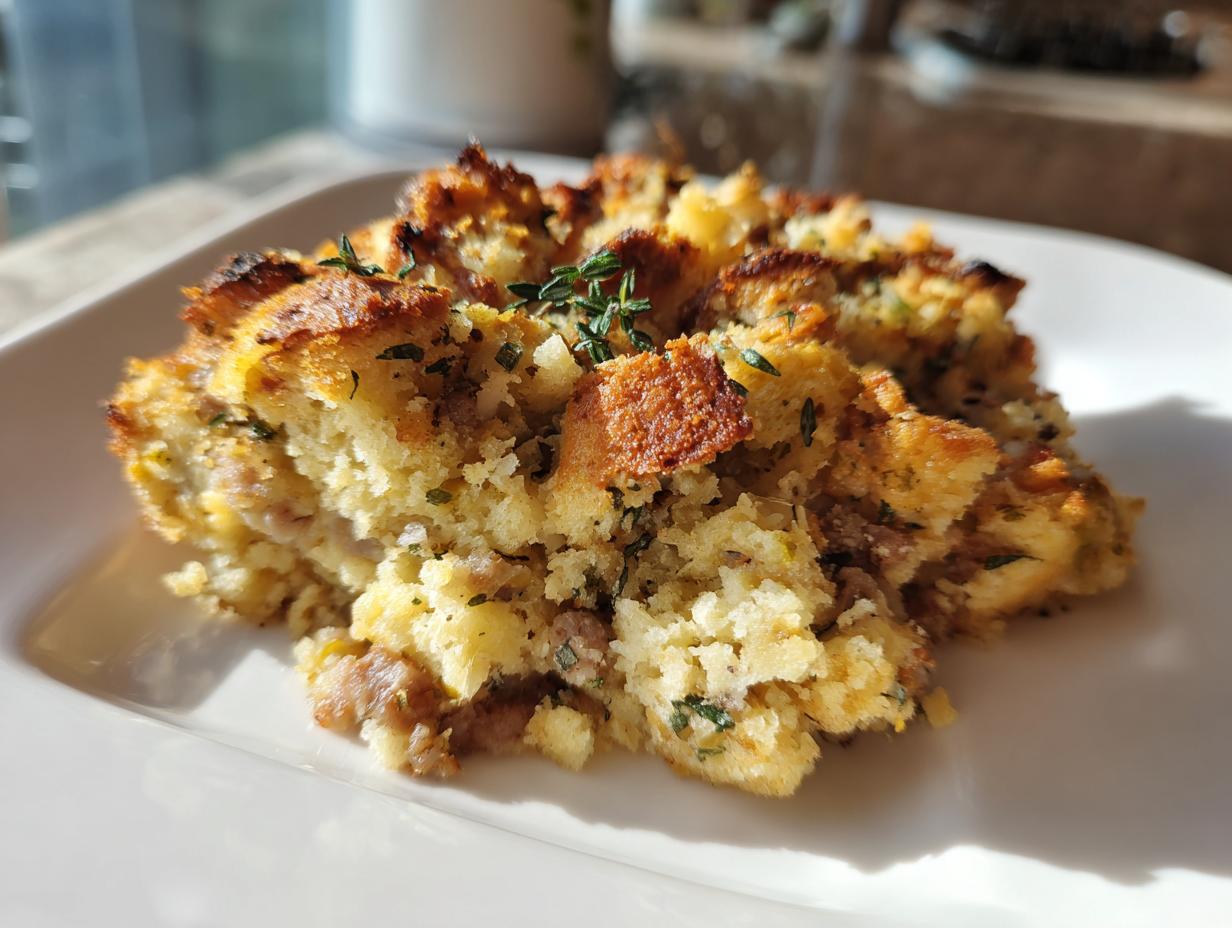
The holiday table needs a centerpiece side dish, and honestly, nothing whispers ‘Thanksgiving’ louder than incredible stuffing. We’re diving into the ultimate savory classic today: sausage stuffing. Forget dry, crumbly stuff you have to choke down; my goal—and I know yours too—is that perfect bite: rich, herbaceous, sinking into a deeply moist interior while the top bakes up into that irresistible golden crust. Here at Julia Meal, we honor those time-tested American classics because they stick around for a reason. If you want to know the heart behind why we focus on reliability in every recipe, you just have to look at our story. Trust me, this recipe is the one that will make your holiday feast legendary.
- Why This Sausage Stuffing Recipe Stands Out for Your Holiday Meal
- Gathering Ingredients for Your Holiday Stuffing Side Dish
- Step-by-Step Instructions for Perfect Sausage Stuffing
- Make Ahead Stuffing: Planning Your Thanksgiving Stuffing Recipe
- Tips for Achieving the Best Sausage and Herb Stuffing
- Serving Suggestions for Your Holiday Stuffing Side Dish
- Storage and Reheating Instructions for Leftover Sausage Stuffing
- Frequently Asked Questions About This Sausage Stuffing Recipe
- Storage and Reheating Instructions for Leftover Sausage Stuffing
- Nutritional Estimates for Classic Sausage Stuffing
- Share Your Experience with This Sausage Stuffing Recipe
- Nutritional Estimates for Classic Sausage Stuffing
- Share Your Experience with This Sausage Stuffing Recipe
Why This Sausage Stuffing Recipe Stands Out for Your Holiday Meal
I’ve tweaked hundreds of side dishes, but this specific sausage stuffing recipe is the one I keep coming back to, especially when my Aunt Carol is coming over—she notices *everything*! It’s not fancy, but it’s reliable. When you’re balancing turkey timing and everything else, you need a side dish you can trust not to fail you. This recipe nails the texture every single time, and the flavor profile is pure comfort.
- We use just the right amount of broth and eggs to saturate the bread without making it a soupy disaster.
- The sausage itself is the workhorse here, giving us savory depth right from the start.
- It browns beautifully on top, giving you that crunch that everyone fights over.
Perfect Texture: Moist Bread Stuffing with Sausage
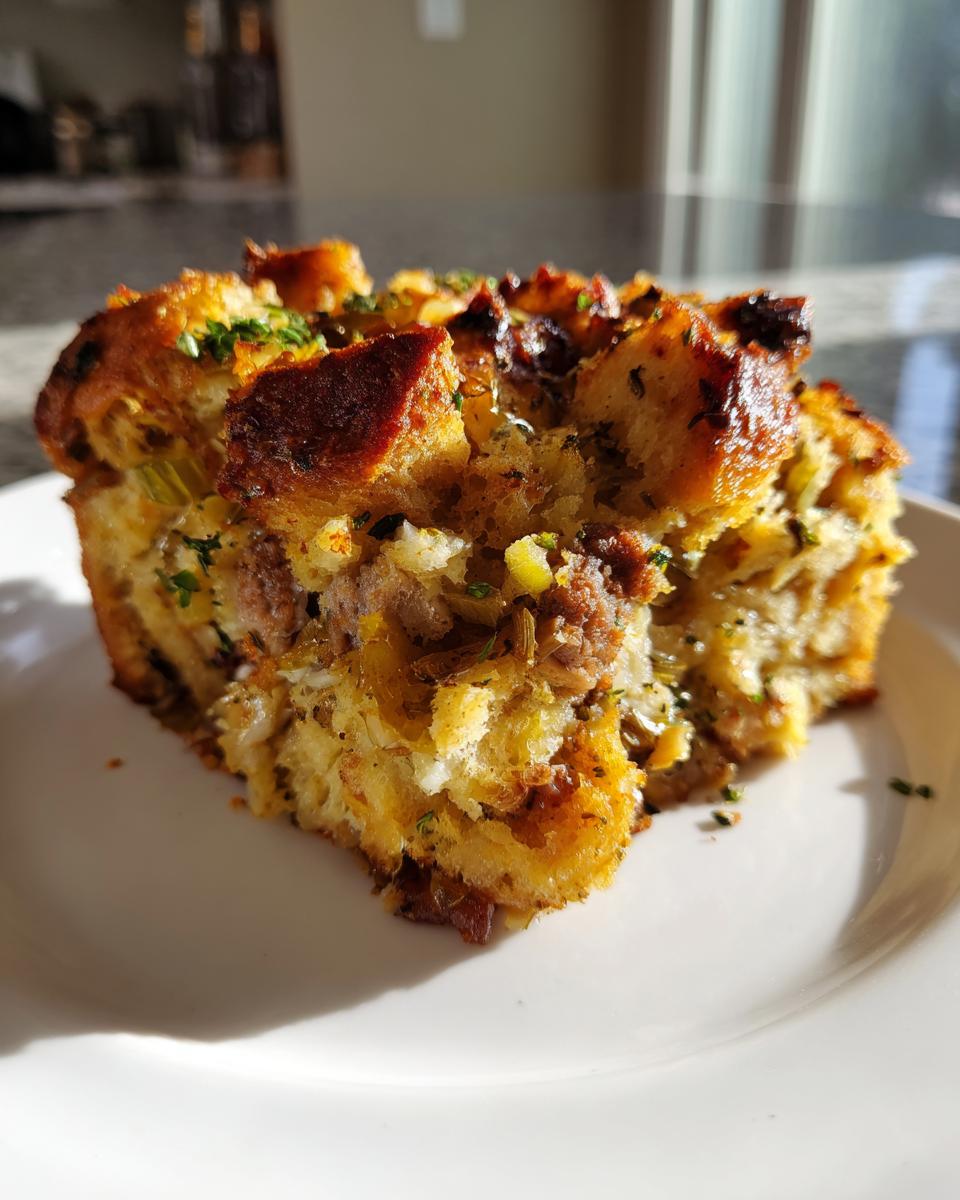
Listen, nobody wants stuffing that tastes like dry bread crumbs mixed with meat. The trick here is the simple combination of just two large eggs whisked into the chicken broth. That egg-and-broth mixture coats every single cube of bread—but gently! That’s what keeps your bread stuffing with sausage incredibly moist deep inside the casserole dish while the edges get caramelized just right. It’s a delicate balance that works perfectly when you get the tossing right.
The Flavor Base: Classic Sausage and Herb Stuffing
The second you start cooking the sausage with the onion and celery, your house starts smelling like a holiday dream. That foundation is key. We load it up with sage, thyme, and rosemary. Seriously, use dried herbs here because they pack a punch once they hit the heat, infusing every bit of bread. This isn’t just sausage stuffing; it’s truly the best sausage and herb stuffing you’ll ever serve. It tastes like tradition!
Gathering Ingredients for Your Holiday Stuffing Side Dish
When we’re making a showstopper like this savory sausage stuffing, the ingredients can’t be an afterthought—they need precision! I’ve included everything you need for a foolproof holiday stuffing side dish right here. Don’t substitute the sausage unless you absolutely have to; it provides so much savory fat that keeps the bread from drying out during baking. Gather these items, and we can move on to the magic!
Ingredient Notes and Essential Substitutions
Okay, let’s talk specifics because ingredient quality really dictates the final result here. You know I’m all about making things easy, but some things you just can’t cut corners on, especially if you want that perfect texture.
- Sausage: Please use bulk pork sausage. The seasoning blends well and it renders great fat for sautéing the veggies. If you absolutely must skip pork, use mild bulk Italian sausage, but taste it first—it might be saltier!
- Bread Cubes: This is crucial for your sausage stuffing! They must be dried out. If your bread isn’t stale, cut those cubes up and spread them on a baking sheet. Bake them at 250°F for about 15–20 minutes until they feel like firm croutons. Fresh, soft bread turns into mush, and we want structure!
- Broth: I use chicken broth because it’s a good middle-ground flavor, but if you’re using turkey drippings or any other poultry broth—go for it! Just ensure it’s low-sodium, because the sausage usually adds plenty of salt already.
- Vegetables: Don’t try to substitute celery or onion for dried items. You need that fresh, sweet liquid released by the slow cooking process to flavor the entire mass of bread.
Follow this list closely, and your bread will absorb the liquid perfectly without collapsing.
Step-by-Step Instructions for Perfect Sausage Stuffing
Alright, let’s get cooking! This process is really straightforward, but the order of operations is everything if you want that heavenly texture where every bite is seasoned perfectly through and through. First things first: preheat that oven to 350°F and get your 9×13 baking dish lightly greased. We are looking for that beautiful golden crust, after all! My grandmother always said, “Don’t cheat the preheat,” so let that oven come up to temperature while you work. These instructions walk you through building the flavor layer by layer, leading us straight to the most delicious sausage stuffing your table has ever seen.
Preparing the Flavor Base: Sausage and Aromatics
Grab your biggest skillet! We start by cooking the pound of bulk pork sausage over medium heat until it’s all browned up. This is important: drain off any excess grease afterward. We want the flavor, not a greasy slick on our stuffing! Once the sausage is done, toss in the chopped onion and celery. You need to cook those veggies until they are nice and soft—give them about five to seven minutes. They should be tender, not crunchy. Now, stir in your dried sage, thyme, rosemary, salt, and pepper. Just cook that fragrant mix for about one minute until you can really smell the herbs waking up. Then, pull that skillet right off the heat. This flavorful mixture is the backbone of our entire sausage stuffing recipe.
Moistening the Bread Stuffing with Sausage Mixture
Time for the big bowl! Combine all twelve cups of dried bread cubes with the wonderful sausage mixture you just made. Take your time tossing this gently—we want distribution, not aggression! In a separate small bowl, whisk your two eggs lightly, then add your cup of chicken broth. This is the magic potion. Pour that broth mixture right over the bread. Now, gently toss everything together until the bread is evenly moistened. Pay close attention here: if it still looks too dry—like the bread is just dusting the bottom of the bowl—add more broth, just a few spoonfuls at a time. You want it moist, I mean really nicely damp, but definitely not soggy! If it’s too wet, you’ll end up with something closer to bread pudding, and we’re aiming for a true bread stuffing with sausage masterpiece.
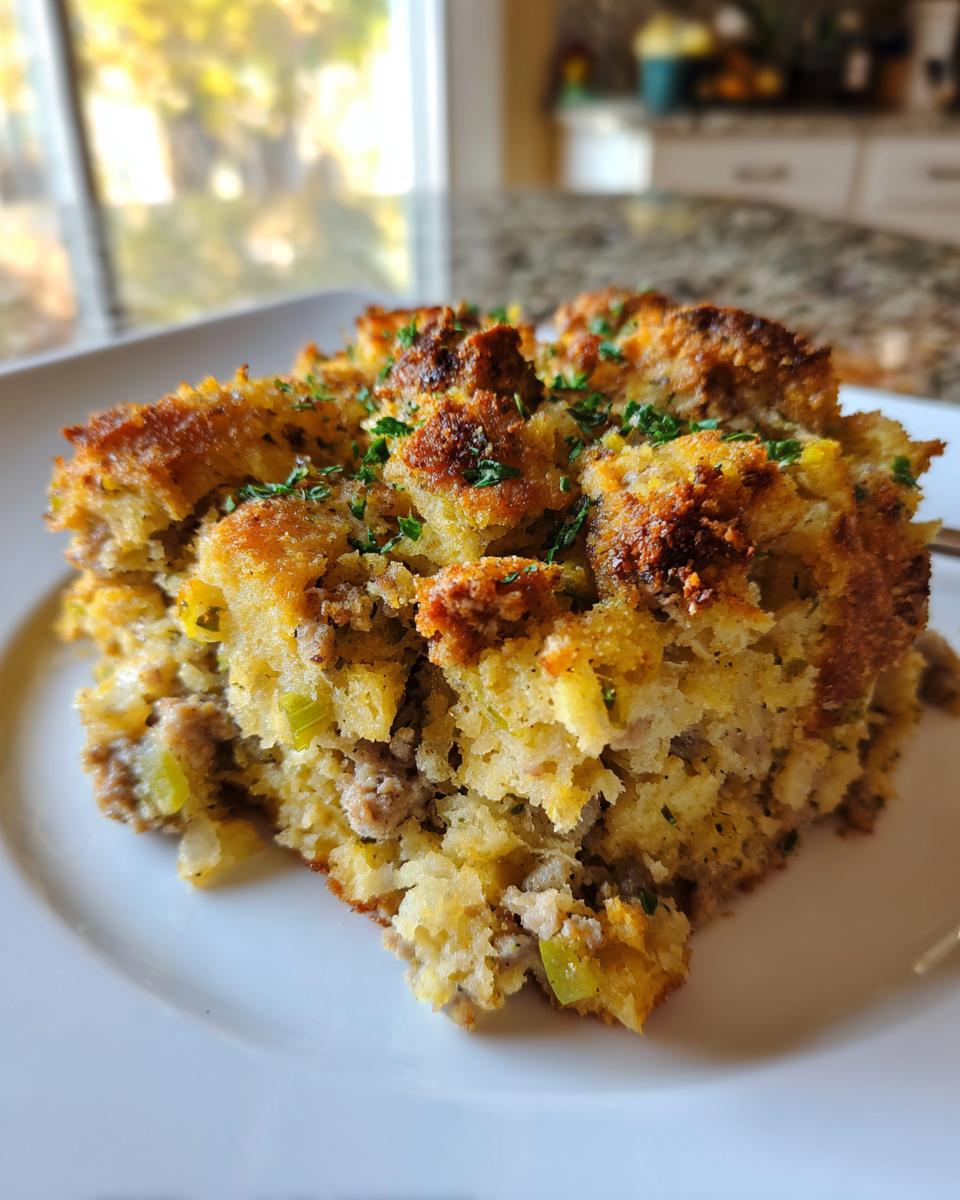
Once everything looks perfectly uniform, transfer it all into that prepared baking dish. Smooth out the top lightly (don’t pack it down!) and pop it into that waiting oven. It should bake for about 35 to 45 minutes until that top turns beautifully golden brown. Pure holiday magic!
Make Ahead Stuffing: Planning Your Thanksgiving Stuffing Recipe
I know what you’re thinking: the day is nuts! Between the bird and the pies, who has time to mix everything from scratch on Thanksgiving morning? That’s why I love that this recipe works so beautifully as a make ahead stuffing. This is truly a lifesaver, and it tastes just as good—maybe even better—the next day because the bread has more time to hang out with all that savory sausage flavor.
Here’s my absolute tried-and-true method for prepping this early. Assemble the whole thing—mix your bread, sausage, veggies, and the broth/egg mixture—just like we did in the steps above. Put it all into your greased baking dish, cover it tightly with plastic wrap, and tuck it right into the refrigerator. It holds perfectly like that for up to 24 hours. No worries about it ruining the texture; it just soaks up the flavors deeper!
The only thing you absolutely must remember when using this make ahead stuffing technique is the bake time adjustment. When you pull that cold dish out of the fridge, don’t just immediately stick it in the hot oven. Let it sit on the counter while your oven finishes preheating and while you’re getting organized—maybe about 30 minutes is perfect. Because it’s starting cold, you need to add about 10 to 15 minutes extra to the baking time. You’re looking for that same golden-brown top, but you need to ensure the center is piping hot all the way through. Trust me, having this Thanksgiving stuffing recipe assembled the night before is the secret weapon to a calm holiday morning!
Tips for Achieving the Best Sausage and Herb Stuffing
You’ve got the flavor base locked down, but now we need to talk about presentation and planning for different party sizes. Getting that perfect crust on your sausage stuffing is something people obsess over, and I get it—that transition from soft bread to golden crunch is part of the experience! This is where a little technique, passed down through years of holiday chaos, really makes the difference.
I remember Julian’s grandmother wrestling with pans twice as big as hers one year for a massive gathering. She didn’t panic, though. She just dedicated two separate pans, one covered and one uncovered, just to see which one yielded the crust she loved most. She discovered that if you want that incredible, shatter-on-your-fork top, you have to bake it uncovered. That’s the key!
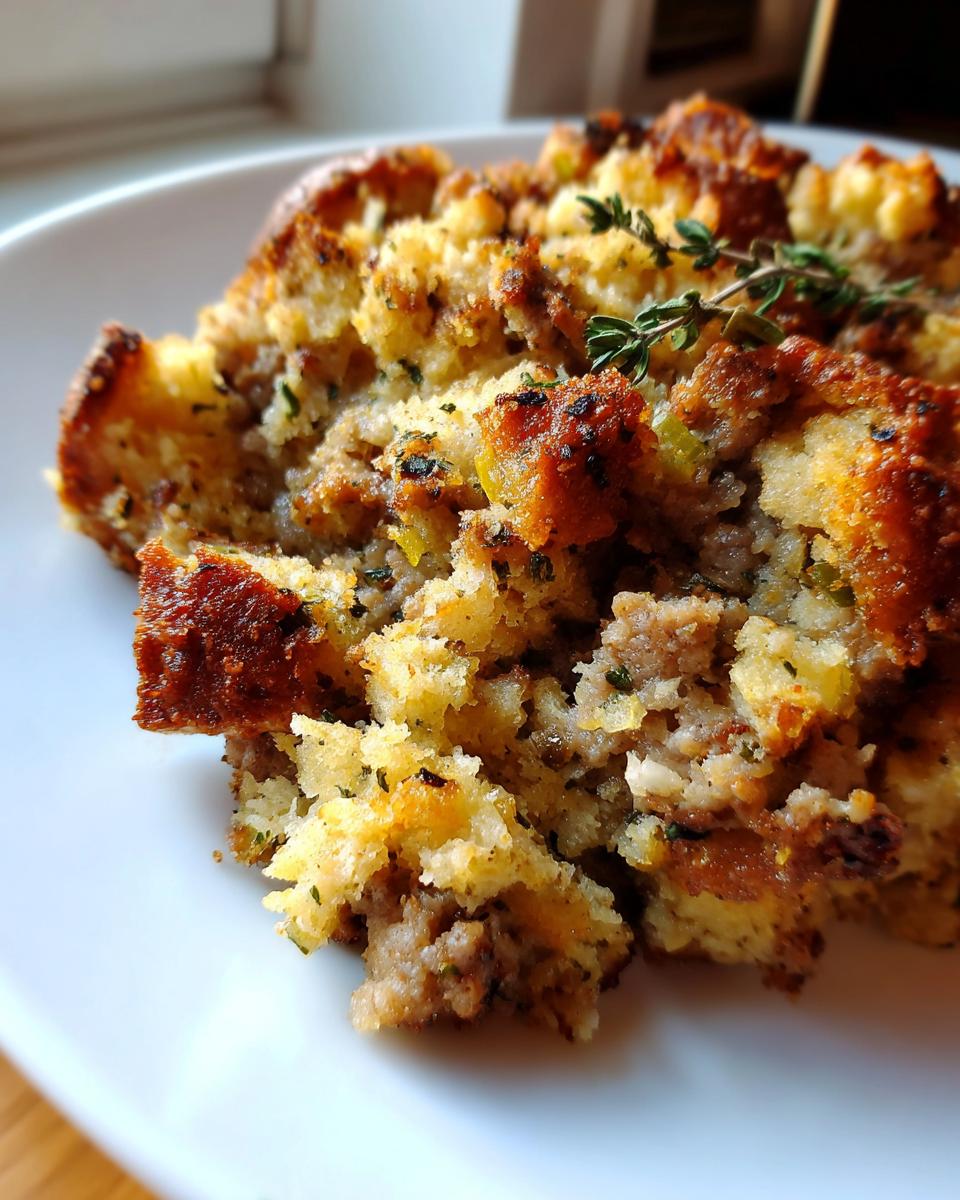
However, if your main goal is delivering ultra-moist stuffing that needs to feed a huge crowd without drying out on the buffet, the foil trick is your friend. For the first 25 minutes of baking, I loosely drape foil over the dish. This traps the steam, keeping everything incredibly tender and hydrated. Then, strip the foil off for the last 10 or 15 minutes. That final burst of heat guarantees you get that essential golden color.
Scaling Your Sausage Stuffing for Two or for a Crowd
Planning a small dinner for two, or expecting a massive extended family reunion? This sausage stuffing recipe is super flexible, which I love! You don’t have to go out and buy special small ingredients or stress about doubling everything for a huge crowd.
If you’re having a quiet evening, scaling back is simple. Just use half of every single ingredient listed—half the sausage, half the bread, half the broth, ditch the two eggs and use just one lightly beaten egg. Bake that smaller batch in a small casserole dish (like an 8×8) for about 30 minutes. Check it earlier since it’s shallower!
For a crowd? You can easily double or triple the recipe. Just make sure you have a baking dish large enough to accommodate the volume without making the layers too thick. If your dish is deeper than a standard 9×13, you might need to add an extra splash or two of broth because the bread cubes packed deeper won’t absorb moisture as quickly from the top. A slightly thicker layer means a slightly longer bake time, but the flavor payoff for feeding everyone is totally worth the small extra wait!
Serving Suggestions for Your Holiday Stuffing Side Dish
Now that you have the most perfectly textural, savory sausage stuffing ready to go, the next big question is: what are we eating it with? This isn’t just any side dish; it’s rich with pork sausage and herbs, so we need to pair it with things that balance that richness, bringing brightness and freshness to the plate. You don’t need a million sides, just the right ones!
For the main event, you absolutely need something roasted. This stuffing shines right next to classic roast turkey, of course. The slight saltiness of the sausage complements the mild flavor of the breast meat beautifully. If you’re going for something different, this holiday stuffing side dish also stands up surprisingly well to slow-cooked pulled pork, oddly enough. The sweetness from the BBQ sauce cuts right through the sage and thyme!
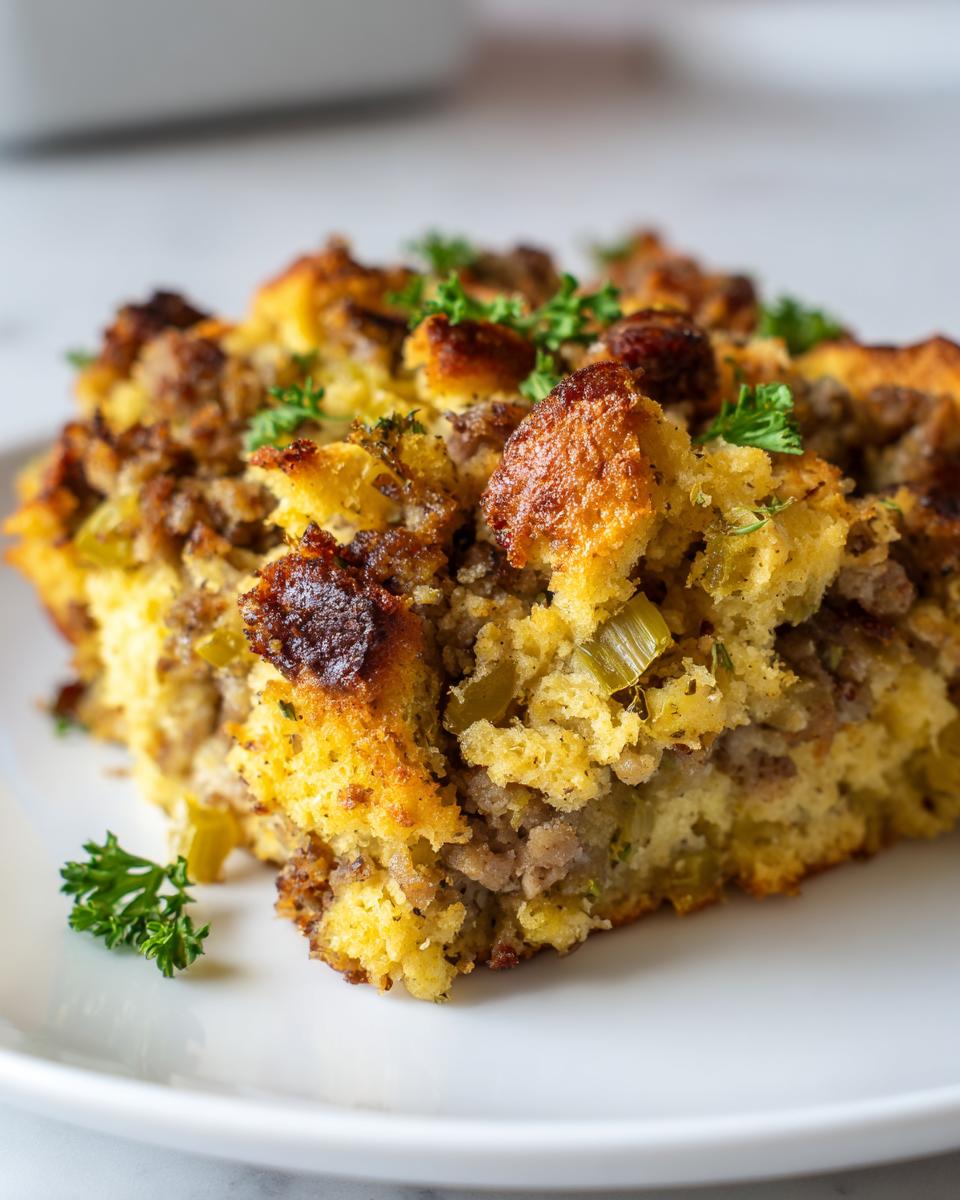
When you’re looking at vegetable pairings, think tart or green to cut the fat. Forget heavy, creamy sides here; we want contrast!
- Cranberry Power: A sharp, homemade cranberry sauce is non-negotiable. The acidity of the berries is the perfect contrast to the savory sausage.
- Green Beans: Keep them simple! Steamed or lightly sautéed green beans with just a squeeze of fresh lemon juice brighten everything up immensely.
- Roasted Root Vegetables: A simple pan of roasted carrots and parsnips, maybe tossed with a tiny bit of maple syrup, works because the slight sweetness complements the herbs in the stuffing without making the whole plate too heavy.
Honestly, once you pull this rich sausage stuffing out of the oven, your holiday table practically sets itself. Just make sure everyone gets a corner piece for that crust!
Storage and Reheating Instructions for Leftover Sausage Stuffing
The best part about making a true bread stuffing with sausage? The leftovers! Sometimes, I think the stuffing is even better the next day, once all those flavors have married overnight in the fridge. But you can’t just microwave it straight from the container; that’s a swift path to a soggy mess, and we worked too hard for soggy stuffing. We need to respect the beautiful texture we created!
First, keep your leftovers safe. Once the stuffing has cooled down a bit after dinner, cover the dish or transfer the stuffing into an airtight container. It will keep great in the refrigerator for about three to four days. Don’t push it past that, especially with the sausage and broth content in there.
When it comes time to reheat—and chances are you’ll want it hot for breakfast the next morning, don’t lie—the oven is always your very best friend for restoring that lovely texture. Spread your leftover sausage stuffing onto a baking sheet. Yes, a baking sheet! Don’t put it back in the deep casserole dish, heating that dense center is too hard.
Since the loaf shape is gone, you need to fight off dryness. Sprinkle just a tablespoon or two of extra chicken broth—or even just water—over the stuffing on the sheet before you pop it in the oven. You don’t want it swimming, just a light spritz of moisture to steam things up a bit.
Bake it at about 325°F. You’ll probably only need 15 to 20 minutes, but keep an eye on it. You’re looking for it to be steaming hot all the way through. The edges will crisp up again beautifully, and the broth you added will steam the interior back to life. If you really, truly can’t wait and need a portion in two minutes, use the microwave, but only in short 45-second bursts, stirring well between each one. Then, for maximum deliciousness, toss that microwaved portion on a hot skillet for a minute or two to bring back the slight crunch we all crave in our sausage stuffing!
Frequently Asked Questions About This Sausage Stuffing Recipe
It’s funny how many questions pop up once you get everyone excited about the main side dish! Dealing with holiday cooking means we need absolute certainty so there are no surprises when it’s time to eat. I’ve gathered the questions I usually get about making sure this sausage stuffing comes out perfectly, every time. Here are the fast answers!
Can I use fresh bread instead of dried bread cubes for this sausage stuffing?
Oh, that’s a good one, and I see why you ask! You definitely *can* start with fresh bread, but you absolutely must dry it out first. This is non-negotiable for a good result! Fresh bread is too soft and will just turn into paste when you add the broth and sausage mixture. We need those bread cubes to be firm enough to absorb the liquid slowly without collapsing into goo.
To dry it quickly—because who has time to wait three days for bread to go stale?—just cut your loaf into cubes, spread them out generously on a rimmed baking sheet. Pop that sheet into a low oven, around 250°F, for about 15 to 20 minutes. You want them to feel firm and slightly hard, like a store-bought crouton, but not browned or toasted around the edges. Once they’re dry, they’ll absorb the broth perfectly and keep that beautiful structure in your sausage stuffing.
What is the best way to ensure my bread stuffing with sausage is fully cooked?
This answer has two parts: visual cues and actual temperature checks. First, the visual cue everyone loves: the top golden brown crust. That usually means the outside edges are done and singing! But since we are dealing with a dense, moist casserole, you have to check the heart of the dish, especially if you made a deep pan of it.
The most reliable way to guarantee doneness, especially since we are dealing with pork sausage, is using a food thermometer. Stick it right into the center of the casserole. You need that internal temperature to read 165°F. If you don’t have a thermometer handy—and who always remembers theirs?—the next best thing is to carefully insert a thin metal skewer or the tip of a sharp knife deep into the center and pull it out. If the knife comes out steaming hot with no wetness clinging to it, you’re good to go! It should just have moist crumbs clinging, reminding you that this is the best bread stuffing with sausage ever made. If it’s wet or cool, give it another 10 minutes in the oven!
Storage and Reheating Instructions for Leftover Sausage Stuffing
The best part about making a true bread stuffing with sausage? The leftovers! Sometimes, I think the stuffing is even better the next day, once all those flavors have married overnight in the fridge. But you can’t just microwave it straight from the container; that’s a swift path to a soggy mess, and we worked too hard for soggy stuffing. We need to respect the beautiful texture we created!
First, keep your leftovers safe. Once the stuffing has cooled down a bit after dinner, cover the dish or transfer the stuffing into an airtight container. It will keep great in the refrigerator for about three to four days. Don’t push it past that, especially with the sausage and broth content in there.
When it comes time to reheat—and chances are you’ll want it hot for breakfast the next morning, don’t lie—the oven is always your very best friend for restoring that lovely texture. Spread your leftover sausage stuffing onto a baking sheet. Yes, a baking sheet! Don’t put it back in the deep casserole dish, heating that dense center is too hard.
Since the loaf shape is gone, you need to fight off dryness. Sprinkle just a tablespoon or two of extra chicken broth—or even just water—over the stuffing on the sheet before you pop it in the oven. You don’t want it swimming, just a light spritz of moisture to steam things up a bit.
Bake it at about 325°F. You’ll probably only need 15 to 20 minutes, but keep an eye on it. You’re looking for it to be steaming hot all the way through. The edges will crisp up again beautifully, and the broth you added will steam the interior back to life. If you really, truly can’t wait and need a portion in two minutes, use the microwave, but only in short 45-second bursts, stirring well between each one. Then, for maximum deliciousness, toss that microwaved portion on a hot skillet for a minute or two to bring back the slight crunch we all crave in our sausage stuffing!
Nutritional Estimates for Classic Sausage Stuffing
I always tell people that the sausage stuffing recipe is meant to be enjoyed, not meticulously counted, especially on the holidays! But if you are planning ahead or watching certain macros, I pulled together the general estimates based on the ingredient list above. Remember, this is just a guide—the exact amounts of fat drained from the sausage or the specific brand of bread you use will change these numbers slightly!
These estimates are based on a 1-cup serving size, yielding about 10 servings from the full recipe.
- Calories: Approximately 320
- Fat: Around 18g (Be sure to drain that sausage grease well!)
- Carbohydrates: About 28g
- Protein: Roughly 12g
- Sugar: Very low, about 2g
- Sodium: This is the highest number, near 650mg, mainly coming from the sausage and added salt, so be mindful if you are salting your turkey separately!
It’s a hearty side dish, full of savory flavor thanks to that delicious pork sausage!
Share Your Experience with This Sausage Stuffing Recipe
I truly hope this sausage and herb stuffing becomes a tradition in your kitchen the way it is in mine. Cooking is all about connection, and nothing connects people like a perfectly savory, comforting side dish at a big shared meal. I put everything I know about making this recipe reliable into these notes, so now it’s your turn!
I’d love to hear how it turned out for your big feast! Seriously, did you get that golden crust everyone fights for? Did you make the *make ahead stuffing* work for your schedule? Please leave a rating below—it helps other cooks know this is a trustworthy Thanksgiving stuffing recipe to rely on. And if you managed to snap a picture before everyone dug in, share it! We all love seeing our recipes out in the real world. For information on how we handle your shared data, please check out our privacy policy. Happy feasting!
Nutritional Estimates for Classic Sausage Stuffing
I always tell people that the sausage stuffing recipe is meant to be enjoyed, not meticulously counted, especially on the holidays! But if you are planning ahead or watching certain macros, I pulled together the general estimates based on the ingredient list above. Remember, this is just a guide—the exact amounts of fat drained from the sausage or the specific brand of bread you use will change these numbers slightly!
These estimates are based on a 1-cup serving size, yielding about 10 servings from the full recipe.
- Calories: Approximately 320
- Fat: Around 18g (Be sure to drain that sausage grease well!)
- Carbohydrates: About 28g
- Protein: Roughly 12g
- Sugar: Very low, about 2g
- Sodium: This is the highest number, near 650mg, mainly coming from the sausage and added salt, so be mindful if you are salting your turkey separately!
It’s a hearty side dish, full of savory flavor thanks to that delicious pork sausage!
Share Your Experience with This Sausage Stuffing Recipe
I truly hope this sausage and herb stuffing becomes a tradition in your kitchen the way it is in mine. Cooking is all about connection, and nothing connects people like a perfectly savory, comforting side dish at a big shared meal. I put everything I know about making this recipe reliable into these notes, so now it’s your turn!
I’d love to hear how it turned out for your big feast! Seriously, did you get that golden crust everyone fights for? Did you make the *make ahead stuffing* work for your schedule? Please leave a rating below—it helps other cooks know this is a trustworthy Thanksgiving stuffing recipe to rely on. And if you managed to snap a picture before everyone dug in, share it! We all love seeing our recipes out in the real world. For information on how we handle your shared data, please check out our privacy policy. Happy feasting!
PrintClassic Sausage and Herb Stuffing
A savory, moist bread stuffing featuring seasoned sausage and fresh herbs, perfect for holiday meals.
- Prep Time: 20 min
- Cook Time: 45 min
- Total Time: 65 min
- Yield: 10 servings 1x
- Category: Side Dish
- Method: Baking
- Cuisine: American
- Diet: Vegetarian
Ingredients
- 1 pound bulk pork sausage
- 1 large onion, chopped
- 3 celery stalks, chopped
- 1 tablespoon dried sage
- 1 teaspoon dried thyme
- 1 teaspoon dried rosemary
- 1 teaspoon salt
- 1/2 teaspoon black pepper
- 12 cups dried bread cubes (about 1 standard loaf)
- 1 cup chicken broth, plus more as needed
- 2 large eggs, lightly beaten
Instructions
- Preheat your oven to 350 degrees Fahrenheit. Lightly grease a 9×13 inch baking dish.
- Cook the sausage in a large skillet over medium heat until browned. Drain off excess grease.
- Add the chopped onion and celery to the skillet with the sausage. Cook until the vegetables soften, about 5 to 7 minutes.
- Stir in the sage, thyme, rosemary, salt, and pepper. Cook for 1 minute until fragrant. Remove the skillet from the heat.
- In a very large bowl, combine the dried bread cubes and the sausage mixture. Toss to distribute evenly.
- In a separate bowl, whisk together the chicken broth and the lightly beaten eggs.
- Pour the broth and egg mixture over the bread and sausage mixture. Gently toss everything together until the bread is evenly moistened. Add more broth, a few tablespoons at a time, if the mixture seems too dry.
- Transfer the stuffing mixture to the prepared baking dish.
- Bake for 35 to 45 minutes, or until the top is golden brown and the center is heated through.
Notes
- For a crispier top, bake uncovered. For a moister stuffing, you can cover the dish loosely with foil for the first 25 minutes of baking.
- You can prepare this make ahead stuffing up to 24 hours in advance. Cover the assembled, unbaked dish and refrigerate. Before baking, let it sit at room temperature for 30 minutes, then add 10 to 15 minutes to the total bake time.
- To scale this recipe for two servings, use half the ingredients and bake in a small casserole dish for about 30 minutes.
Nutrition
- Serving Size: 1 cup
- Calories: 320
- Sugar: 2
- Sodium: 650
- Fat: 18
- Saturated Fat: 6
- Unsaturated Fat: 12
- Trans Fat: 0
- Carbohydrates: 28
- Fiber: 2
- Protein: 12
- Cholesterol: 55