

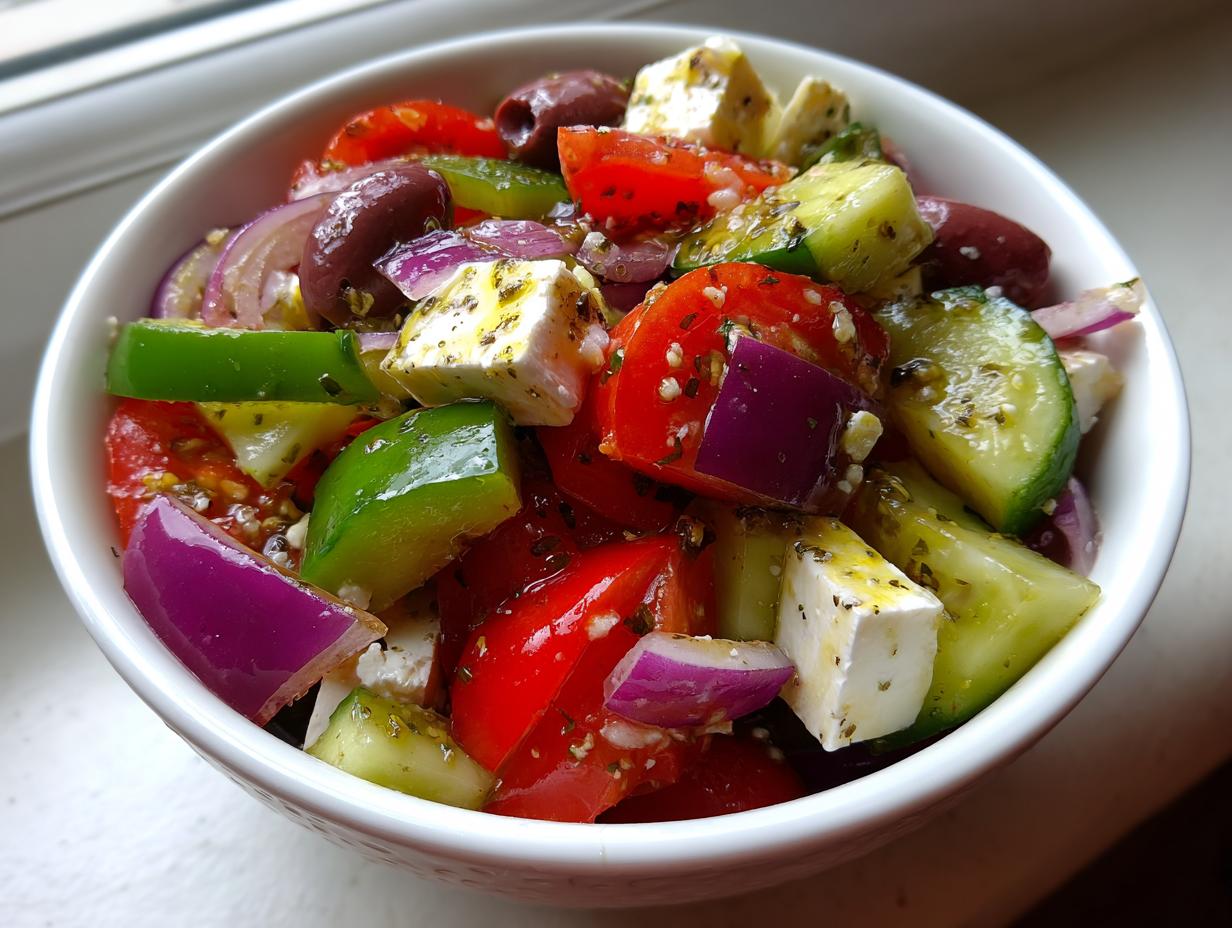
There is just nothing that screams ‘fresh’ quite like the bright, sharp flavors of true Mediterranean cooking. When I think about capturing that sunshine on a plate, I land right back on the classic Greek Salad. Now, I know what you’re thinking: salads are complicated, or they take too long, right? Wrong! My goal here at Julia Meal is to bring you those extraordinary flavors without the professional kitchen fuss. This recipe—the Best Easy Classic Greek Salad Recipe—is my stamp of approval. It sticks strictly to the principles I learned about food being about connection: use simple, high-quality ingredients, and let them shine. You’ll have a vibrant, authentic, and zesty side dish ready before you can even decide on a main course. If you love this commitment to fresh simplicity, you should check out how I handle my lentil salad with feta and lemon vinaigrette, too!
- Why This Classic Greek Salad Recipe Stands Out
- Simple Greek Salad Ingredients You Need
- Crafting the Best Greek Salad Dressing Recipe
- How to Prepare Your Perfect Greek Salad
- Expert Notes for an Authentic Greek Salad
- Serving Suggestions for Your Refreshing Cold Salad
- Storage and Reheating Instructions for Leftover Greek Salad
- Greek Salad Variations and Substitutions
- Frequently Asked Questions About This Greek Salad
Why This Classic Greek Salad Recipe Stands Out
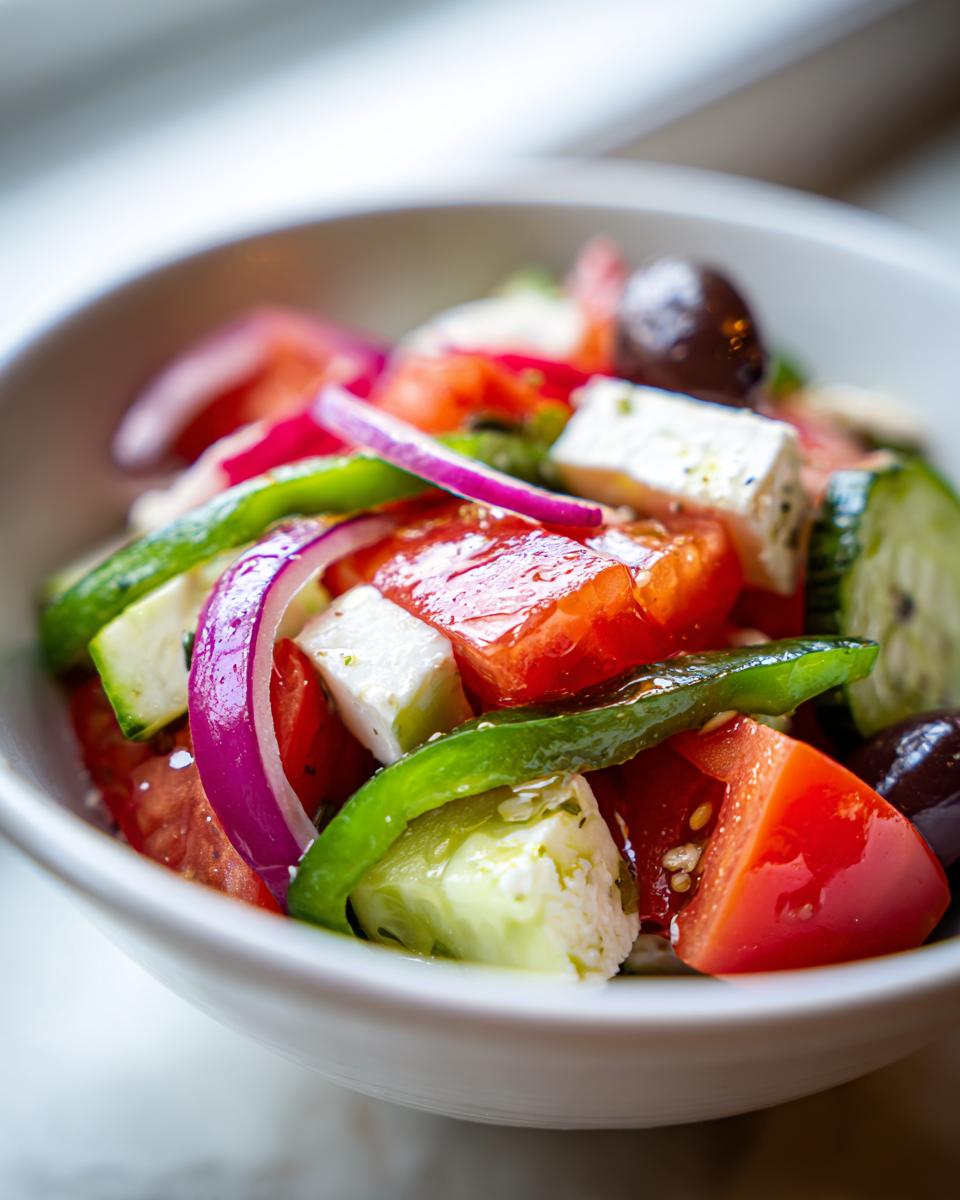
I don’t just throw recipes onto this site because they taste okay. When I bring you a recipe, it has to be the best way to do it—efficient, flavorful, and trustworthy. This Greek Salad is genuinely superior because it respects the foundational flavors while fitting perfectly into your busy life. It’s the standard I hold for all my fresh vegetable salad ideas. Check out how quickly we get this amazing flavor together!
- It’s fast! No fancy cooking skills needed, seriously.
- It uses true Mediterranean ratios for a mouthwatering zing.
- The quality of your fresh ingredients shines through, which is what matters most to me.
If you’re looking for more ways to bring those vibrant Mediterranean tastes into your rotation, don’t forget to look at my quinoa salad with chickpeas recipe!
Ready in Minutes: The Ultimate 15 Minute Greek Salad
Seriously, folks, you are looking at maybe 15 minutes total time here. That includes chopping! This isn’t some weekend project; this is your go-to for a quick summer salad when the heat hits and you don’t want to turn on the stove. When I say 15 Minute Greek Salad, I mean it. It’s perfect for those unexpected weeknight dinners or when you need a last-minute healthy side dish recipe!
Authentic Horiatiki Style for True Mediterranean Flavor
This is deeply important to me: we are making this the authentic way—Authentic Horiatiki Salad (village salad). That means NO lettuce! The magic happens when the juices from those incredibly ripe tomatoes mix with the excellent olive oil and vinegar. That natural liquid *is* the base of the dressing, not some thick, heavy green stuff. Keeping that tradition means you get that pure, intensely refreshing taste.
Simple Greek Salad Ingredients You Need
For a salad this incredibly refreshing, you really only need the best versions of a few core components. That’s the beauty of Mediterranean cooking, isn’t it? Less fuss, better flavor. I always tell people that investing in high-quality ingredients pays off tenfold here. Don’t skimp on the olive oil or the feta; those are the stars of the show! Gathering these Simple Greek Salad Ingredients is half the battle, and we’re going to organize them so you know exactly how to treat them before they hit the bowl.
If you’re loving this focus on fresh, high-quality ingredients, you absolutely must add my lentil salad with feta and lemon vinaigrette to your next shopping list!
Vegetables for Your Vibrant Vegetable Salad
We are building this around crispness and juiciness. Because we aren’t using lettuce, these vegetables need to be top-notch. For a true Vibrant Vegetable Salad, aim for garden-ripe tomatoes. They should feel heavy, not fluffy!
- Tomatoes: You need 4 large, very ripe ones. Cut them into nice, rustic wedges—not perfect slices, you want chunkiness here.
- Cucumber: 1 large English cucumber. I usually just slice mine, but if you want bigger bites, feel free to chop it roughly.
- Red Onion: Just 1, sliced super thin. We want the flavor, but not the harsh bite when you bite into a huge chunk!
- Green Bell Pepper: Roughly chop about 1 pepper. It just adds that necessary crunch and green color pop.
The Essential Feta Cheese and Olives for Greek Salad with Feta and Olives
This is where we get salty, briny, and creamy joy! When I’m planning my list for Greek Salad with Feta and Olives, these items are non-negotiable. Make sure you look for the good stuff.
- Feta Cheese: You need 8 ounces. My strong recommendation? Buy it in a block, packed in brine, and either cube it yourself or crumble it coarsely right before serving. A block just tastes so much better than the stuff already pre-crumbled in a plastic bag, trust me.
- Kalamata Olives: 1 cup, whole or pitted—your preference! Those dark, purplish-black beauties bring that essential salty depth that defines this dish.
Crafting the Best Greek Salad Dressing Recipe
Okay, you’ve got your incredible, fresh vegetables all chopped and waiting. What takes this from a bowl of chopped veggies to an authentic Greek Salad experience? It’s this dressing, hands down! Too often people buy bottled stuff, and honestly, that’s where we lose that vibrant Mediterranean soul. This Best Greek Salad Dressing Recipe embraces simplicity, focusing on two non-negotiables: good red wine vinegar and really, *really* good extra virgin olive oil. You need about 1/4 cup of that beautiful oil—don’t skimp, the quality makes the whole salad taste expensive! We whisk it all together with a generous pinch of dried oregano. That oregano, folks, is the sound of Greece in a bowl!
You can see how simple I keep things over here at Julia Meal—if it doesn’t amplify the main ingredients, we skip it! If you’re interested in other quick sauces, I just shared my absolute favorite cilantro lime sauce, which is perfect for grilling!
Tips for an Easy Homemade Vinaigrette
Making your own Easy Homemade Vinaigrette is all about the emulsification—getting those oil and vinegar buddies to play nicely together. The trick isn’t complex machinery; it’s patience! Whisk hard and fast right before you pour it over the vegetables. If you notice the dressing separating while you are prepping other things, just give it another quick whisk! Another thing I always check is the tang. If your tomatoes are super sweet, you might want an extra tiny splash of vinegar, or even a drop of lemon juice, to really make those flavors pop. Just taste as you go!
For those looking to add some carbs, I highly recommend checking out this amazing Greek Pasta Salad recipe after you master this pure version!
How to Prepare Your Perfect Greek Salad
Alright, we have our gorgeous, colorful ingredients ready on the counter, and that zesty dressing is waiting patiently. Now comes the fun part—bringing it all together! Remember what I always say? Cooking should be joyful, not a chore. This is where we take those beautiful components and combine them using a slight, technique-based order that ensures every single bite is perfect. You want crunch, you want tang, and you want the feta to stay creamy, not dissolve into the mix. Follow these simple steps, and you’ll have the most delicious, fresh vegetable salad on the table in a flash!
If you want another super easy main course to pair with this incredible salad, you should check out my thoughts on an easy one-pot sausage and rice skillet!
Assembling the Fresh Vegetable Salad
First things first, your veggies take center stage. Toss those tomato wedges, cucumbers, onions, bell peppers, and those briny Kalamata olives right into your biggest mixing bowl. Now, pour that beautiful homemade dressing right over the top. This is where you must show a little restraint! Use large salad tongs or even your hands (washed, of course!) to gently toss everything. We aren’t aggressively mixing; we are just coaxing the vegetables to get acquainted with the dressing. Do this tenderly so the tomatoes don’t turn mushy on you.
The Final Touch: Adding Feta to Your Greek Salad
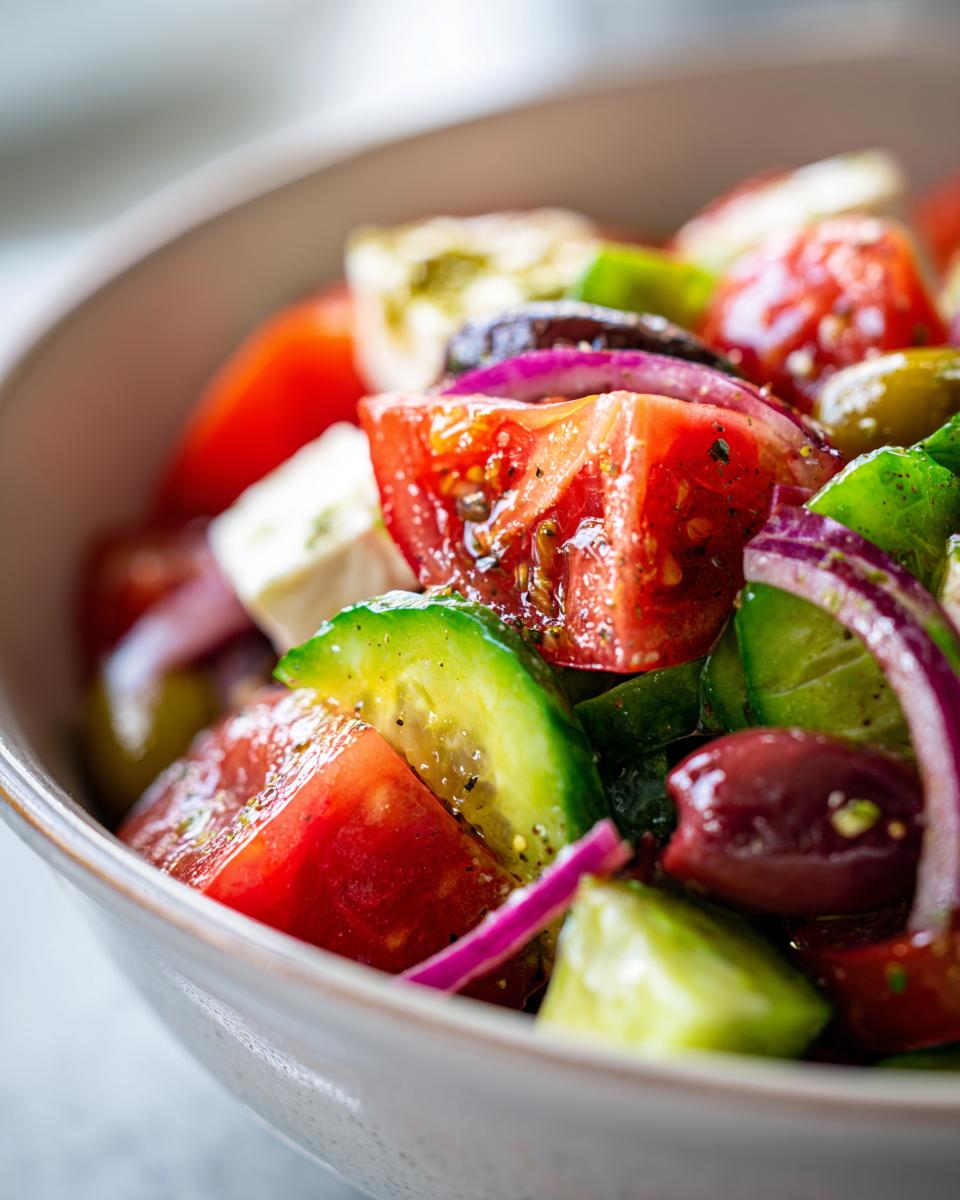
This is the critical step if you want that creamy texture in every serving! The feta cheese goes in last. Seriously, wait until the other veggies are dressed before you even think about adding the feta cubes. A gentle fold—just trying to coat them slightly in the dressing—is all they need. If you’re planning ahead (and I highly recommend trying the flavor-boosting note from above), you could have marinated your feta in the dressing for about 30 minutes prior to this step. When you add it this late, you make sure those lovely cubes stay beautiful and distinct, not just broken bits floating around.
Expert Notes for an Authentic Greek Salad
When I bring you a recipe, especially one rooted in such a strong tradition as this, I feel like I need to share the little secrets that move it from “good” to “amazing.” That’s what separates a home cook from someone who just follows directions—it’s knowing the philosophy behind the steps. For this Greek Salad, we are aiming for that pure, rustic experience that feels like you’re eating lunch on a Greek island veranda, not just eating greens in July. Paying attention to these details is how we build real flavor and trust in the kitchen together.
If you’re looking to deepen your love for Mediterranean flavors, don’t skip my thoughts on lentil salad with feta and lemon vinaigrette—it uses similar philosophy notes!
These are the crucial habits I picked up that I want you to adopt for the absolute best result, capturing that true Authentic Horiatiki Salad feel. Plus, you can find a really beautiful, simple traditional version over at Downshiftology if you want another reference point!
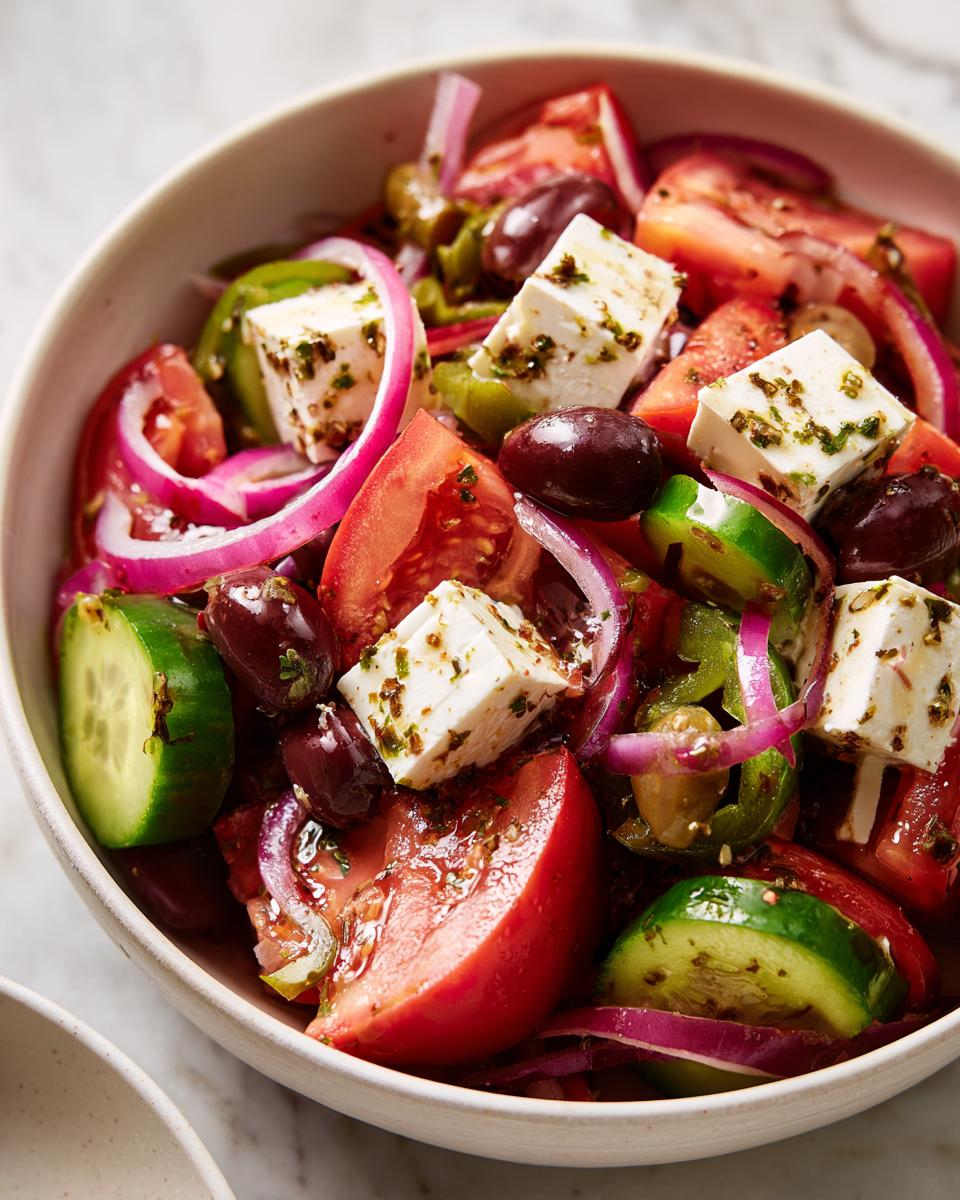
- Embrace the Tomato Juice: This is HUGE for Horiatiki tradition—you must skip the lettuce! When you cut those perfectly ripe tomatoes, they release their gorgeous, savory juices into the bottom of the bowl. When you add the olive oil and vinegar, those juices combine to create the second half of your dressing. It’s magic, and it’s why the salad tastes so naturally flavorful and refreshing.
- Marinate the Feta (If You Can Wait!): Remember how I told you to add the feta last? Well, here’s the trade-off: if you have 30 minutes to let the feta cubes sit *in* the dressing before you even add the vegetables, your flavor payoff is massive. The olive oil penetrates the cheese beautifully, resulting in a richer, creamier bite that really sings with the oregano. It takes planning, but wow, is it worth it!
- Size Matters: Don’t chop everything too small! The vegetables should be cut into larger, rustic pieces. This style of chopping ensures that you get a solid bite of tomato, cucumber, and onion together—that textural contrast is what makes a fresh vegetable salad so satisfying. Keep those feta cubes big, too!
Serving Suggestions for Your Refreshing Cold Salad
This Refreshing Cold Salad just screams for sunshine and good company! Honestly, it brightens up any plate instantly. Since it’s naturally light and packed with healthy fats and veggies, it plays so well with almost anything, especially grilled meats or fish—it feels like a vacation on a plate! I love pairing a big bowl of this alongside some crispy baked chicken, maybe my chicken fettuccine alfredo if I want something richer, or just some simple grilled halloumi for a vegetarian centerpiece.
It totally works as a light lunch on its own if you’re watching carbs, but it’s genuinely the best side for a BBQ spread or when you have company over. Nobody ever complains about having too much fresh salad, especially when it looks this vibrant!
Storage and Reheating Instructions for Leftover Greek Salad
Now, here’s a hard truth about salads made with incredibly fresh ingredients and that wonderful tomato nectar we talked about: they are built to be eaten *immediately*. A Greek Salad doesn’t actually reheat, which is a good thing because we want those vegetables crunchy and crisp! If you try to keep the dressed salad overnight, I promise you, those gorgeous tomatoes will get sad, and the whole thing will turn into a watery mess, no matter how perfectly you made the dressing.
But don’t throw away those lovely fixings! We can definitely save the components. My key piece of advice here is separation therapy. Keep everything separate until the very last minute. If you find yourself with leftover veggies and feta, store them in an airtight container in the fridge—they should hold up beautifully for a couple of days.
You want to store the dressing completely separately, obviously! I keep mine tightly sealed on the counter or in the fridge, depending on the oil used, but it needs a good shake before serving. When you want to enjoy those leftovers, just toss the crisp vegetables and the feta with a *fresh* drizzle of that Best Greek Salad Dressing Recipe right before your fork gets there. It keeps that vibrant Mediterranean flavor alive! If you love make-ahead dishes, you might enjoy my strategies for baked potato salad, which handles leftovers much more gracefully!
Greek Salad Variations and Substitutions
I love the purity of the classic Greek Salad, that perfect Horiatiki style, but I also know that sometimes life calls for a little customization! Maybe you need more staying power for lunch, or perhaps you just ran out of red wine vinegar. Don’t sweat it! The spirit of this Mediterranean dish is so robust that it handles a few friendly tweaks really well. I encourage you to experiment and make this recipe your own, especially when you are feeding a crowd or want to use up summer garden overflow.
If you’re looking for another fantastic, easy pasta dish that still carries that clean, bright flavor profile, you absolutely need to bookmark my caprese pasta salad recipe!
Making a Greek Pasta Salad
This is probably the most popular swap people make, right? Turns it from a light side dish into a hearty main course! Taking these core flavors and turning them into Greek Pasta Salad Ideas is incredibly easy. The key is volume and absorption. You’ll want to cook about 8 ounces of pasta—maybe rotini or bowtie shapes—and let it cool completely first. Then, you simply add the cooked, cooled pasta right into the bowl with your vegetables. Since the pasta will soak up some of that zesty goodness, you need to plan ahead slightly: just double the dressing quantities listed in the recipe. Toss everything together gently, maybe throw in some chickpeas for extra bulk, and you’ve got a fantastic cold salad for leftovers all week long!
Frequently Asked Questions About This Greek Salad
I totally get it—when you find a recipe you love, you want to make sure you’re doing it justice, or maybe you need to tweak it for an unexpected gathering. That’s what this FAQ section is for! I’ve pulled together some of the questions I get most often about ingredient swaps and preparation for this Greek Salad because consistency is key to that unforgettable fresh flavor. We want this to be your absolute go-to for a healthy side dish recipe.
Before we dive in, remember that if you’re looking for other great handheld options, my classic chicken salad recipe is always a winner!
Can I add lettuce to a traditional Greek Salad?
Ah, the age-old question! If we are sticking to that pure, Authentic Horiatiki Salad tradition, the answer is a firm, loving no. The real Greek village salad relies on the juices from the tomatoes mixing with the dressing to create the perfect light coating for the cucumber and onions. That natural liquid is essential! *However*, I know many wonderful people enjoy a standard Greek Salad with Lettuce when they serve it for lunch or want more volume. If you must add greens, romaine is the best choice because it’s sturdy and won’t wilt instantly under the dressing.
What is the best type of feta cheese to use?
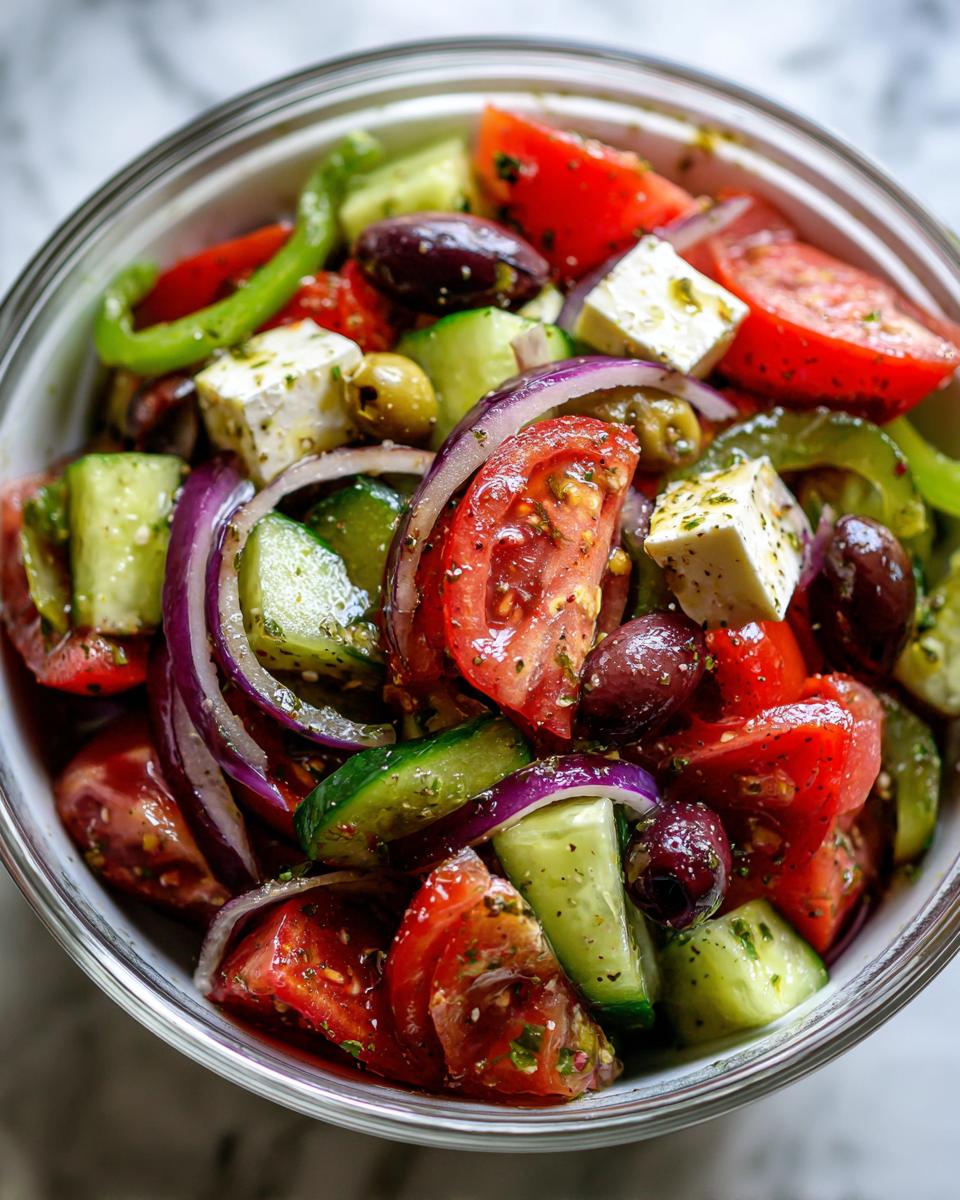
I cannot stress this enough: buy the block feta packed in brine! Seriously, ditch the pre-crumbled stuff if you can. When feta is sold in dry containers, it tends to be drier and sometimes has stabilizers that mess with the texture. The block feta, submerged in that salty liquid, stays creamy, slightly moist, and has a much cleaner, tangier flavor that melts beautifully in your mouth when you bite into it. It stays in those lovely big cubes we talked about, too, making it perfect for a stunning presentation of your Greek Salad with Feta and Olives.
Is this a good Mediterranean Diet Salads option?
Absolutely! This is practically the poster child for the Mediterranean Diet Salads category. You’ve got hydration from the cucumbers and tomatoes, healthy fats from the olive oil, salty deliciousness from the olives, and protein/calcium from the feta. It’s packed with color and whole ingredients. It’s incredibly light, satisfying, and supports that wonderful lifestyle focused on fresh produce. It’s a winner for flavor and for fueling your body right!
PrintBest Easy Classic Greek Salad Recipe
Make a classic Greek salad, also known as Horiatiki, that features crisp vegetables, creamy feta, and briny olives tossed in a zesty homemade dressing. This refreshing salad is ready in minutes and perfect for any gathering or light meal.
- Prep Time: 15 min
- Cook Time: 0 min
- Total Time: 15 min
- Yield: 4 servings 1x
- Category: Side Dish
- Method: No Cook
- Cuisine: Greek
- Diet: Vegetarian
Ingredients
- 4 large ripe tomatoes, cut into wedges
- 1 large English cucumber, sliced or roughly chopped
- 1 red onion, thinly sliced
- 1 green bell pepper, roughly chopped
- 1 cup Kalamata olives, whole or pitted
- 8 ounces feta cheese, cut into large cubes or crumbled
- 1/4 cup extra virgin olive oil
- 3 tablespoons red wine vinegar
- 1 teaspoon dried oregano
- 1/2 teaspoon salt
- 1/4 teaspoon black pepper
Instructions
- Prepare the vegetables: Place the tomato wedges, cucumber, red onion slices, green bell pepper pieces, and Kalamata olives into a large mixing bowl.
- Make the dressing: In a small bowl, whisk together the extra virgin olive oil, red wine vinegar, dried oregano, salt, and black pepper until well combined.
- Combine: Pour the dressing over the vegetables and gently toss to coat everything evenly.
- Add feta: Gently add the feta cheese cubes to the bowl. Toss lightly one more time, taking care not to break up the cheese too much.
- Serve immediately: Serve your fresh Greek salad right away for the best texture.
Notes
- For an authentic Horiatiki style, avoid adding lettuce. The juices from the ripe tomatoes create the natural base for the dressing.
- If you prefer a finer texture, you can use crumbled feta instead of large cubes.
- You can marinate the feta cheese in the dressing for 30 minutes before adding it to the salad for deeper flavor.
Nutrition
- Serving Size: 1 serving
- Calories: 320
- Sugar: 7
- Sodium: 650
- Fat: 28
- Saturated Fat: 10
- Unsaturated Fat: 18
- Trans Fat: 0
- Carbohydrates: 12
- Fiber: 3
- Protein: 10
- Cholesterol: 45