

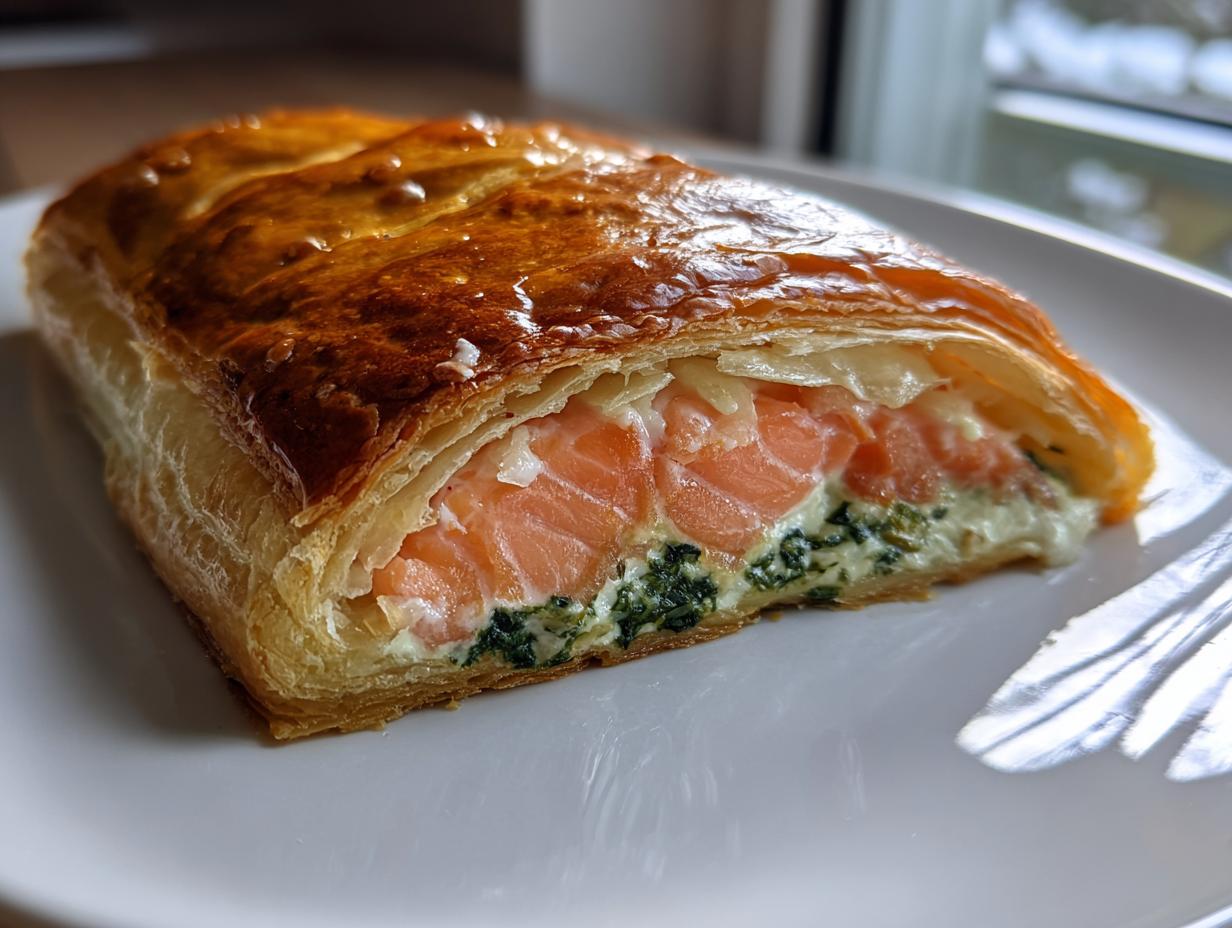
If you think making a show-stopping centerpiece like a salmon wellington means hours of fussy work and complicated French techniques, I want you to take a deep breath. That feeling—that desire to serve something truly elegant—is exactly why I started Julia Meal! My philosophy is that gourmet food should feel joyous, not stressful. This recipe strips away the intimidation factor. We’re using simple ingredients and proven steps to wrap flaky salmon in golden pastry, ensuring you get that rich, impressive result every single time. Forget the fine dining fear; this incredible salmon wellington is built for your home kitchen, making it perfect for both special occasions and those nights when you just deserve a truly fantastic meal. You can find more inspiration for quick dinners here: quick, easy weeknight dinners.
- Why This Easy Salmon Wellington Recipe Works for You
- Gathering Ingredients for Your Salmon Wellington
- Step-by-Step: How to Make Salmon Wellington
- Salmon Wellington Tips and Tricks for a Flaky Crust
- Making Ahead and Storing Your Salmon Wellington
- Serving Suggestions for Your Elegant Seafood Centerpiece
- Frequently Asked Questions About Salmon Wellington
- Storing Leftover Salmon Wrapped in Pastry
- Your Next Gourmet Salmon Dinner Awaits
Why This Easy Salmon Wellington Recipe Works for You
When I test recipes for Julia Meal, I focus on one thing: making sure you feel like a culinary wizard without all the extra cleanup. This puff pastry salmon recipe is designed to look like it took all day, but honestly? It’s sneaky fast. We’ve engineered the steps so you nail the texture every time. We’re taking the intimidation out of gourmet cooking!
Achieving Flaky Pastry Salmon Recipe Perfection
I know the nightmare scenario: you cut into your beautiful pastry only to find a watery, soggy mess underneath. No thank you! That’s why we go the extra mile to blot that salmon completely dry and, trust me, that pre-bake chill time is non-negotiable. It sets the butter in the dough so you get that beautiful lift.
Simple Yet Impressive Dinner Ideas with Salmon
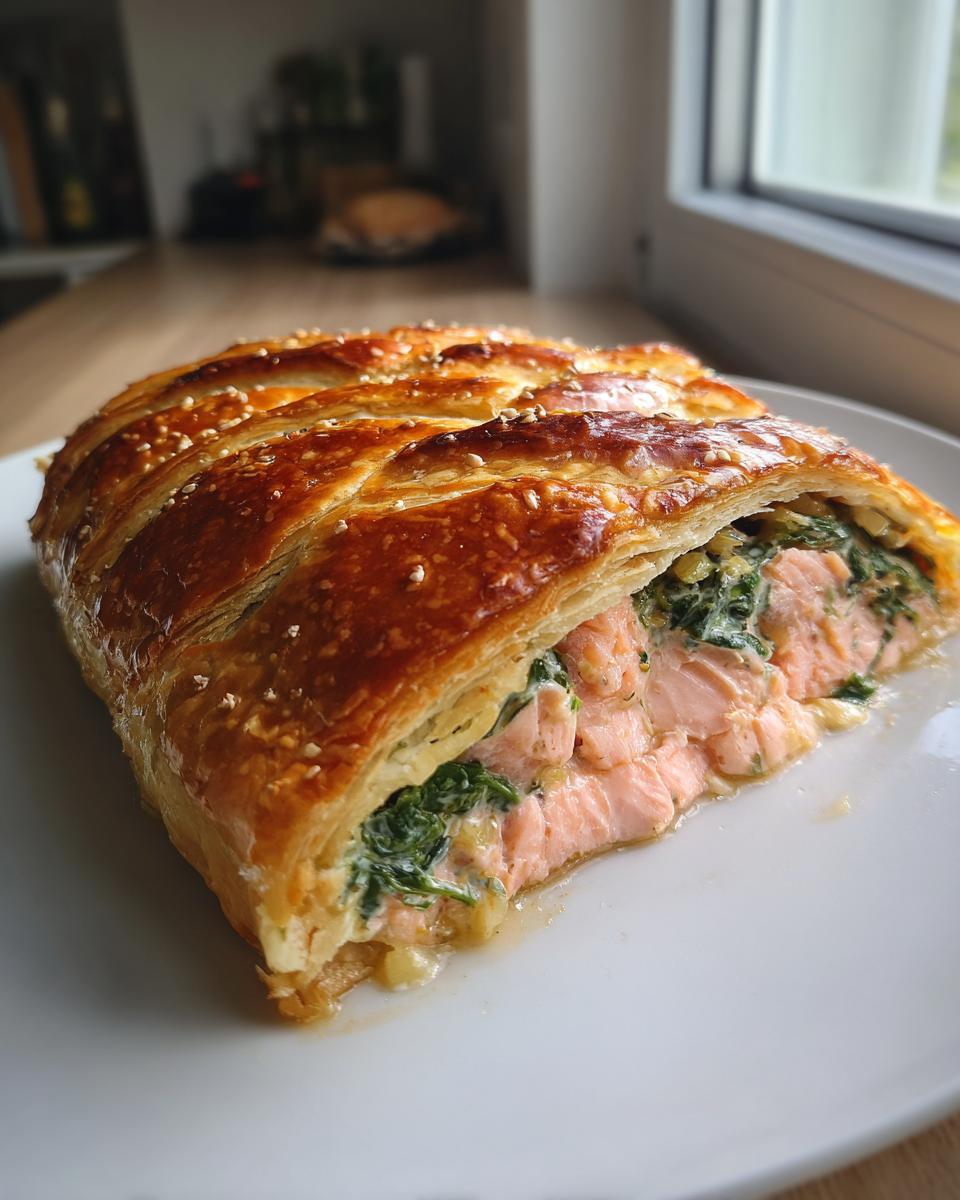
If you’re hunting for those show-stopping impressive dinner ideas with salmon for a holiday gathering or a last-minute date night, this is it. It looks incredibly layered and fancy, but underneath, it’s just quality ingredients coming together smoothly. If you liked how easy my sausage skillet was, wait until you try wrapping fish!
The Creamy Spinach and Cream Cheese Salmon Bake Filling
Our filling isn’t just glue to hold things together; it’s flavor central! That blend of earthy spinach, tangy cream cheese, and bright dill cuts right through the richness of the salmon and pastry. It’s savory, bright, and makes every slice of this creamy stuffed salmon bake taste unbelievably balanced.
For more easy dishes that bridge the gap between fancy and doable, check out my favorite easy one-pot sausage and rice skillet.
Gathering Ingredients for Your Salmon Wellington
Okay, friend, gathering your bits and pieces is the first step to success—just like when I make my famous chicken salad! For this beautiful salmon wellington, we need quality starting points. I always stress the importance of center-cut salmon because it bakes more evenly.
You’ll need that piece of salmon, naturally, and a sheet of good all-butter puff pastry—get the best one you can find! Then we assemble that creamy, savory layer:
- 1 (1.5 lb) center-cut salmon fillet, skin removed
- 1 sheet (about 14 oz) all-butter puff pastry, thawed
- 1 tablespoon olive oil
- 1 shallot, finely minced
- 5 ounces fresh spinach, chopped
- 4 ounces cream cheese, softened
- 1 tablespoon fresh dill, chopped
- 1 teaspoon lemon zest
- 1/2 teaspoon salt & 1/4 teaspoon pepper
- 1 large egg, beaten (our golden coat!)
That’s it! Simple, right? Having everything ready makes the final assembly feel like you’re just putting together a beautiful gift. If you want to see another favorite ready-ahead recipe, take a peek at my best classic chicken salad recipe.
Step-by-Step: How to Make Salmon Wellington
Alright, let’s stop admiring the ingredients and start building! This process is all about layering flavor and structure. Remember, the key to a truly successful salmon wrapped in pastry is controlling moisture at every single turn. If you’ve ever felt intimidated by this classic showstopper, I promise you, sticking to these steps for our easy salmon en croute will change your mind.
Preparing the Salmon and Squeezing the Spinach
This is where we fight the dreaded soggy bottom before it even has a chance to show its face. First, take your lovely salmon fillet and pat it down with paper towels until it feels dry—and I mean *bone dry*. Season it simply with salt and pepper. Now, look at your spinach. You have to get every drop of liquid out, or that puff pastry won’t puff! I wilt mine down, let it cool just slightly, and then wrap it tightly in a clean tea towel or strong paper towels and literally wring the moisture out over the sink. Squeeze hard!
Assembling the Salmon Wellington Filling Base
Once your spinach is resigned to its fate (i.e., dry!), whisk it together in a bowl with the softened cream cheese, that fresh dill, lemon zest, and any remaining seasoning. It should look like a thick, spreadable paste. Get your pastry sheet ready on your parchment-lined baking sheet. Now, take that creamy spinach mixture and spread it evenly right across the middle of the pastry. Leave about two inches bare around the edges; we need that space to seal everything up tight later on.
Chef Julian’s Tip: When spreading the filling, make sure it’s slightly thinner around the edges where the pastry overlaps. Too much filling there can cause the pastry to tear when it puffs up.
Wrapping and Sealing the Puff Pastry Salmon Recipe
Gently lay your seasoned salmon right on top of that green layer. Now, pull up the long sides of the pastry over the salmon. Overlap them by about an inch right over the top center, and trim off any heavy excess dough so it doesn’t get too bulky. Pinch those seams together firmly so they stick. Next, take the ends and fold them up tightly, like wrapping a present, pressing hard on the corners to seal. Flip the *entire thing* seam-side down onto your prepared sheet. That tight seal is what contains all the wonderful juices while baking. I always give the top a gentle score with a sharp knife just for looks, but don’t cut through to the filling!
Baking Your Salmon Wellington to Golden Perfection
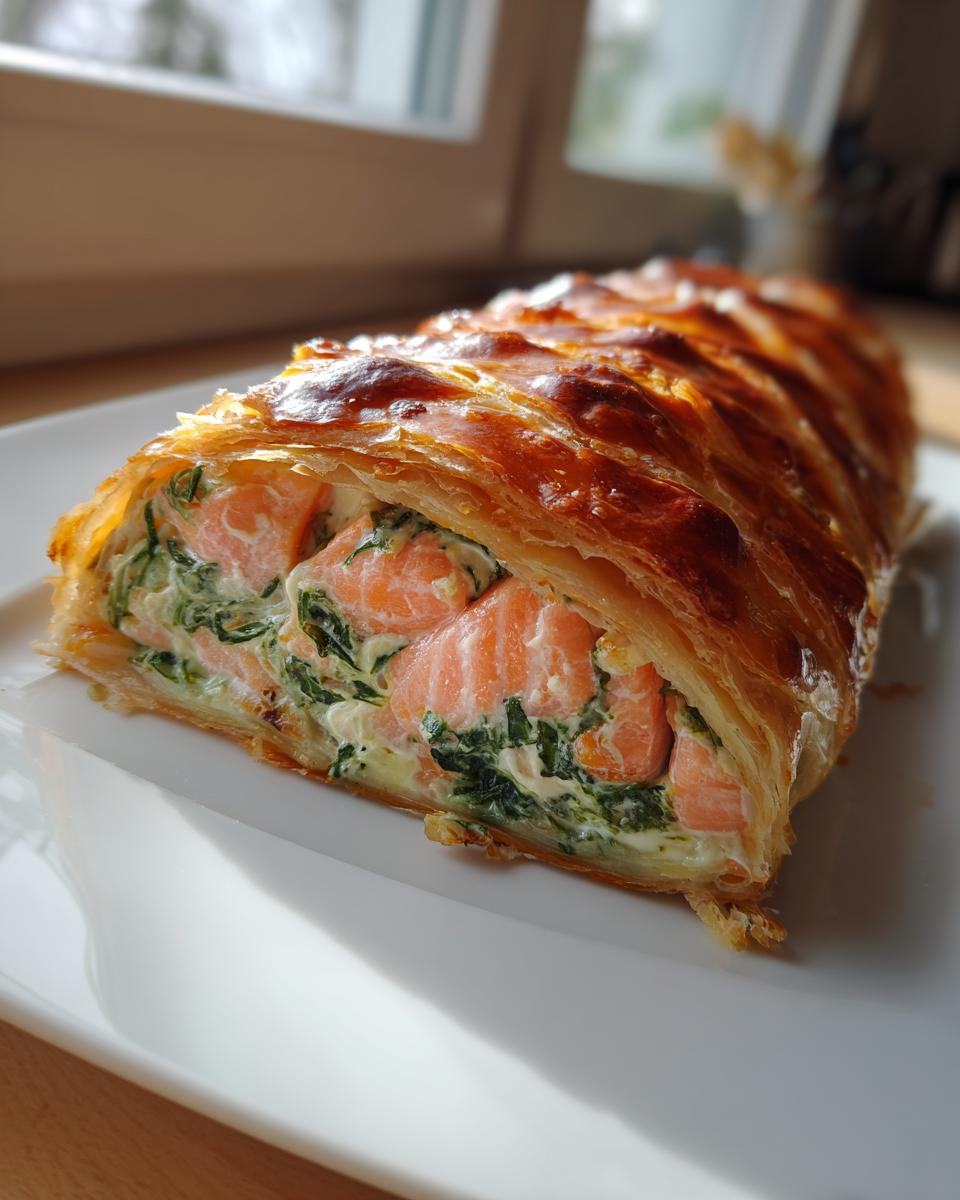
We need that oven screaming hot—400°F (200°C) is where we start! Before it goes in, brush the entire surface generously with that simple egg wash. That’s what gives you that magnificent, glossy finish. Pop it in the oven and let it roast for about 25 to 30 minutes. You are looking for pastry that’s deep golden brown all over. Don’t trust the clock completely; trust your thermometer! Once the center of the salmon hits 145°F (63°C), you’re done. Pull it out and let it rest for ten minutes before slicing. This allows the juices to redistribute. If you enjoyed learning these core techniques, you might also appreciate the methods in my easy one-pot creamy lasagna soup recipe!
If you want to move on to simple, flavorful mains, check out this easy pepper steak recipe next!
Salmon Wellington Tips and Tricks for a Flaky Crust
Now that you know the main steps for the how to make salmon wellington, let’s talk about the finer points. This is what separates a good pastry-wrapped fish from one that knocks everyone’s socks off! Getting that puff pastry shatteringly crisp—that’s the secret to a truly gourmet salmon dinner. It all comes down to temperature management and a little patience right before baking.
The Essential Chill Time for Salmon Wellington
Listen, I know you want to get this beautiful salmon wellington into the oven the second you finish sealing it, but hold your horses! That 10 to 15 minutes in the fridge (or even the freezer for 5 minutes if you’re rushing) is absolutely crucial. Chilling the pastry firms up the fat solids we worked into the dough. When those cold fat bits hit the hot oven air, they create steam pockets, meaning that glorious, flaky lift. Without chilling, the butter melts instead of steaming, and well, you get that flat, sad pastry. I learned this the hard way, trust me! If you want more deep-dive tips on achieving that perfect crust, check out what the folks over at Mia Meal suggest about protecting the base.
Achieving a Deep Golden Egg Wash Finish
The egg wash is what gives your final dish that rich, deep golden color—it’s pure presentation magic. We put on one good coat before we chill, but for extra pizzazz, especially if you’re aiming for that stunning holiday salmon main course look, try a double coat. Apply the first layer of beaten egg, let it sit for five minutes until it looks slightly tacky, and then add a second, even layer. This creates an unbelievably shiny, deep amber crust when it comes out of the oven. It just screams ‘special occasion’!
Making Ahead and Storing Your Salmon Wellington
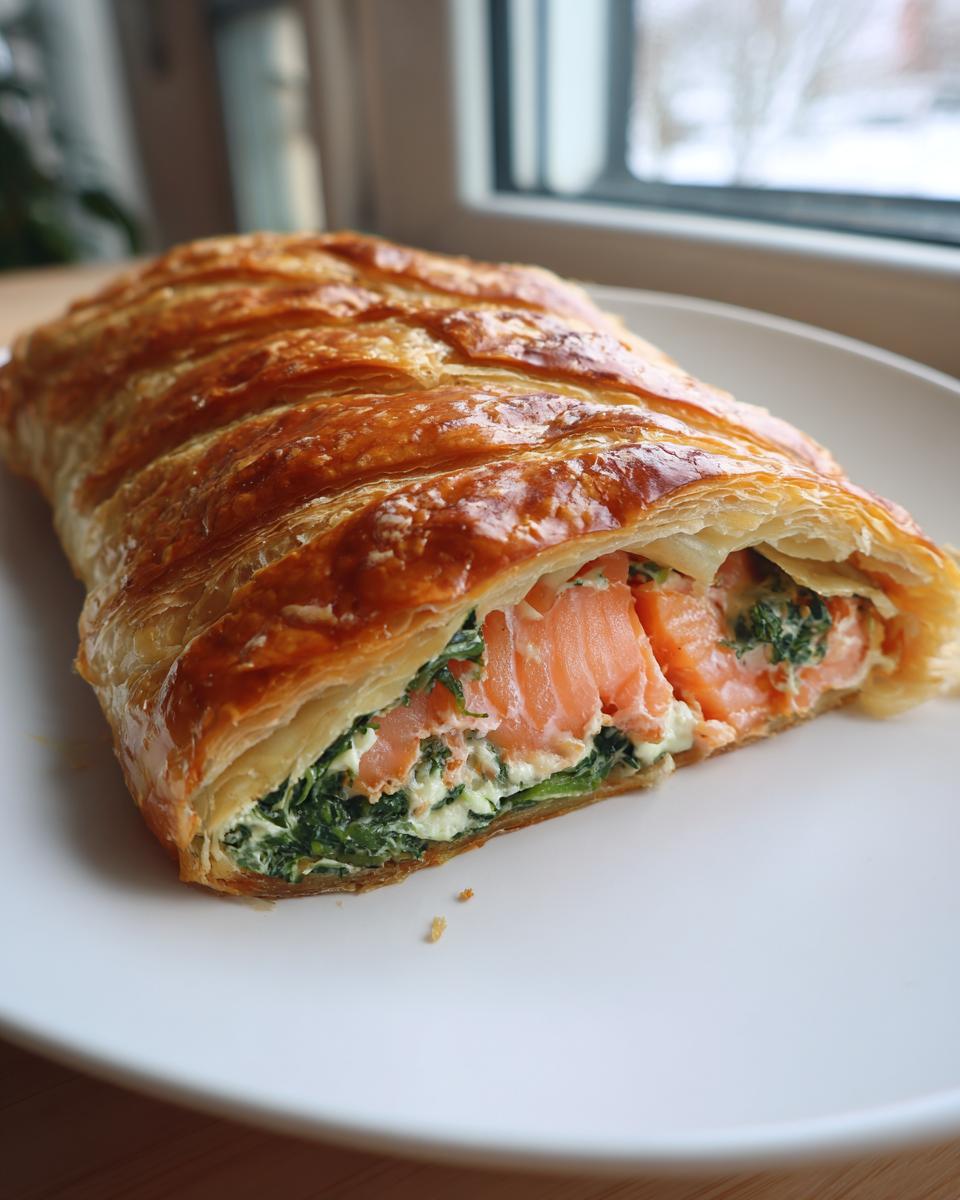
One of the best parts about this salmon wellington is that it’s fantastic for planning ahead! If you’re hosting a big meal, you can assemble the whole thing—salmon, filling, everything—right up until the egg wash step. Seal it perfectly, seam-side down, onto your parchment-lined sheet.
Here’s the trick: wrap the whole assembly tightly in plastic wrap and pop it into the fridge for up to 24 hours. That’s right, you can do your heavy lifting the day before! You’ll want to let it sit on the counter for about 20 minutes out of the fridge before you apply the egg wash and bake it, just to take the chill off the pastry slightly. If you need to keep it longer, you can freeze it unbaked! Just brush with egg wash right before putting it into a preheated 400°F oven, adding about 10 minutes to the baking time. For more on prepping ahead, check out my dedicated post on make ahead salmon wellington!
Serving Suggestions for Your Elegant Seafood Centerpiece
When you serve this stunning centerpiece, you want sides that complement the rich pastry and fish without stealing the show, right? This is an elegant seafood centerpiece, so keep things bright! I always lean toward crisp, fresh vegetables. Roasted asparagus is a classic for a reason—it adds a lovely snap.
But if you want something a little more satisfying, try a light grain or pasta dish. My creamy lemon parmesan orzo is fantastic because the acidity cuts through the richness of the cream cheese filling beautifully. If you keep it simple with something like perfect roasted broccoli, you can’t go wrong. It’s all about balance for a luxurious gourmet salmon dinner!
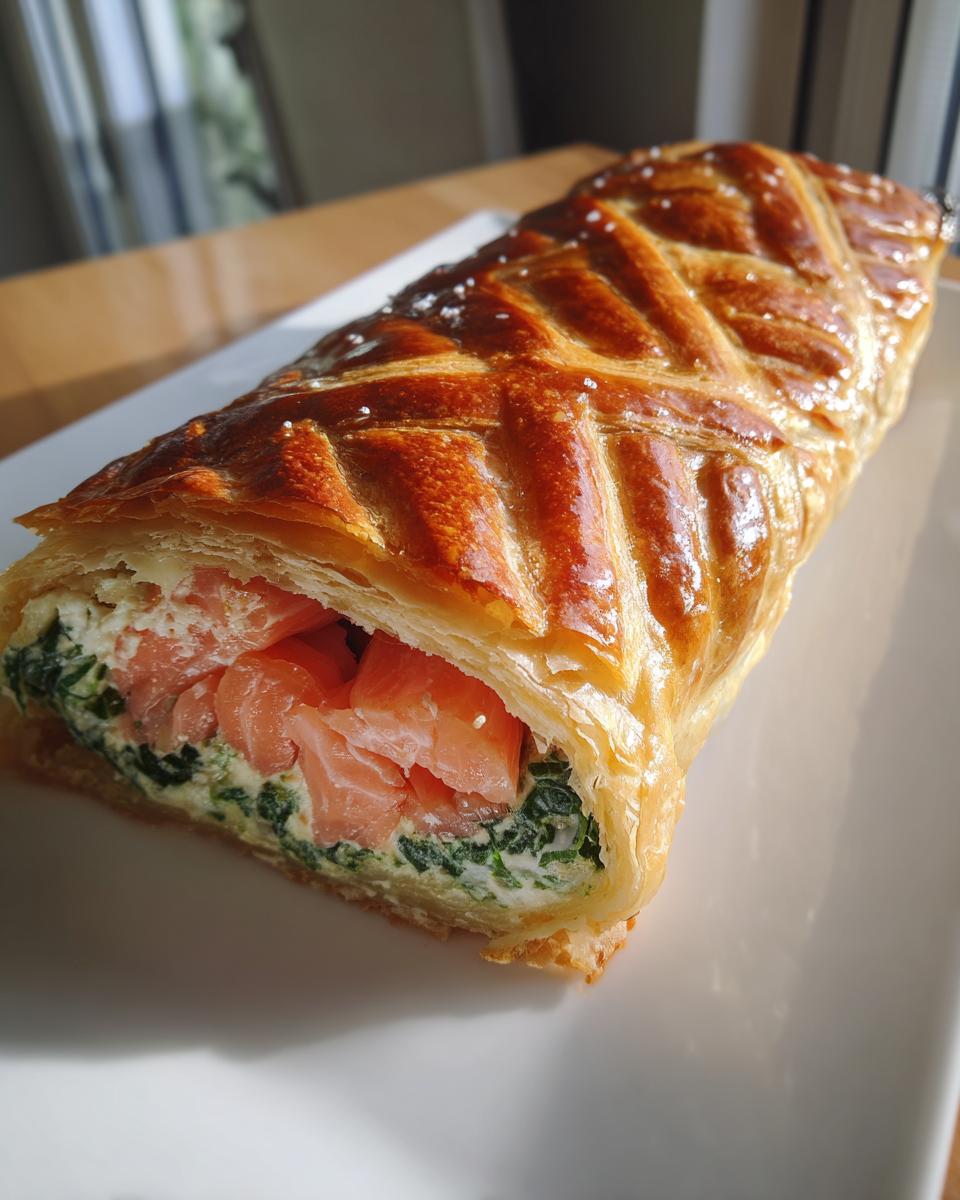
Frequently Asked Questions About Salmon Wellington
I get so many questions about this impressive dish! It seems complicated, but once you know these little secrets, your salmon wellington will come out perfect every time. Let’s tackle some of the most common things folks ask me when they’re planning their seafood puff pastry recipes.
Can I use frozen puff pastry for salmon wellington?
Absolutely, yes! Frozen puff pastry is a total lifesaver. The most important thing, though, is that you must thaw it correctly. You can’t rush puff pastry, or it gets tough. I usually take the sheet out of the freezer the night before and let it thaw slowly in the refrigerator. When you’re ready to assemble, just let it sit on the counter for about 10 minutes to soften up enough to unroll without cracking. It’s essential for that flaky pastry salmon recipe result!
What is the difference between salmon wellington and salmon en croute?
This is a fun one! Honestly, for most people making dinner at home, they are the exact same thing. Salmon en croute is just the more traditional French term, which basically means ‘salmon in a crust.’ Our recipe fits that perfectly. “Wellington” just carries that heavier, recognizable name associated with beef Wellington. So, if you see a recipe for either one, you know you’re making something special for your elegant seafood centerpiece.
How do I prevent the salmon from overcooking inside the pastry?
This is all down to two things: preparation and monitoring. First, make sure you’re using a center-cut fillet if you can find one; the thickness is more even than the tail end. Second, don’t skip the resting time for the assembled pastry, and always, always use a meat thermometer! We’re aiming for an internal temperature of exactly 145°F (63°C) when you pull it out. It will continue cooking slightly while it rests, ensuring it’s perfectly tender inside. For more great recipe insights, don’t forget to check out my thoughts on easy rice casserole recipes!
Storing Leftover Salmon Wrapped in Pastry
Oh, leftovers! Sometimes eating the salmon wellington the next day is even better, right? Store any remaining salmon wrapped in pastry right in the fridge; keep it airtight for up to two days. Now, here is my big warning: skip the microwave! It’ll turn that flaky pastry into sadness.
To reheat, I actually prefer the oven or even an air fryer. Just cut the piece you want, place it on a small baking sheet, and heat it at 350°F (175°C) for about 10 to 15 minutes until warmed through. This gives the pastry a chance to crisp back up a bit. Trust me, you want that texture back! If you want another amazing make-ahead option, you absolutely have to try my chicken fettuccine alfredo recipe.
Your Next Gourmet Salmon Dinner Awaits
Well, now that you know all the secrets to this amazing and truly easy salmon wellington, I want you to get baking! Don’t let this recipe live only in your bookmarks. Give it a try this week, and please, come back and tell me how it went! Rate this recipe below and share your golden-crusted triumphs. To make sure you never miss out on another accessible gourmet creation, hit that subscribe button for more kitchen honesty, just like this!
If you want to know the story behind Julia Meal and why I cook the way I do, you can always read more on my About Page!
PrintEasy & Impressive Salmon Wellington with Creamy Spinach Filling

Create a show-stopping centerpiece with this easy Salmon Wellington recipe. Tender salmon is wrapped in flaky puff pastry with a rich spinach and cream cheese filling. This elegant seafood main course is perfect for special dinners or holiday gatherings.
- Prep Time: 20 min
- Cook Time: 30 min
- Total Time: 65 min
- Yield: 4 servings 1x
- Category: Dinner
- Method: Baking
- Cuisine: American
- Diet: Vegetarian
Ingredients
- 1 (1.5 lb) center-cut salmon fillet, skin removed
- 1 sheet (about 14 oz) all-butter puff pastry, thawed
- 1 tablespoon olive oil
- 1 shallot, finely minced
- 5 ounces fresh spinach, chopped
- 4 ounces cream cheese, softened
- 1 tablespoon fresh dill, chopped
- 1 teaspoon lemon zest
- 1/2 teaspoon salt
- 1/4 teaspoon black pepper
- 1 large egg, beaten (for egg wash)
Instructions
- Preheat your oven to 400°F (200°C). Line a baking sheet with parchment paper.
- Pat the salmon fillet completely dry with paper towels. Season the salmon evenly with salt and pepper. Set aside.
- Prepare the filling: Heat olive oil in a skillet over medium heat. Sauté the minced shallot until soft, about 2 minutes.
- Add the chopped spinach to the skillet. Cook until the spinach wilts completely. Remove from heat and squeeze out as much excess moisture as possible using a clean kitchen towel or paper towels. This step prevents a soggy bottom.
- In a bowl, combine the wilted spinach mixture, softened cream cheese, chopped dill, and lemon zest. Mix until well combined.
- Lay the thawed puff pastry sheet on a lightly floured surface. If using a rectangular sheet, trim it slightly so it is large enough to fully enclose the salmon fillet.
- Spread the creamy spinach filling evenly over the center of the puff pastry, leaving a 2-inch border on all sides.
- Place the seasoned salmon fillet directly on top of the spinach filling.
- Fold the longer sides of the pastry up and over the salmon, overlapping them slightly in the center. Trim any excess pastry.
- Fold the ends up tightly over the salmon, pressing firmly to seal the seams completely. You want a tight seal to keep the moisture in and the pastry crisp.
- Place the sealed Salmon Wellington seam-side down onto the prepared baking sheet.
- Brush the entire surface of the pastry generously with the beaten egg wash. If desired, lightly score the top of the pastry with a knife for decoration, being careful not to cut all the way through.
- Bake for 25 to 30 minutes, or until the pastry is deep golden brown and puffed, and the internal temperature of the salmon reaches 145°F (63°C).
- Let the Salmon Wellington rest for 10 minutes before slicing into thick portions. Serve immediately.
Notes
- For the flakiest crust, chill the assembled Wellington for 15 minutes before applying the egg wash and baking.
- If you want an extra golden crust, brush the pastry with egg wash twice, waiting 5 minutes between applications.
- Serve this elegant seafood centerpiece with roasted asparagus or a simple lemon butter sauce.
Nutrition
- Serving Size: 1 slice
- Calories: 450
- Sugar: 2
- Sodium: 450
- Fat: 28
- Saturated Fat: 14
- Unsaturated Fat: 14
- Trans Fat: 0
- Carbohydrates: 18
- Fiber: 2
- Protein: 30
- Cholesterol: 90