

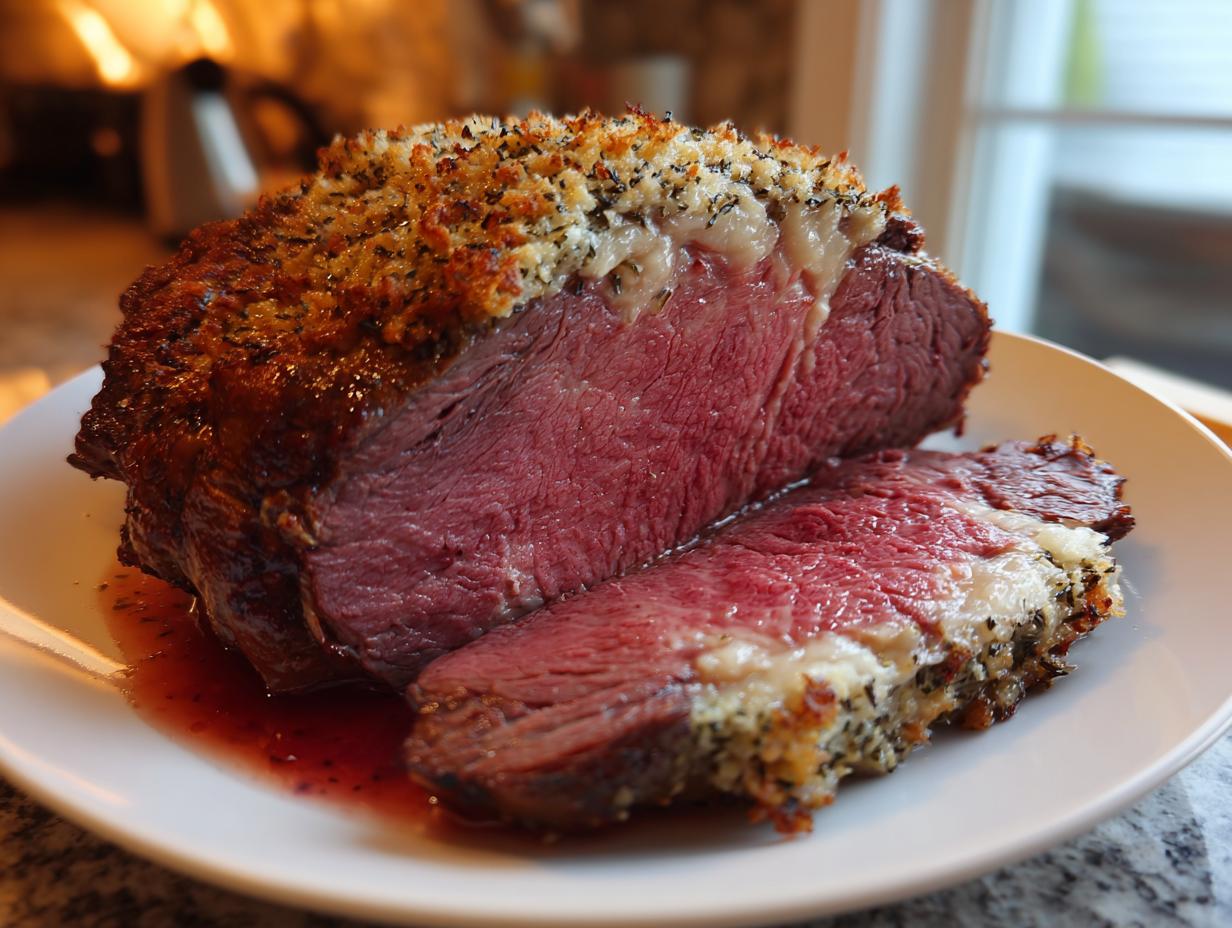
The holiday table—it’s where we gather, where the conversation flows best, and where the centerpiece needs to be absolutely unforgettable. For me, that centerpiece has always been a standing rib roast, the king of beef. I remember helping my grandfather carve a massive, glistening roast after church every Christmas, and that tradition is why I worked so hard to perfect the prime rib roast oven method. Forget the stress! This Foolproof Oven-Roasted Prime Rib with Garlic Herb Crust isn’t just a recipe; it’s my promise to you that you’ll achieve that stunning, juicy interior and deeply flavored crust every single time, even if you’re intimidated by cooking beef this large.
- Why This prime rib roast oven Recipe Guarantees Success (E-E-A-T)
- Ingredients for the Best prime rib roast oven
- How to Prepare the prime rib roast oven: Step-by-Step Instructions
- Tips for Perfect Medium Rare Prime Rib Oven Cooking
- Storage & Reheating Instructions for Leftover prime rib roast oven
- Frequently Asked Questions About Your prime rib roast oven
- Serving Suggestions for Your Holiday Beef Roast Oven Centerpiece
- Estimated Nutritional Data for prime rib roast oven
- Share Your Holiday prime rib roast oven Experience
Why This prime rib roast oven Recipe Guarantees Success (E-E-A-T)
People get nervous cooking a roast this expensive, but that’s why I developed this specific system. The real secret to achieving that **Perfect Medium Rare Prime Rib** and ensuring a **Juicy Prime Rib Roast** every time is leveraging temperature staging. We start hot and fast—a quick 15-minute blast at 500 degrees F to build a gorgeous, savory crust you just can’t get otherwise. Then, we drop the heat way down to 325 degrees F for the long, gentle cook. For deeper dives into handling your roast, I always recommend looking at tried-and-true methods, like those found on sites focusing on bone-in perfection.
When you’re aiming for perfection, you need to trust your tools over the clock. My biggest piece of advice? Get yourself a reliable probe thermometer. Don’t guess! I learned the hard way years ago, trying to use my grandmother’s old estimate timing for a big holiday roast, and I ended up with a gray band of overcooked meat. Never again! The thermometer is your guide to success, especially when you check out reliable sources like this great guide on oven method timing.
The Importance of Bringing the prime rib roast oven to Room Temperature
If you put a cold roast straight from the fridge into the oven, the outside has to cook for ages just trying to warm up the center. This guarantees an uneven cook. You’ll get a thin gray layer on the outside and a cold spot in the middle. Letting that **prime rib roast oven** sit out lets the meat fibers relax slightly, promoting even heat penetration right from the start. It’s a small step, but trust me, it makes a huge difference in the final texture you get on your festive plate.
Ingredients for the Best prime rib roast oven
Since this is such a special occasion roast, you have to start with the best beef possible. I always look for a large, beautiful **bone-in prime rib roast (standing rib roast)**, maybe 5 to 7 pounds so we have leftovers for incredible sandwiches the next day! We pair that marvelous beef with a simple but powerful rub starting with olive oil and plenty of texture from **coarse kosher salt** and fresh black pepper. You don’t want to skimp on the beef quality here; it’s the star of the show, and you can find some absolutely amazing roasting guides online if you need extra reading, like this one focusing on melt-in-your-mouth flavor.
Herb Crust Components: Best Prime Rib Seasoning
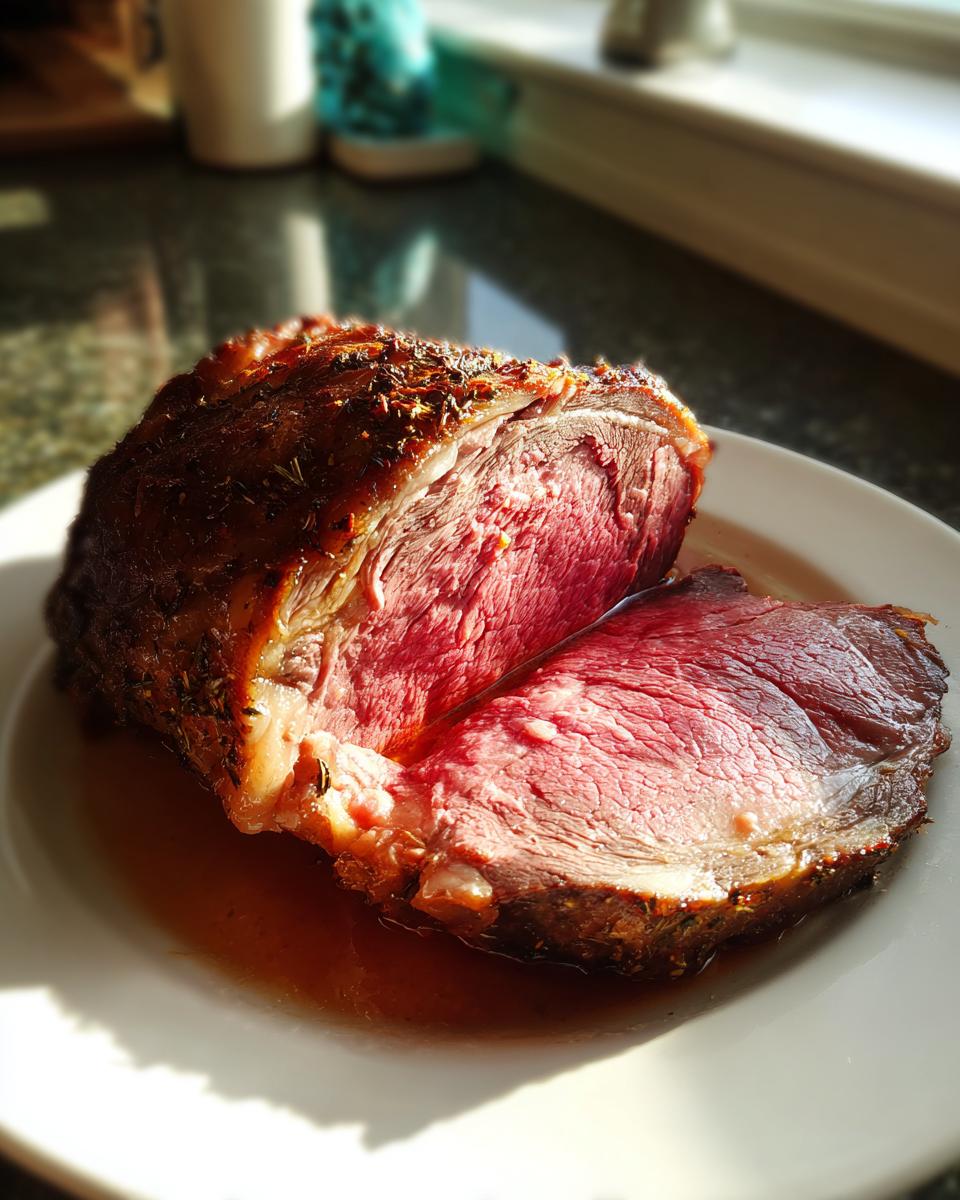
The flavor barrier we build comes from fresh herbs and aromatics. I pound together fresh minced garlic, vibrant chopped rosemary, and thyme leaves right into that paste. This mixture cooks down beautifully against the fat cap, creating that signature **Herb Crusted Prime Rib** exterior that everyone fights over at the table. It smells *amazing* while the roast is in the oven, honestly one of my favorite parts!
How to Prepare the prime rib roast oven: Step-by-Step Instructions
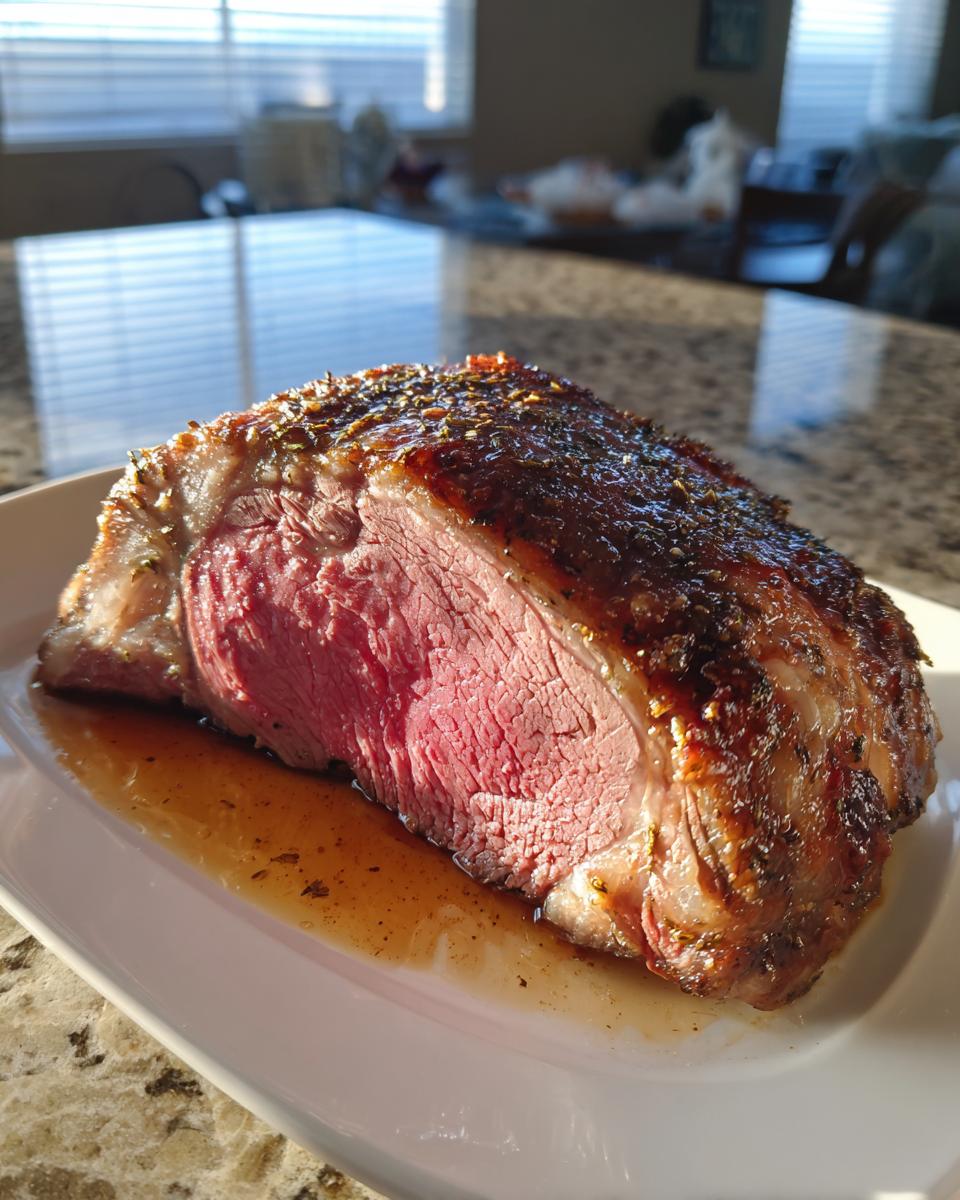
Alright, let’s get this show on the road! This is the part where we turn our beautifully seasoned meat into a glorious centerpiece. First things first—make sure that roast has been sitting out for those crucial few hours we talked about earlier. Once it’s ready, preheat your oven to a screaming hot 500 degrees F. This is the beginning of what some folks lovingly call the ‘Prime Rib 500 Rule’ technique—we want a serious crust development!
You’ll place your roast fat-side up on a rack inside a roasting pan. Resist the urge to add liquid underneath it right now; we need that dry heat to work its magic. For about 15 minutes, let it blast at 500 degrees. This initial sear sets the stage for that beautiful, deep mahogany color. Be careful opening the oven door just yet!
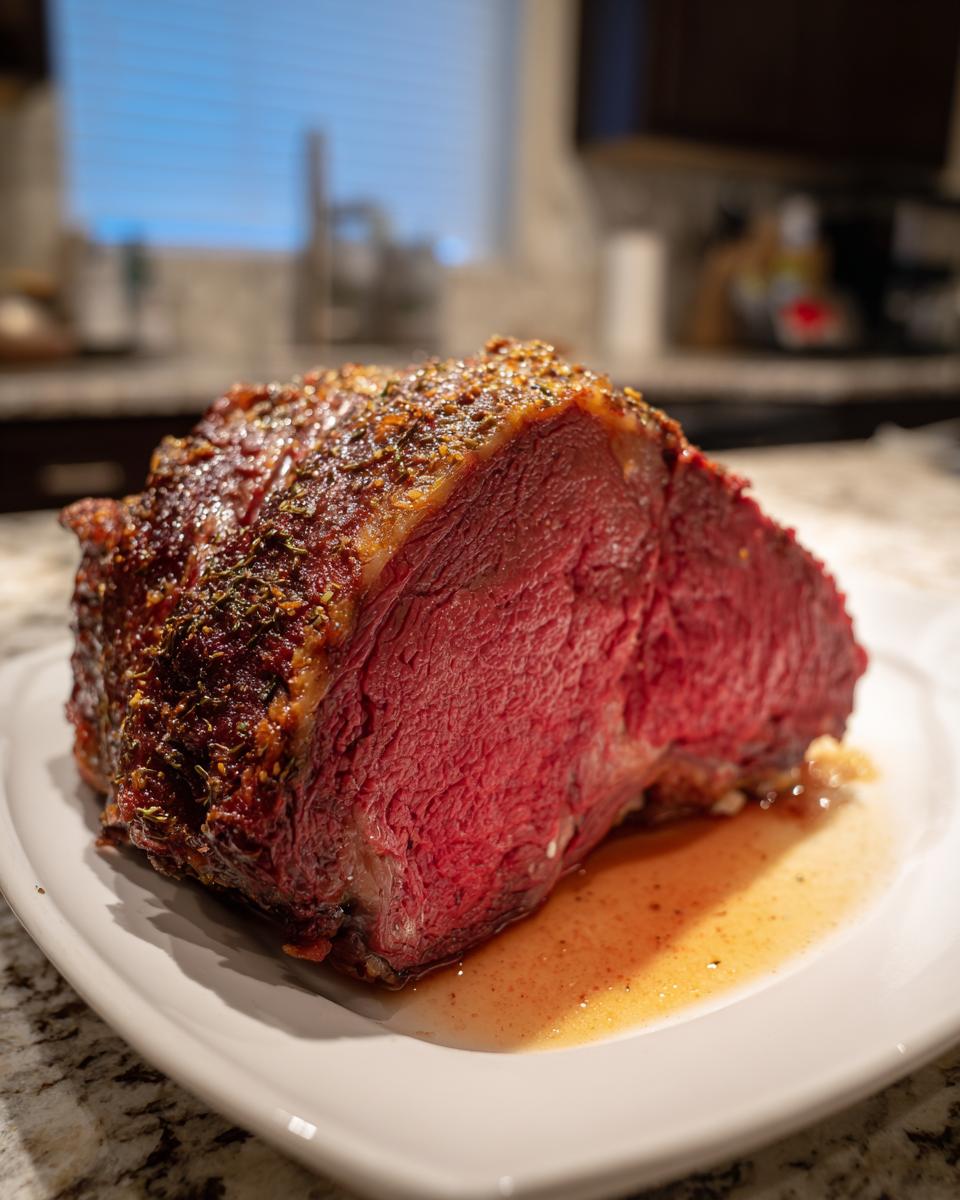
After those initial 15 minutes, it is time to drop the temperature—don’t even open the door to panic! Just change the setting right away to 325 degrees F. Now, the roasting begins in earnest. This is where we rely on the meat thermometer for guidance on **Prime Rib Roast Temperatures**. You are aiming for that sweet spot for your **Perfect Medium Rare Prime Rib**.
For medium-rare perfection—which is honestly the only way to serve this incredible beef—you need to pull it out when the thermometer reads between 125 and 130 degrees F inserted into the thickest part, way away from any bone. I’ve got a great resource with detailed temperature charts if you want visual confirmation, like what they lay out here. Remember, unlike a chicken, you can’t really overcook this by a few degrees without losing tenderness, so precision is everything here.
Once you hit the target temperature, get that beautiful roast out immediately and onto a clean cutting board! You absolutely must tent it loosely with foil. We aren’t done yet, even though it smells done!
The Crucial Resting Period for a Juicy Prime Rib Roast
This step is not optional; it’s mandatory if you want that famous **Juicy Prime Rib Roast**. You have to let the roast hang out, covered, for a minimum of 20 minutes. Seriously, set a timer! While it rests, the internal temperature keeps rising—we call that carryover cooking, picking up another 5 to 10 degrees. If you cut it immediately, all those wonderful juices you worked so hard to keep inside will run right out onto your board. Patience yields tenderness; skipping this ruins all your work on the initial sear or the low roast technique.
Simple Prime Rib Au Jus Recipe from Pan Drippings
While the meat is resting, we make the best gravy ever without any extra fuss, utilizing our rich pan drippings. This is my go-to **Prime Rib Au Jus Recipe**. Move your roasting pan onto the stovetop burner set to medium heat. Pour in a cup of good beef broth—don’t let that flavor go to waste! Get a wooden spoon and scrape, scrape, scrape those lovely brown bits stuck to the bottom. That stuff is called fond, and it’s pure gold. Let it simmer for about five minutes to let the flavors meld, then pour it through a fine-mesh sieve. That liquid gold is what you’ll serve alongside every slice.
If you prefer following a recipe that focuses purely on the low-and-slow approach, you can certainly check out this alternative method, but I really stand by this two-temperature approach for the best crust!
Tips for Perfect Medium Rare Prime Rib Oven Cooking
Getting that stunning, edge-to-edge **Perfect Medium Rare Prime Rib** means obsessing over two things: the thermometer and the cut of meat itself. When it comes to buying, a **Bone In Prime Rib Roast** tends to cook a bit more evenly because those bones act like a natural insulator, protecting the meat closest to them from drying out. A **Boneless Prime Rib Oven Cooked** is easier to carve, sure, but you have to watch the exterior edges like a hawk because they cook faster than the center.
My moment of learning came when I cooked for my wife’s family for the first time. I thought I knew the exact time based on weight, but I ended up stressing the whole afternoon. Now? I only focus on the temperature. If the center says 128 degrees F, I pull it, no matter what the clock says! That experience taught me that reliability comes from the internal reading, not generic timing charts. You won’t regret following that temperature advice, especially when preparing a show-stopper like this for your own big holiday roast.
Storage & Reheating Instructions for Leftover prime rib roast oven
Listen, if you’ve got leftovers of this amazing roast—which is rare in my house, trust me!—you want to treat them right. Store the slices airtight in your refrigerator; they’ll keep well for about three to four days. The day you reheat them, don’t just throw them in the microwave like sad, dry scraps. That’s a cardinal sin!
Instead, take a small amount of that beautiful **Prime Rib Au Jus Recipe** liquid we saved, put it in a small saucepan, and barely warm it. Dip your slices gently into that warm broth or just let them sit in the pan for a minute covered over very low heat. This keeps the **Juicy Prime Rib Roast** texture intact, making Friday’s dinner almost as good as the main event!
Frequently Asked Questions About Your prime rib roast oven
What is the best internal temperature for prime rib?
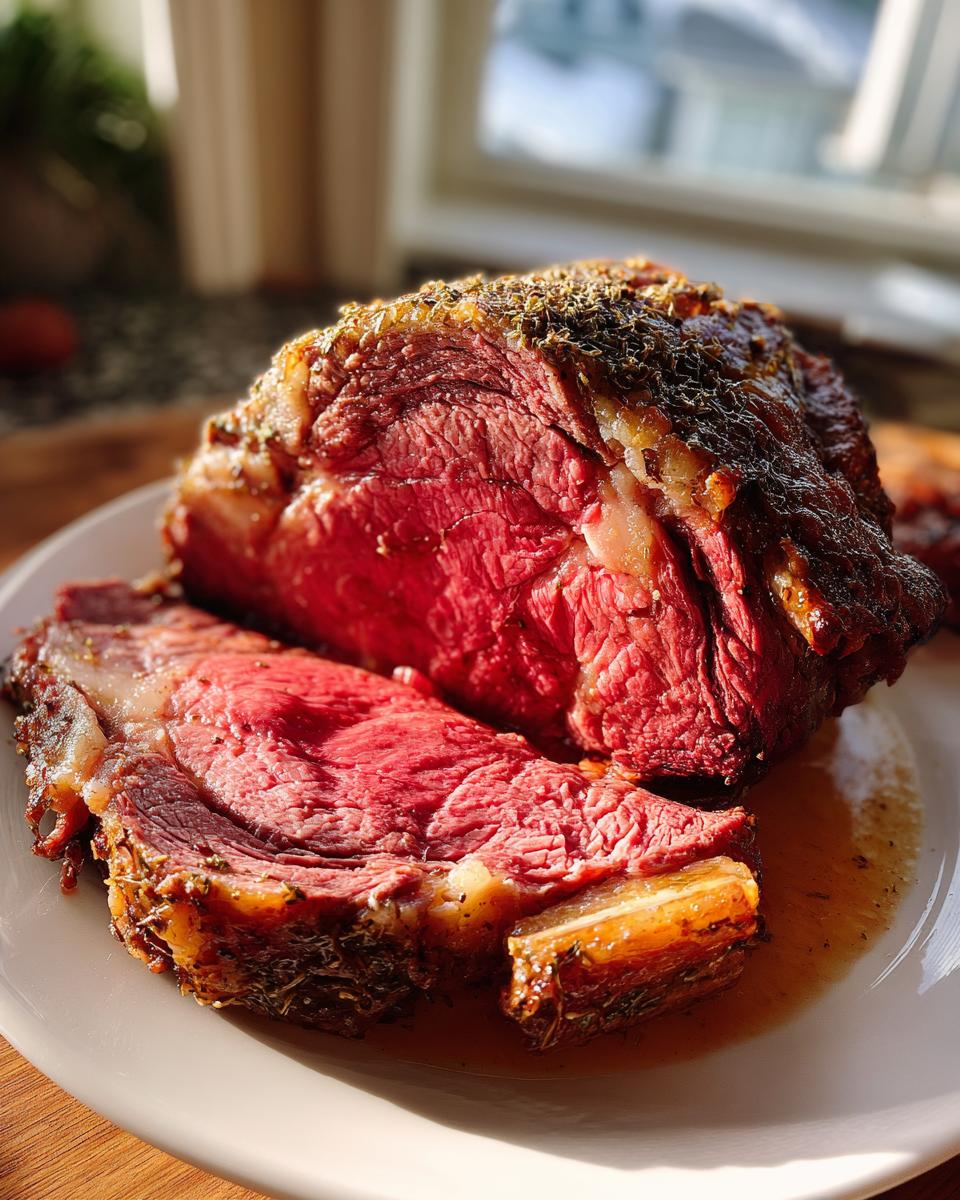
If you’re asking me, the absolute best temperature for a **Perfect Medium Rare Prime Rib** is pulling it out of the oven when the meat thermometer reads 125 degrees F to 130 degrees F. Don’t forget that resting period we talked about! During that 20 minutes, the temperature will climb another 5 to 10 degrees, bringing you right into that perfect medium-rare zone without ever overcooking the outer edges. If you are aiming for medium, pull it a little higher, closer to 135 degrees F before resting.
How long do I cook a 6lb prime rib roast oven?
Timing is tricky because every **prime rib roast oven** is different—weight, bone-in vs. boneless, even the starting temperature matters! For a 6-pound bone-in roast using this sear-then-roast method, you’re probably looking at about 1 hour and 45 minutes total cook time at 325 degrees F *after* the initial 15-minute blast at 500 degrees F. However, I strongly urge you to ditch the timer and trust the thermometer, just like they emphasize on these juicy roast guides. That’s the only way to guarantee the juiciness!
Can this be used as an Easy prime rib oven method for a boneless roast?
Absolutely, yes, though you need to make a small adjustment. A **Boneless Prime Rib Oven Cooked** doesn’t have those insulating bones, so it cooks faster. If you are using a similar weight roast, you’ll likely cut about 10 to 15 minutes off the total slow-roasting time. Keep that thermometer handy and check it sooner than you think you should. And if you’re looking for general tips on hosting a spectacular holiday meal, this site has great advice for making the whole event special.
What if I prefer the low-and-slow approach instead of the 500-degree sear?
You certainly can! That initial high sear is my preferred way to ensure the surface flavor is locked in, but it’s not the only way to get a great result. If you skip the initial high heat entirely, you can simply place your seasoned roast in the oven at a steady 325 degrees F from the very beginning. You’ll just need to roast it longer overall until the internal temperature lines up with what we discussed for that **Perfect Medium Rare Prime Rib**.
Serving Suggestions for Your Holiday Beef Roast Oven Centerpiece
Now that you have somehow managed to pull off the absolute best **Holiday Beef Roast Oven** centerpiece anyone has ever seen, you need the supporting players to shine, too! You can’t serve this prime rib with just refrigerator leftovers, right? The meat is so rich and savory that you need sides that complement it without fighting it.
My number one go-to pairing, hands down, is creamy mashed potatoes. But don’t just make them plain! Whip those potatoes with tons of butter and a little heavy cream, maybe even a touch of horseradish mixed in for a nice little kick that plays off the beef beautifully. We want richness, but we also need balance.
For greens, you can’t beat roasted asparagus. A little olive oil, salt, pepper, and maybe a squeeze of lemon right after they come out of the oven. They get that nice char and still offer a bit of freshness against the heft of the roast. If I’m feeling really traditional—thinking back to my grandmother’s big feasts—we always have homemade Yorkshire puddings. They are sponges for the warm **Prime Rib Au Jus Recipe** we made earlier, soaking up all that flavor. Find my favorite simple Yorkshire recipe, which is almost as easy as making the gravy, over here: it’s a classic!
Estimated Nutritional Data for prime rib roast oven
When we talk about making something this decadent for a special **prime rib roast oven** celebration, we know we aren’t exactly shooting for low-calorie food, right? This is the occasional masterpiece! Keep in mind that the figures below are broad estimates based on a typical 6-ounce serving after cooking, factored against the ingredients we used in this recipe, like the herbs and seasoning. Actual counts will vary wildly depending on how much of the fat cap you trim, which is totally understandable!
- Serving Size: 6 oz cooked
- Calories: 450
- Fat: 30g
- Saturated Fat: 12g
- Carbohydrates: 1g
- Protein: 40g
- Sodium: 450mg
Please take these numbers with a grain of salt—or maybe a bit of coarse kosher salt, as the recipe calls for! Because we are dealing with a large, heavily marbled cut of beef, the exact fat and calorie count is going to change based on the specific roast you buy and how much of that amazing, savory fat renders off during the cooking process for your **Foolproof Prime Rib Recipe**. This is just a helpful guide, not a strict diet plan!
Share Your Holiday prime rib roast oven Experience
I poured my heart into this **prime rib roast oven** method so you could have a spectacular, stress-free feast, and now I truly want to hear all about it!
Did you master that medium-rare center? Did the garlic herb crust turn out perfectly browned? Hearing about your successes—or even the tough questions you ran into—is what makes this whole process worthwhile for me. When you try this **Foolproof Prime Rib Recipe**, please take a second to leave a rating below. Five stars if it blew your holiday crowd away, obviously!
Don’t be shy about dropping a comment if you tried a different technique or if you have a burning question about **Prime Rib Roast Temperatures** when working with a bone-in cut. Maybe you used a specific mustard on your rub? Share your tweaks! I’m always learning from this community, too. Remember to check out some other great holiday inspiration, too, like the wonderful approach shared by these folks when planning your menu.
If you want to share photos of your stunning centerpiece on social media, tag me! I love scrolling through and seeing all these amazing **Holiday Beef Roast Oven** creations out in the world. I’m always happy to jump into the comments section to offer advice for your next big roast, especially if you’re planning on repeating this showstopper later. You can find even more simple cooking ideas right over here: for more easy tips.
PrintFoolproof Oven-Roasted Prime Rib with Garlic Herb Crust
Cook a perfectly juicy, medium-rare prime rib roast in the oven every time using this simple, high-heat sear and low-roast method. This recipe features a flavorful garlic and herb crust, making it the ideal centerpiece for your holiday feast.
- Prep Time: 20 min
- Cook Time: 2 hr 30 min
- Total Time: 3 hr 00 min
- Yield: 6-8 servings 1x
- Category: Dinner
- Method: Oven Roasting
- Cuisine: American
- Diet: Low Fat
Ingredients
- 1 (5-7 pound) bone-in prime rib roast (standing rib roast)
- 3 tablespoons olive oil
- 6 cloves garlic, minced
- 2 tablespoons fresh rosemary, chopped
- 1 tablespoon fresh thyme leaves
- 2 tablespoons coarse kosher salt
- 1 tablespoon freshly ground black pepper
- 1 teaspoon onion powder
- 1 teaspoon paprika
- 1 cup beef broth (for au jus)
Instructions
- Remove the prime rib roast from the refrigerator 2 to 3 hours before cooking to allow it to come closer to room temperature. Pat the entire roast dry with paper towels.
- Preheat your oven to 500 degrees Fahrenheit.
- Prepare the herb crust: In a small bowl, mix the minced garlic, rosemary, thyme, kosher salt, black pepper, onion powder, and paprika with the olive oil until a thick paste forms.
- Rub the herb paste evenly over the entire surface of the prime rib roast. If using a bone-in roast, try to work some of the rub between the meat and the bones.
- Place the roast, fat side up, in a roasting pan fitted with a rack. Do not add any liquid to the pan yet.
- Sear the roast: Place the pan in the preheated 500 degree oven and roast for 15 minutes. This high heat creates the crust.
- Reduce the oven temperature to 325 degrees Fahrenheit without opening the oven door. Continue roasting until the internal temperature reaches your desired doneness. Use a meat thermometer inserted into the thickest part of the roast, avoiding bone contact.
- For medium-rare (recommended), remove the roast when the internal temperature reads 125 to 130 degrees Fahrenheit.
- Rest the roast: Carefully remove the roast from the oven and transfer it to a cutting board. Tent it loosely with aluminum foil. Let the roast rest for at least 20 minutes before carving. The internal temperature will rise about 5 to 10 degrees during resting.
- Make the au jus: Place the roasting pan (with drippings) over medium heat on the stovetop. Pour in the beef broth and scrape up any browned bits from the bottom of the pan. Simmer for 5 minutes, then strain the liquid to serve as au jus.
- Carve the roast and serve immediately with the warm au jus.
Notes
- Use a reliable meat thermometer; this is the key to achieving perfect medium rare prime rib.
- For a bone-in roast, the bones act as insulation, meaning you may need to add 10 to 15 minutes to the total cook time compared to a boneless roast of the same weight.
- If you prefer a more traditional low-and-slow method without the initial high sear, simply roast the entire time at 325 degrees Fahrenheit, checking the temperature frequently.
Nutrition
- Serving Size: 6 oz cooked
- Calories: 450
- Sugar: 0
- Sodium: 450
- Fat: 30
- Saturated Fat: 12
- Unsaturated Fat: 18
- Trans Fat: 0
- Carbohydrates: 1
- Fiber: 0
- Protein: 40
- Cholesterol: 140