

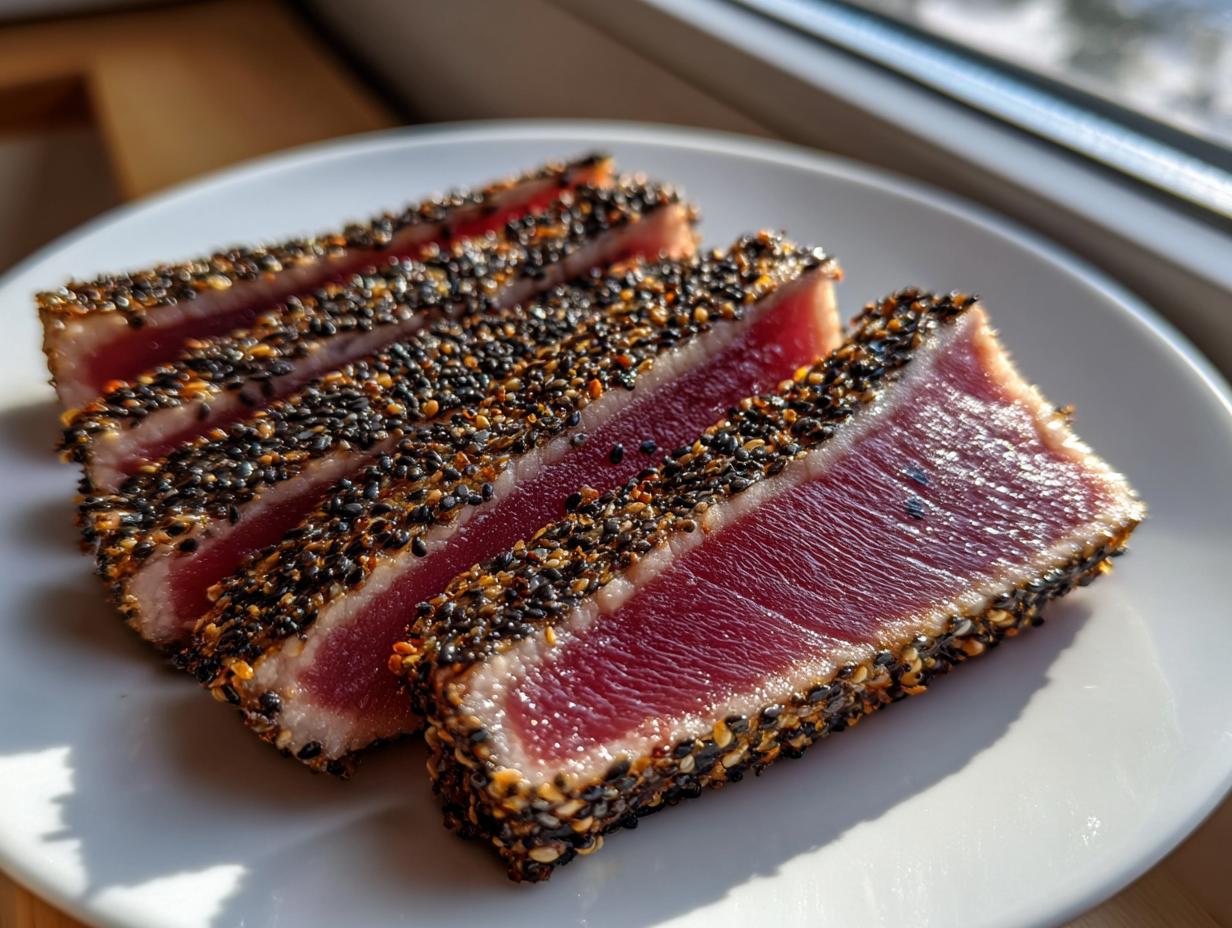
You know that moment at a really nice restaurant when the plate arrives, and the tuna is just stunning? A beautiful dark crust, but the middle is practically ruby red and cool? I used to think that was pure magic only chefs could pull off. Wrong! I spent ages messing up expensive fish, ending up with grey hockey pucks instead of glorious **Seared Ahi Tuna**. But trust me, achieving professional results at home is all about nailing just a few tiny, crucial techniques. This guide cuts right to the chase. We’re going to master that perfect sear—warm, flavorful, and quick—while keeping that amazing, cool, raw center intact. It’s not just a recipe; it’s about learning the feel of that perfect sear. For more on where my cooking philosophy began, you can always check out our story here.
- Why This Seared Ahi Tuna Recipe Delivers Gourmet Tuna Results
- Essential Ingredients for Seared Ahi Tuna Steaks
- Equipment Needed for Perfect Seared Ahi Tuna
- Step-by-Step Instructions for Your Seared Ahi Tuna
- Tips for Success with Your Asian Tuna Recipe
- Serving Suggestions for a Healthy Dinner
- Storage and Reheating Instructions
- Frequently Asked Questions About Seared Ahi Tuna
- Estimated Nutritional Data for Seared Ahi Tuna
- Share Your Experience Making This Recipe
Why This Seared Ahi Tuna Recipe Delivers Gourmet Tuna Results
Honestly, you don’t need tons of time or complicated equipment to make something truly special. This recipe proves that fantastic flavor and restaurant-quality texture are totally achievable on a busy weeknight. We focus only on the essentials needed to elevate that beautiful **sushi grade tuna**.
- It’s incredibly fast! Prep takes minutes, and cook time is under four minutes. Perfect for a **quick seafood recipe** when you’re starving but want something elegant.
- It’s genuinely satisfying and light, making it a fantastic choice for a **healthy dinner option!
- The process respects the fish, ensuring you get the amazing contrast we are aiming for.
Achieving the Perfect Rare Center
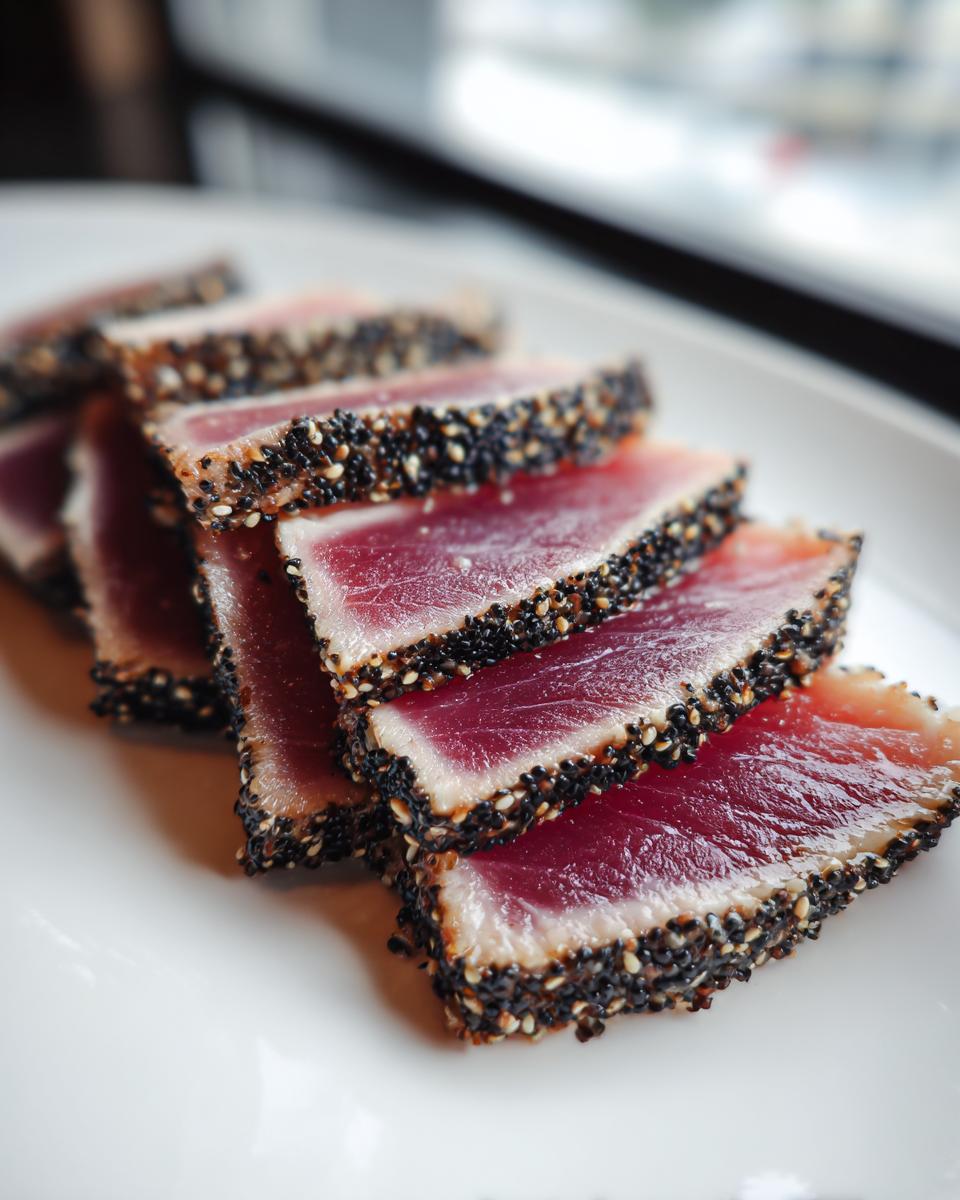
The secret to that gorgeous plate presentation is incredibly strict timing. We’re using super high heat for just a split second on each side. This gives us the warm, savory crust you see on the edge, but the inside stays blissfully cool and raw. If you go even thirty seconds too long, you turn that amazing texture into something boring. That contrast is everything!
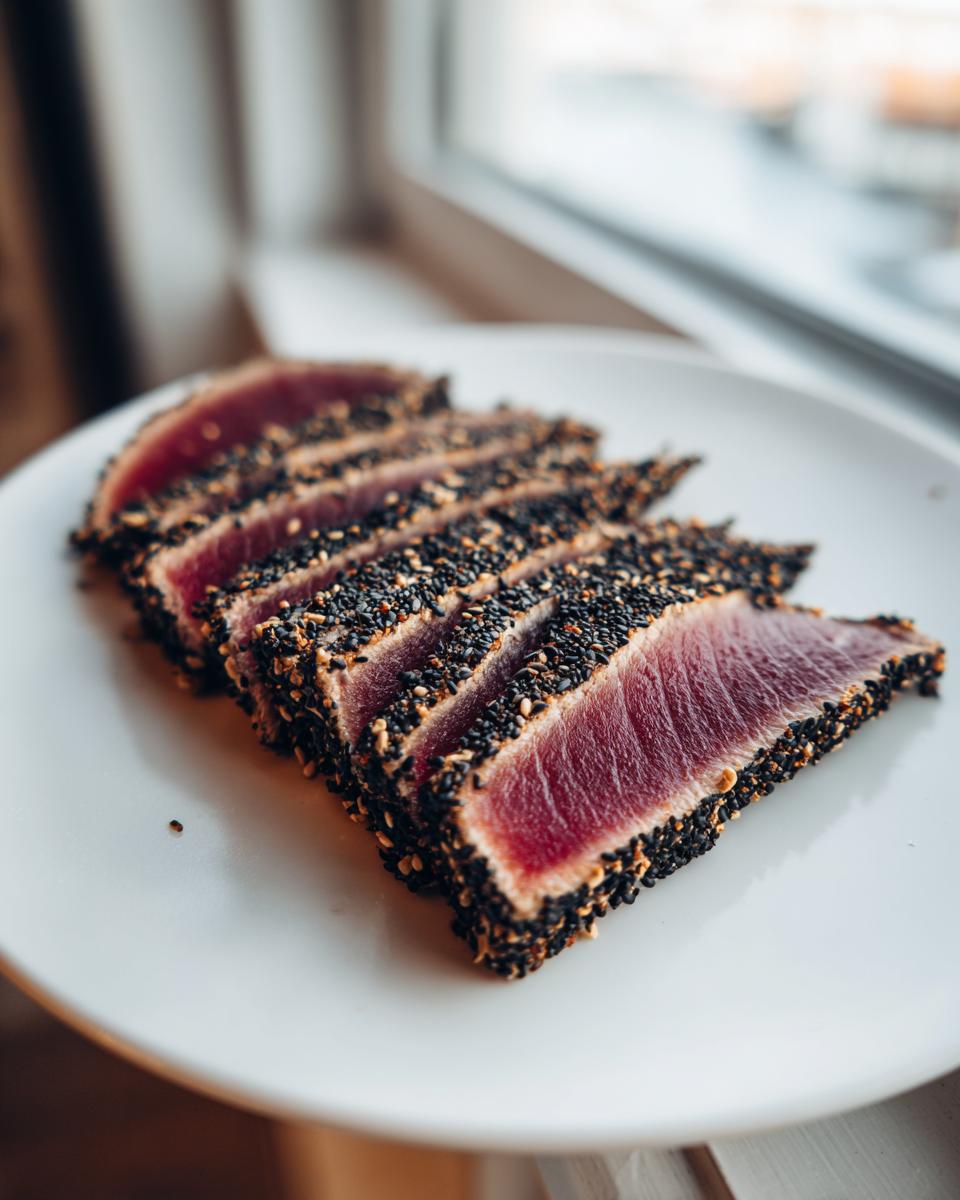
Flavor Profile of This Asian Tuna Recipe
Our marinade is simple but mighty. It leans hard into that savory, salty side of things thanks to the soy sauce we use. But we balance that immediately with a hint of sweetness from the honey and bright sharpness from the vinegar and ginger. It’s a vibrant, savory coating that enhances the rich, meaty flavor of the **yellowfin tuna** wonderfully without overpowering it.
Essential Ingredients for Seared Ahi Tuna Steaks
Look, when you’re cooking something this simple, every ingredient has to pull its weight. I cannot stress this enough: you absolutely must start with the best quality available. Forget the regular tuna swimming in the back of the freezer case! For this recipe to work, we need the very best, highest quality fish. Seriously, seek out the proper stuff—it makes the entire difference between a good meal and one you’ll dream about later.
Here is what you’ll need to grab before you start whipping up that marinade:
- 2 (6-ounce) sushi-grade Ahi tuna steaks
- 2 tablespoons sesame oil
- 1/4 cup soy sauce
- 2 tablespoons rice vinegar
- 1 tablespoon honey
- 1 teaspoon grated fresh ginger
- 1 clove garlic, minced
- 1 tablespoon black and white sesame seeds
- Pinch of red pepper flakes (optional)
Selecting the Best Yellowfin Tuna
When I say “sushi grade,” that’s my shorthand way of saying you need tuna that has been handled with extreme care from the moment it was caught. This usually means it’s been deep-frozen correctly to eliminate any concerns, so you can safely eat the middle nearly raw. Look for steaks that are deep red and firm, almost steak-like in texture. Also, try to get two steaks that are nearly the exact same thickness. If one is an inch thick and the other is half an inch, you know one is going to be perfectly rare and the other will be completely cooked through. Uniformity is key when we’re aiming for that perfect sear!
Equipment Needed for Perfect Seared Ahi Tuna
When it comes to getting that amazing crust on your tuna, the pan is half the battle. Forget your thin, flimsy non-stick pans; they just can’t hold the heat we need for this quick sear. You absolutely have to use something heavy that retains scorching heat like crazy. My go-to, no questions asked, is my big, seasoned cast iron skillet. It gets screaming hot and transfers heat instantly to the sesame seeds, puffing them up and locking in that flavor coating. Don’t fear the high heat—that’s where the magic happens for this **gourmet tuna**!
Step-by-Step Instructions for Your Seared Ahi Tuna
Okay, here’s where we put everything together. This whole process, from marinating to resting, moves super fast, maybe twenty minutes total, but timing is everything. First, make your marinade—that lovely mix of soy, ginger, honey, and vinegar. Whisk it up thoroughly in a dish shallow enough so the marinade just barely covers the fish. Plop your **sushi grade tuna** in there, turn it once, and set a timer for exactly ten minutes. Don’t cheat this! Acid starts cooking the fish, turning it chalky, and we don’t want that!
When the timer sings, pull the steaks out immediately. This is maybe the most overlooked part: you have to pat them ridiculously dry with paper towels. I mean bone dry! If there’s any surface moisture, that pan heat turns into steam, and steam means you steam your beautiful crust right away. You’ll end up with pale, sad tuna, not that gorgeous deep brown sear. Next, spread your black and white sesame seeds out on a plate and gently press the sides of the dry steaks into the seeds until they are fully coated all around.
The Crucial Drying and Coating Steps
Seriously, dry, dry, dry! Patting the tuna until the paper towel is no longer damp is non-negotiable for a proper sear. Moisture actively fights the high heat needed to build that crust. Once they are dry, cover those sides completely with the sesame seeds. I like to use a gentle rolling motion to make sure I get an even distribution of seeds all the way around the perimeter of the steak. This coating not only looks elegant but adds a fantastic nutty crunch to every bite of your **Asian tuna recipe**.
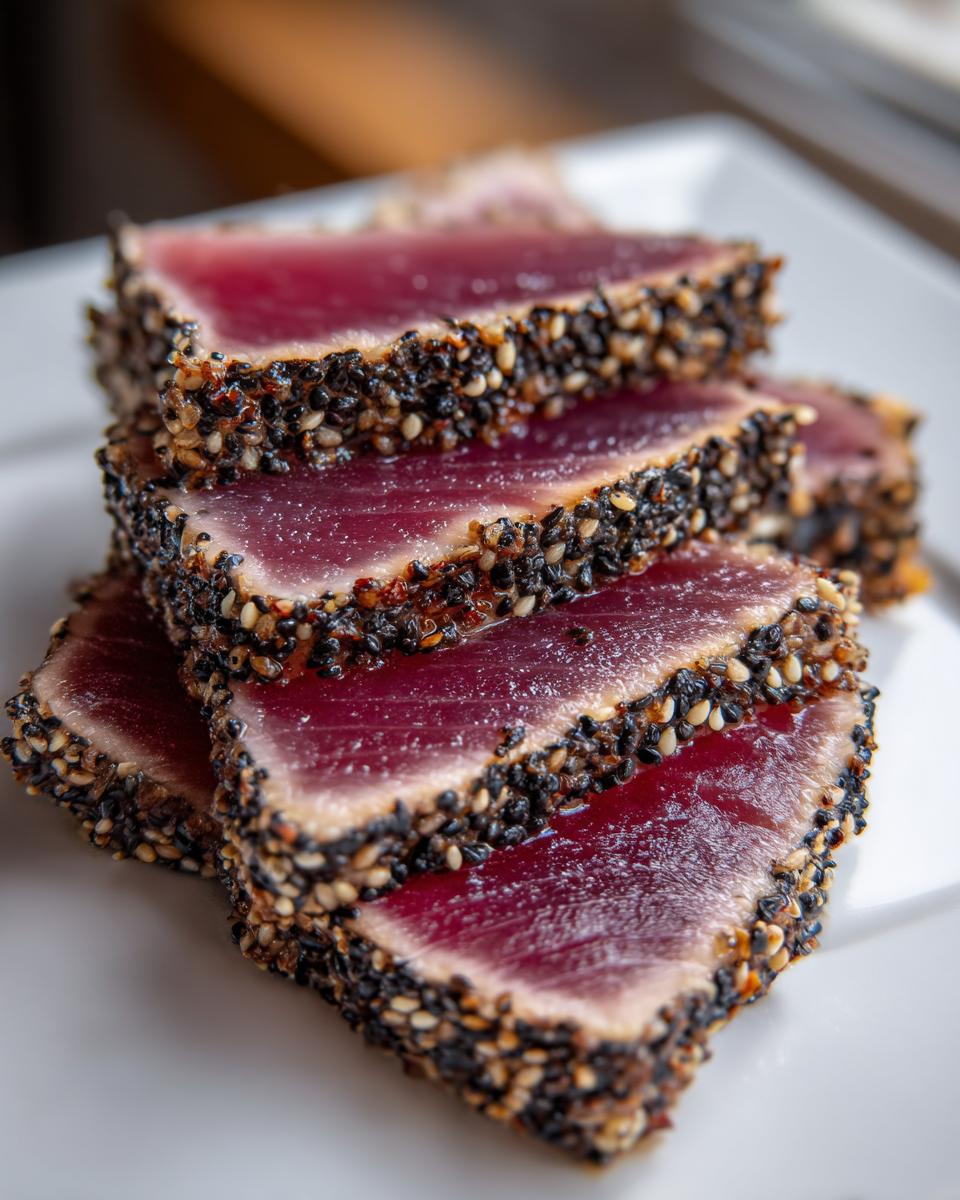
Mastering the High-Heat Sear for Seared Ahi Tuna
Time to turn up the stove! Get that heavy skillet ripping hot—I mean the sesame oil in there should look shimmery and just barely start smoking before the fish ever hits the surface. You want to hear a strong, immediate sizzle when the tuna lands. Drop the seeded sides down and don’t touch them! For that classic rare center, ninety seconds on that first side is usually perfect. Flip, and go another 60 to 90 seconds max. If you’re nervous, pull it off when you think it’s done, let it rest for five minutes, and slice into the center. Do not overcrowd that pan!
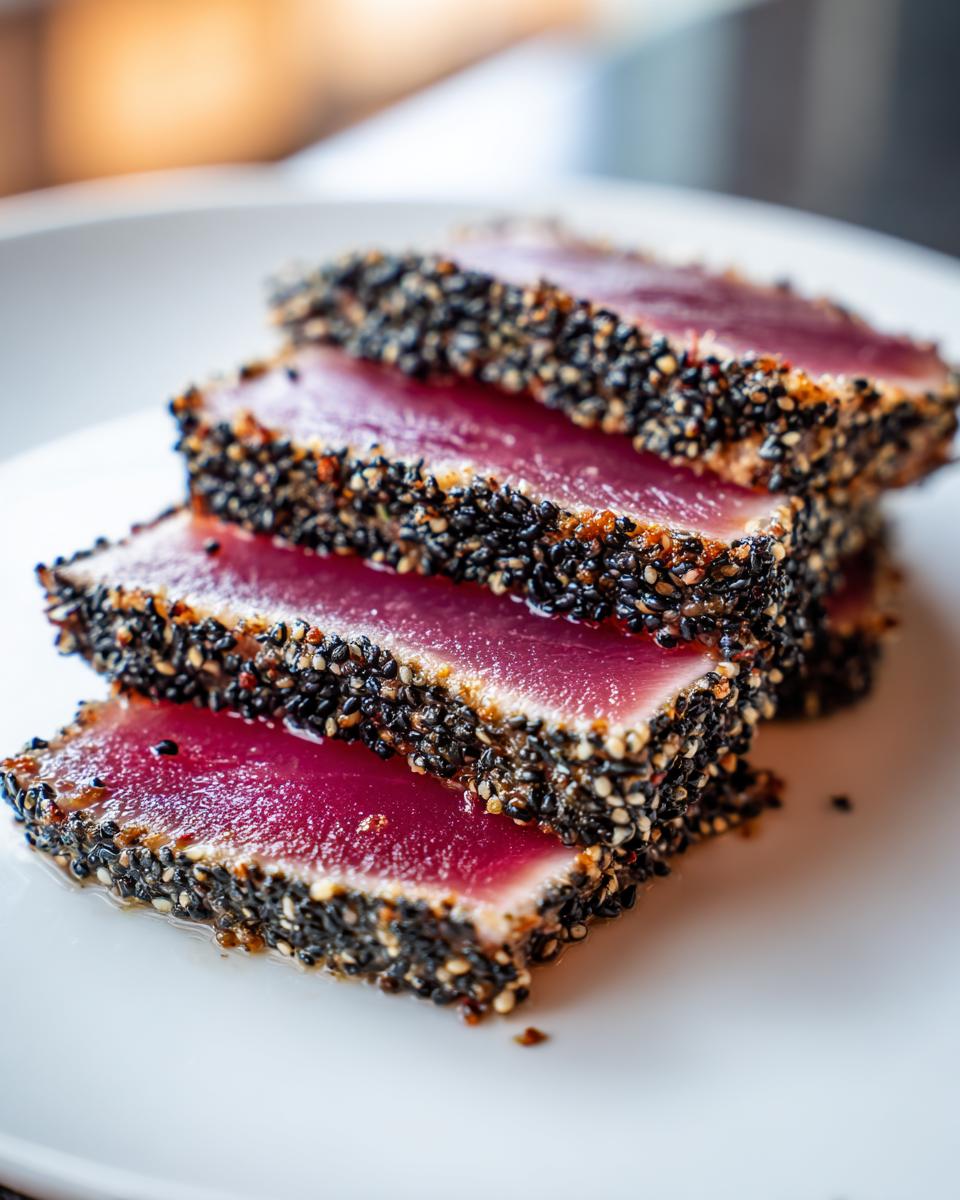
Once they are done searing, get them straight out onto a cutting board. They need to rest for five minutes. I know, it feels counterintuitive when you’re hungry, but letting them rest settles the juices and makes slicing easier. After resting, slice thinly against the grain. That’s how you show off that perfect gradient!
Tips for Success with Your Asian Tuna Recipe
You’ve done the hard part by nailing that sear! Now, let’s make sure the presentation lets that gorgeous color shine. A lot of people rush the last step and destroy the texture they worked so hard to create. Remember what I learned working those killer dinner rushes in the kitchen? Temperature control and slicing accuracy are what take this from beginner to *gourmet*. Don’t let your hard work suffer just because you carved it wrong!
Also, a quick note from my own kitchen: if you’re using ginger, grate it on the finest side of your microplane. I used to just chop it before, but tiny ginger bits disintegrate into the marinade, giving you that clean flavor without chunky surprises. It’s a small thing, but it elevates the whole experience of this **Asian tuna recipe**.
Slicing Technique for Gourmet Tuna Presentation
This is non-negotiable for tenderness! You must slice that tuna steak thinly—think about the thickness of a fancy playing card. More importantly, watch the grain. You’ll see the muscle fibers running in one direction. You have to cut straight across those lines, never parallel to them. Cutting against the grain shortens those tough fibers, making every single slice melt in your mouth. Angle your knife slightly, about 45 degrees, for the prettiest edges!
Serving Suggestions for a Healthy Dinner
We’ve got this beautiful, fast-cooking fish, so sides need to be simple and fresh, right? We don’t want heavy sauces competing with that delicate flavor. I always pair my **Seared Ahi Tuna** with a big bowl of perfectly steamed white rice—it soaks up any little bit of soy glaze left on the plate! Another winner is a quick cucumber slaw dressed with just a splash of rice vinegar and maybe a tiny bit of the marinade you discarded earlier. Keep it bright, keep it clean. Don’t forget the little dollop of wasabi paste on the side if you like that sharp kick!
Storage and Reheating Instructions
I need to be honest with you: this is a dish that sings right when it comes off the hot pan. Once that beautiful sear hits the cold interior, it starts warming up fast. So, the best advice is to eat it all immediately! If you do have leftovers—and I often have a slice or two myself—you must keep them refrigerated straight away in an airtight container. Please, please don’t try to reheat this! That warm crust turns soggy, and it cooks the middle further. It’s much better served cold the next day right out of the fridge, maybe over a little fresh salad!
Frequently Asked Questions About Seared Ahi Tuna
It’s totally normal to have a few questions when you’re working with premium fish like this! I remember being so nervous the first time I tried to make **Seared Ahi Tuna** at home because the fish was so expensive. Don’t worry about it; we’ve solved all the tricky parts of this **Asian tuna recipe** right here. Check below for the answers to the questions I hear most often!
Can I use frozen tuna for this Quick Seafood Recipe?
Yes, you often can, but thawing has to be done perfectly! Never thaw tuna at room temperature; it heats up the outside too fast. The very best way is to seal the tuna tightly in a plastic bag and place it in a bowl of cold, clean water. Change the water every thirty minutes. It thaws gently and safely. That said, fresh fish always has a slight edge in texture, but done right, thawed fish works great for this quick sear.
What is the safest way to handle sushi grade tuna at home?
Safety really boils down to maintaining cold temperatures. Since we are only searing the very outside, the middle stays raw, so we have to trust the quality. Always buy your **sushi grade tuna** from a reputable fishmonger who can tell you exactly how it was handled and flash-frozen. Keep it on ice or in the coldest part of your fridge until the absolute second you start the process. My rule is: if it smells ‘fishy’ instead of clean and ocean-fresh, don’t risk it. A quick rinse under cold water before drying is fine, but keep everything cool!
If you ever want to check our commitment to customer trust and safety standards for all recipes shared on the site, you can look over our policy here.
Estimated Nutritional Data for Seared Ahi Tuna
Now, I know some of you love tracking macros, and since this is such a fantastic, lean protein source, I pulled the estimated numbers for you guys. Remember, because we are keeping the fat to a minimum through that quick high-heat sear, this really shines as a super **healthy dinner** option! These numbers are what you can expect, based on using exactly what’s listed in the marinade minus the sesame seeds, which can vary the fat content slightly.
This estimate is based on one serving—one nice, thick steak. You’re looking at roughly 280 calories per serving, which is amazing for how satisfying this dish is. Look at that protein count—about 30 grams! Fat content is low, largely coming from the sesame oil we use to sear, clocking in around 14 grams total, mostly the healthier unsaturated kind. Carbohydrates are minimal because we kept the honey light in the marinade, keeping the whole thing under 7 net carbs.
Just keep in mind that this is a general guide, since the size of your **yellowfin tuna** steaks can vary a tiny bit, and the exact brand of soy sauce we use might have different sodium levels than yours. If you are concerned about specific dietary requirements, you might want to double-check the labels on your ingredients. For full details on how we manage recipe accuracy and data standards across the site, feel free to check out our terms here.
Share Your Experience Making This Recipe
Now that you’ve mastered the high-heat sear and created a restaurant-quality plate of **Seared Ahi Tuna**, I genuinely want to hear about it! Did you nail that perfect 90-second timing? Did you swap out the honey for maple syrup? Honestly, the best part of sharing these family secrets—or the techniques I’ve picked up along the way—is connecting with you all.
Please, stop by the comments section below right now. Drop a rating for the recipe (five stars if you loved that cool center!) and let me know exactly how it went. Was this the best **quick seafood recipe** you’ve ever tried? If you used a different spice rub or served it with something unexpected, spill the beans! Your feedback helps me keep cooking up the best approaches for you guys.
If you have any specific questions that didn’t get covered above, or maybe you want to chat about sourcing ingredients, you can always reach out directly through our contact page right here. Happy cooking, and thanks for trusting me with your dinner plans!
PrintPerfectly Seared Ahi Tuna Steaks
Learn to quickly sear sushi-grade Ahi tuna to achieve a warm, flavorful crust and a cool, raw center.
- Prep Time: 15 min
- Cook Time: 4 min
- Total Time: 19 min
- Yield: 2 servings 1x
- Category: Dinner
- Method: Pan-Searing
- Cuisine: Asian-Inspired
- Diet: Low Fat
Ingredients
- 2 (6-ounce) sushi-grade Ahi tuna steaks
- 2 tablespoons sesame oil
- 1/4 cup soy sauce
- 2 tablespoons rice vinegar
- 1 tablespoon honey
- 1 teaspoon grated fresh ginger
- 1 clove garlic, minced
- 1 tablespoon black and white sesame seeds
- Pinch of red pepper flakes (optional)
Instructions
- In a shallow dish, whisk together the soy sauce, rice vinegar, honey, ginger, garlic, and red pepper flakes to make the marinade.
- Place the tuna steaks in the marinade. Turn to coat both sides. Marinate for 10 minutes, turning once. Do not marinate longer, as the acid will begin to cook the fish.
- Remove the tuna from the marinade and pat them very dry with paper towels. Discard the remaining marinade.
- In a small bowl, combine the black and white sesame seeds. Press the sides of each tuna steak into the sesame seeds until coated.
- Heat the sesame oil in a heavy skillet (cast iron works well) over high heat until the oil is shimmering, almost smoking.
- Carefully place the crusted tuna steaks in the hot skillet. Sear for 60 to 90 seconds per side for rare (cool center) or up to 2 minutes per side for medium-rare.
- Remove the tuna from the pan immediately. Let the steaks rest on a cutting board for 5 minutes before slicing thinly against the grain.
Notes
- Use only high-quality, sushi-grade yellowfin or bigeye tuna for this recipe.
- For an extra layer of flavor, you can substitute tamari for soy sauce if you prefer a gluten-free option.
- Serve immediately with a side of wasabi or a simple soy dipping sauce.
Nutrition
- Serving Size: 1 steak
- Calories: 280
- Sugar: 5
- Sodium: 650
- Fat: 14
- Saturated Fat: 2
- Unsaturated Fat: 12
- Trans Fat: 0
- Carbohydrates: 7
- Fiber: 0
- Protein: 30
- Cholesterol: 75