

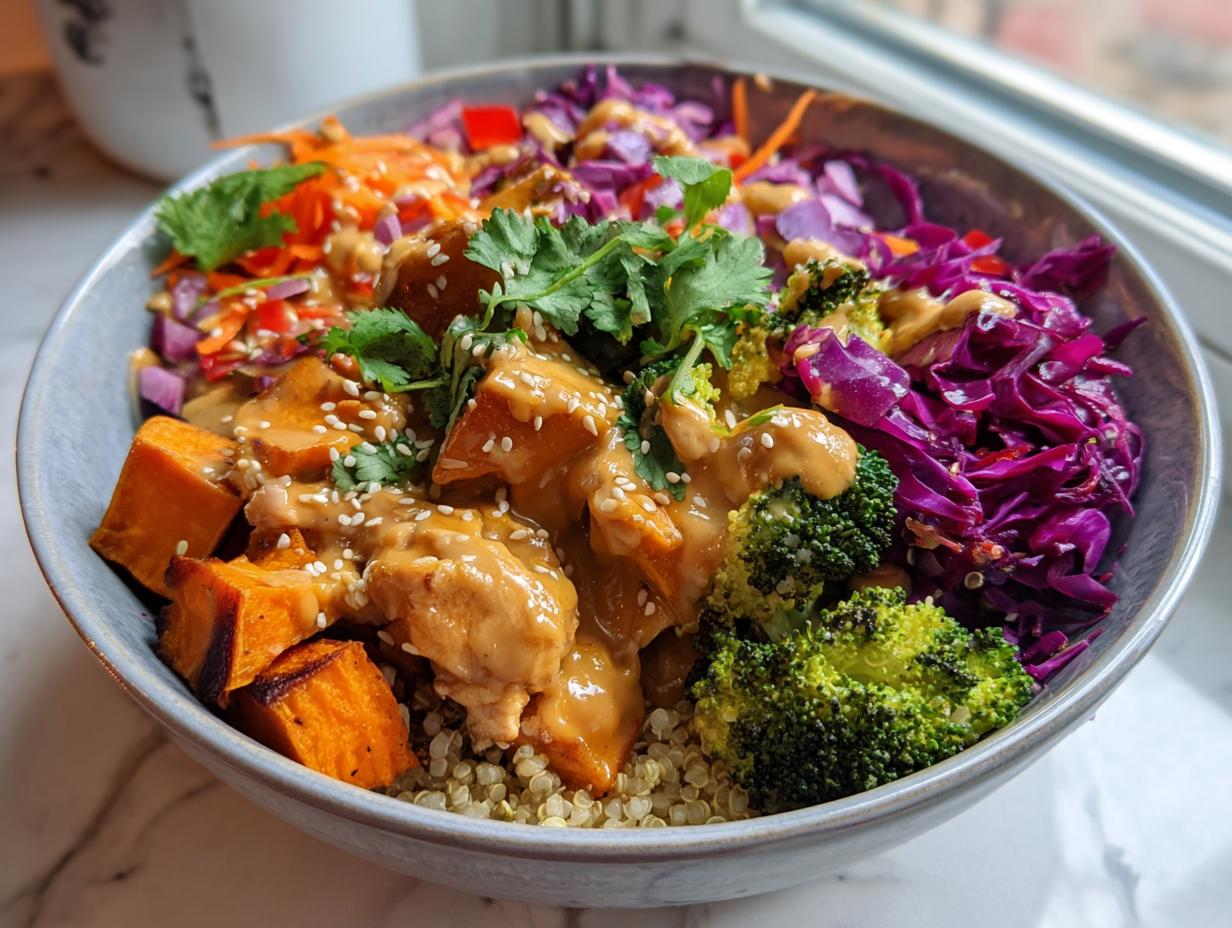
If your weeknight meals feel stuck in a rut—same ingredients, same flavors, just *blah*—then I have the absolute answer you’ve been waiting for. Forget complicated stir-fries or disappointing salads; we’re building something sensational right in your own kitchen. This Thai Peanut Chicken buddha bowl isn’t just another healthy bowl; it’s a powerhouse of texture and flavor that proves nutritious eating doesn’t mean sacrificing pure deliciousness. I spent years in professional kitchens learning precision, but my real passion, the one that drives Julia Meal, is making food this good accessible to you. Check out my guide on quick, easy weeknight dinners for more inspiration! Trust me, combining sweet roasted potato, savory chicken, and that creamy peanut sauce turns a Tuesday night into something special.
- Why This Thai Peanut Chicken Buddha Bowl is Your New Favorite Meal
- Key Components for the Ultimate Buddha Bowl
- Ingredients for Your Buddha Bowl Recipe
- Step-by-Step Instructions for Making the Buddha Bowl
- Expert Tips for the Best Buddha Bowl Dressings and Texture
- Variations on the Classic Buddha Bowl Concept
- Storing Leftovers and Reheating Your Buddha Bowl
- Frequently Asked Questions About Buddha Bowl Meals
- Nutritional Snapshot of This High Protein Buddha Bowl
Why This Thai Peanut Chicken Buddha Bowl is Your New Favorite Meal
Honestly, I think this Thai Peanut Chicken buddha bowl is going to cure your weeknight dinner boredom! It hits all the right notes: incredible flavor that makes you feel like you ordered takeout, tons of nutrients, and it’s fantastic for making ahead. You won’t believe how satisfying one bowl can be.
- It’s packed with protein to keep you focused all afternoon.
- The Thai peanut sauce is just pure, creamy comfort in a spoon.
- You assemble it fast, which means less time cooking and more time enjoying! Meal prepping these is a lifesaver.
High Protein Buddha Bowl for Lasting Energy
If you’ve ever crashed mid-afternoon after lunch, that’s because your meal didn’t have enough staying power. This recipe changes that! We use a hearty base of quinoa and load it up with chicken, pushing the protein count way up. Seriously, this high protein buddha bowl keeps you fueled and satisfied way past 3 PM. You feel energized, not sluggish, and that’s the whole point of eating well, right?
Perfect for Buddha Bowl Meal Prep
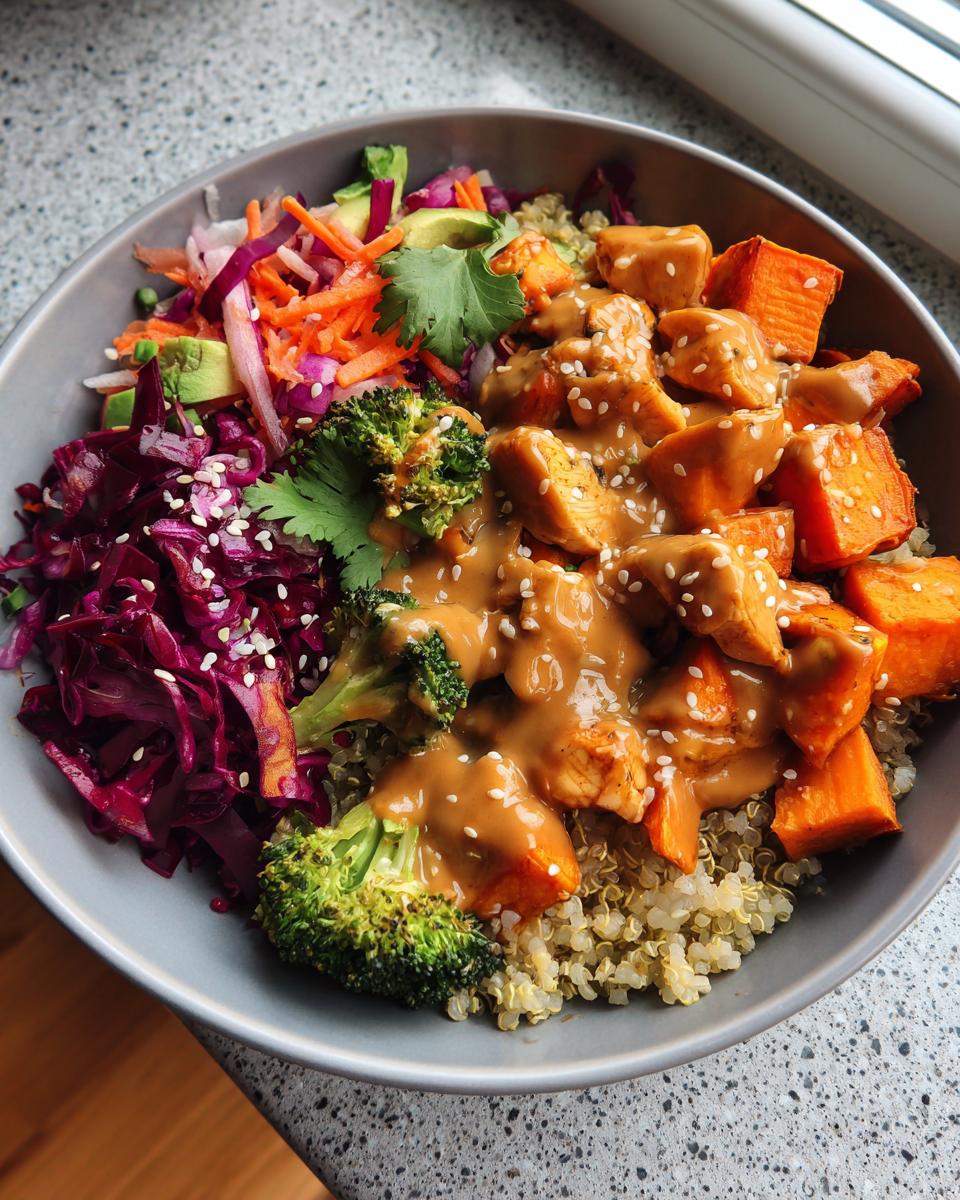
This is where the magic truly happens for busy people. You do the work once, and lunch is sorted for days. The key to successful buddha bowl meal prep is keeping things separate until serving time. Cook everything—quinoa, chicken, sweet potatoes—and store them. Keep that amazing peanut sauce sealed tight in its own little container. When you’re ready to eat, just assemble and drizzle. It’s like having a gourmet meal ready instantly!
Key Components for the Ultimate Buddha Bowl
You can’t just throw things in a bowl and call it a day! A true buddha bowl—the kind that makes you happy when you look at it—needs balance. You need a hearty base (that’s our grain), a solid protein source, tons of color from the veggies, and, most importantly, a killer dressing. When all these parts work together, you get this incredible, satisfying meal that tastes complex but cooks so simply. It’s all about the chemistry of the components.
The Flavor Foundation: Thai Peanut Buddha Bowl Sauce
Listen, the sauce is the conductor of this whole flavor orchestra. Without a knockout sauce, you just have steamed veggies and plain chicken. Our Thai Peanut sauce brings creaminess, a little heat from the sriracha, and that wonderful nutty depth. People search for the best buddha bowl dressings for a reason! Make this sauce, and suddenly your whole buddha bowl tastes like it cost twenty dollars at a trendy cafe. Don’t skimp here!
Choosing Your Grain and Protein for a Buddha Bowl
For this version, I insisted on quinoa. It cooks up fluffy, has a great texture, and bumps up the protein nicely. The star protein here is the chicken; it takes on the paprika beautifully. But remember, if you’re making this totally plant-based, swap that chicken for the crispy chickpeas we roast alongside the sweet potatoes. It keeps that high-protein focus while staying totally plant based lunch ideas friendly.
Ingredients for Your Buddha Bowl Recipe
Okay, now for the real fun part: gathering the goods! I try to organize my ingredients like I organize my kitchen—by component group. This makes assembly so much less chaotic! Remember, the fresher your veggies are, the better your buddha bowl will taste, especially those roasted sweet potatoes. If you love how those sweet potatoes come out, you definitely need to check out my guide on simple roasted sweet potato recipe for inspiration!
We’ve got three main areas to gather supplies for: the base, the main event (chicken and veggies), and of course, that stellar sauce that ties everything together.
For the Quinoa Base:
- 1 cup quinoa, uncooked
- 2 cups water or broth (broth makes everything taste better, trust me!)
For the Chicken and Veggies:
- 1 pound boneless, skinless chicken breasts, cut into bite-sized pieces
- 1 large sweet potato, peeled and cubed
- 1 tablespoon olive oil
- 1 teaspoon smoked paprika
- 1/2 teaspoon salt
- 1/4 teaspoon black pepper
- 1 cup broccoli florets
- 1 cup shredded red cabbage
- 1/2 cup shredded carrots
- 1/4 cup chopped cilantro (for garnish greatness)
- 2 tablespoons sesame seeds (for that final crunch!)
For the Thai Peanut Sauce:
- 1/2 cup creamy peanut butter (use the regular kind, not the oily natural stuff, for the best texture!)
- 1/4 cup warm water
- 3 tablespoons soy sauce or tamari
- 2 tablespoons rice vinegar
- 1 tablespoon maple syrup or honey
- 1 tablespoon grated fresh ginger (fresh is non-negotiable here!)
- 1 clove garlic, minced
- 1 teaspoon sriracha (optional—only if you like a little kick!)
Step-by-Step Instructions for Making the Buddha Bowl
Alright, let’s get down to business! You are only 45 minutes away from enjoying the best buddha bowl you’ve ever made. I always tackle the things that take the longest first. Since we are aiming for that perfect texture everywhere, we need the oven on and the quinoa simmering while we prep the rest. Don’t worry about multitasking here; these steps flow perfectly into one another, making this feel super straightforward, even though the flavor is incredible. For tips on getting that broccoli just right, check out my guide to the perfect roasted broccoli recipe!
Preparing the Base and Sweet Potato Buddha Bowl Elements
First things first: get that oven hot! Preheat it to 400°F (200°C). Toss those cubed sweet potatoes with a little oil, paprika, salt, and pepper, and get them on a sheet pan. They need about 20 to 25 minutes to roast until they’re tender and sweet—this is crucial for our sweet potato buddha bowl! While they bubble away, get your quinoa going. Combine the cup of quinoa with two cups of liquid in a pot, bring it to a boil, then drop it down, cover it, and let it simmer for about 15 minutes until all that liquid disappears. Then, fluff it gently!
Cooking Protein and Mixing the Thai Peanut Buddha Bowl Sauce
Once the potatoes are roasting, grab your skillet for the chicken. Season those bite-sized pieces well, then cook them over medium-high heat until they’re nicely browned and fully cooked through—usually 6 to 8 minutes. Set them aside to rest. Now, the sauce! In a small bowl, you aggressively whisk everything for the Thai Peanut sauce together. If it seems too thick—and sometimes it does if your peanut butter is stubborn—just stream in a tiny bit of warm water until it gets that perfect, beautiful, pourable consistency for your buddha bowl.
Assembling Your Easy Buddha Bowl Recipe
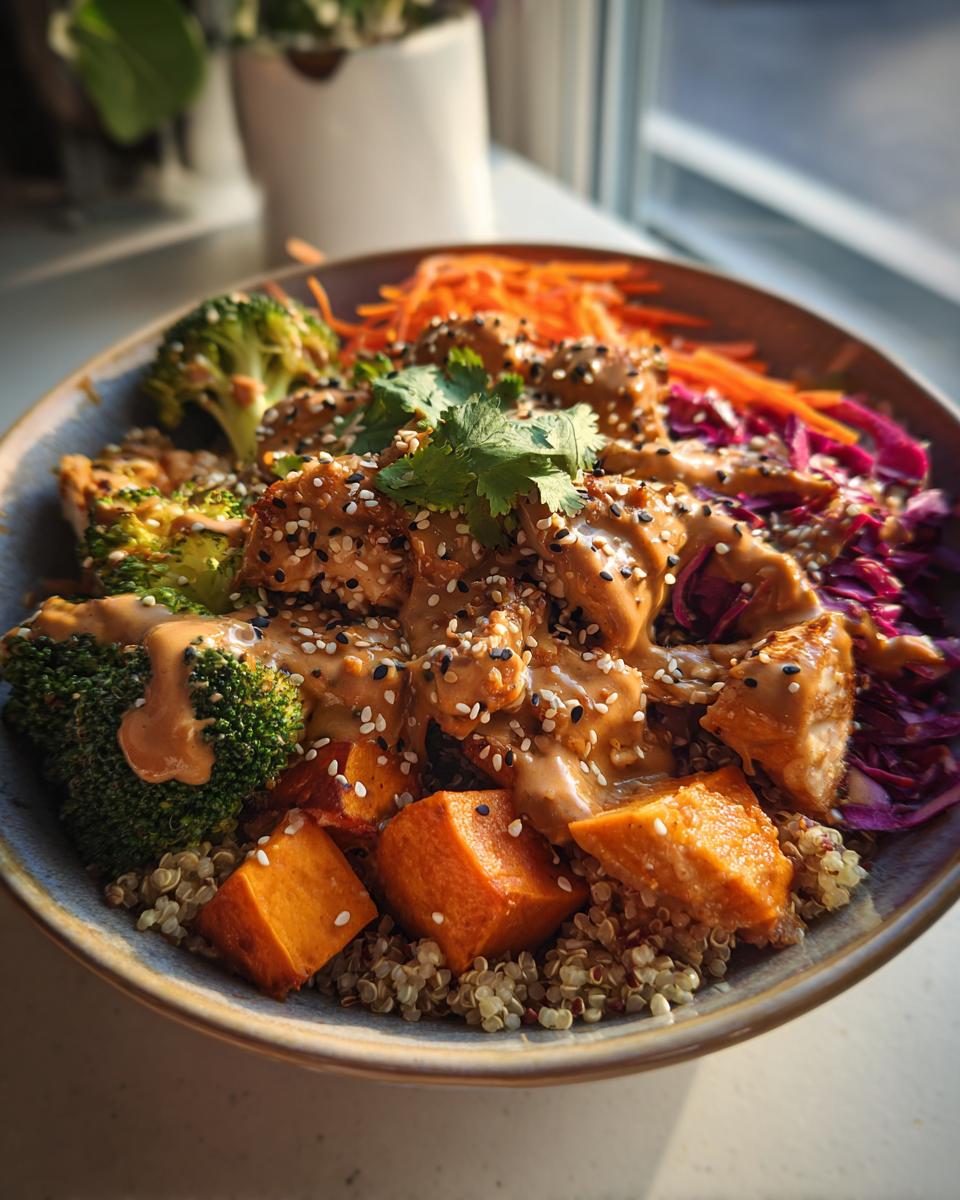
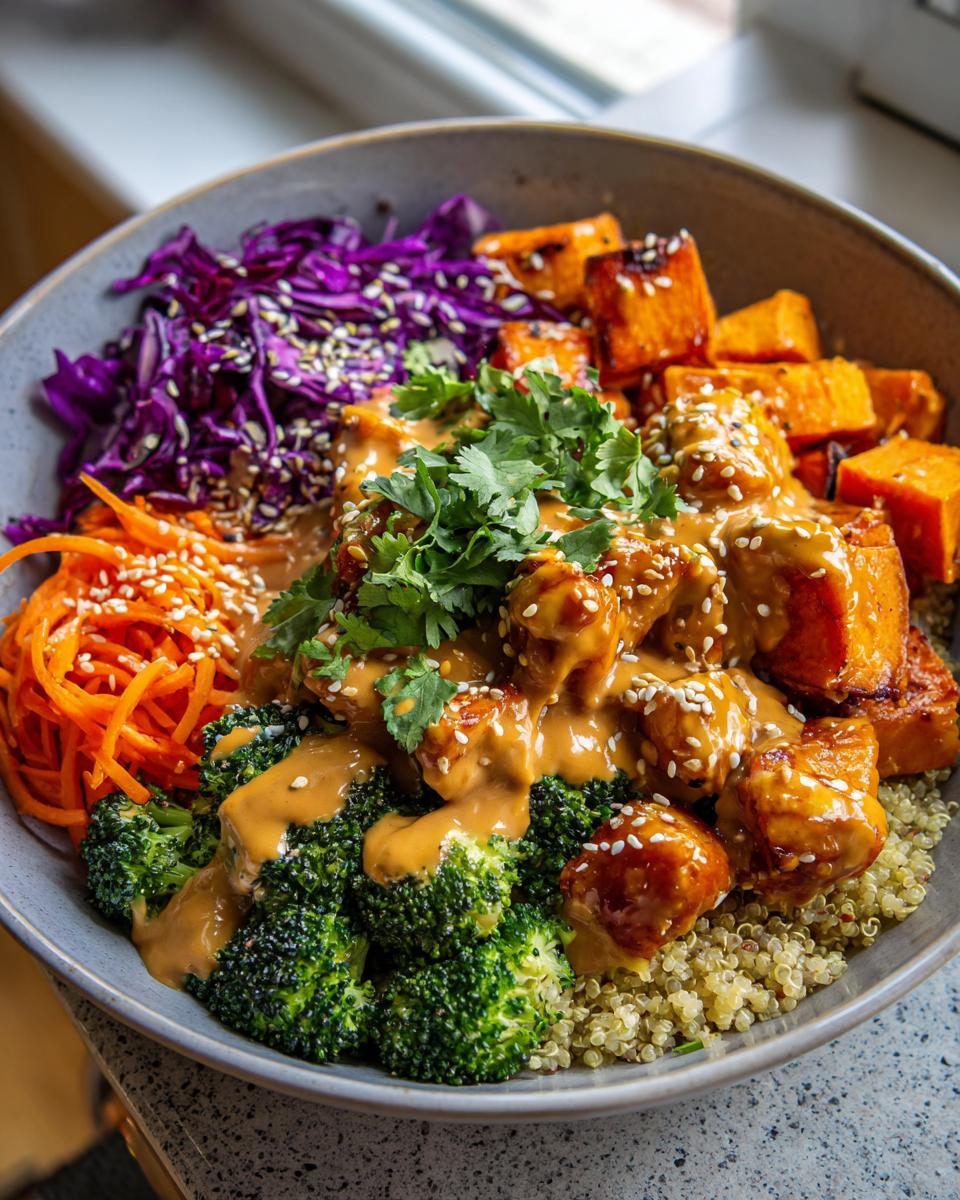
This is the fun, visual part! Take your four bowls and divide up that fluffy quinoa as the base layer. Now, arrange everything else beautifully on top of the grains. Remember those colorful roasted sweet potatoes, the chicken, the fresh shredded cabbage, carrots, and broccoli? Think color blocks! Once everything is settled in its section, just take that gorgeous Thai peanut sauce and drizzle it super generously over the top. A little sprinkle of cilantro and sesame seeds finishes the look. See? That’s how you make an easy buddha bowl recipe that looks gourmet!
Expert Tips for the Best Buddha Bowl Dressings and Texture
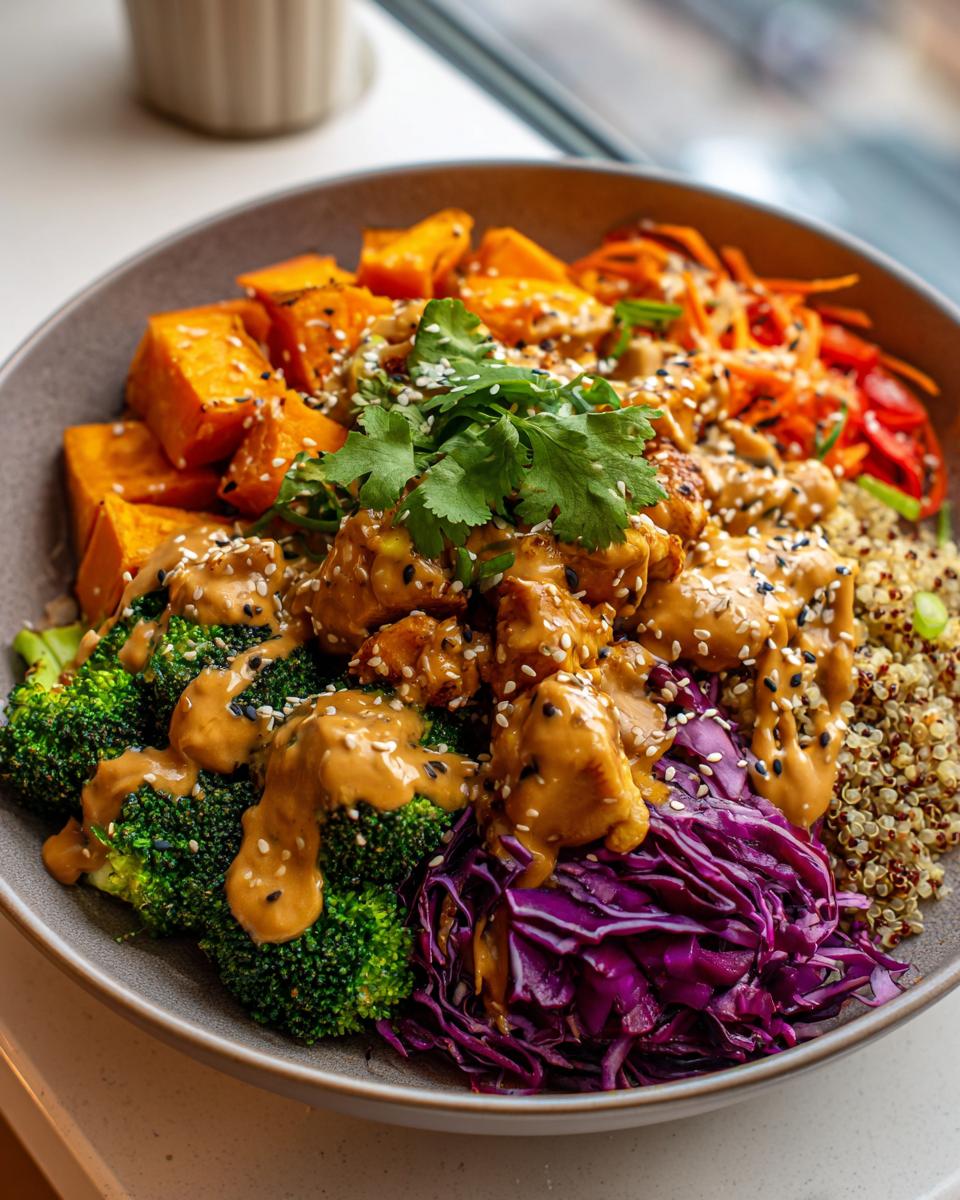
I’ve ruined more sauces than I care to admit in my early days, so please learn from my mistakes! Texture is everything in a buddha bowl—you can’t have mushy broccoli next to rubbery chicken. For the vegetables, you want them crisp-tender, especially the broccoli. That means steaming or lightly sautéing them separately right at the end. You don’t want them soggy sitting in the bottom of your lunch container!
When it comes to the peanut sauce, if you accidentally whisk in too much water and it looks watery, don’t panic! Just quickly stir in an extra tablespoon of peanut butter and maybe half a teaspoon of cornstarch mixed with a tiny splash of cold water. That thickening slurry fixes almost any overly thin sauce disaster. It’s crucial your sauce has body so it clings perfectly to all the components in your finished bowl.
If you want to explore other amazing sauce options beyond peanut, I have a fantastic creamy dressing recipe you should bookmark for later—it gives a totally different vibe to your buddha bowl, but still tastes amazing: easy 10-minute creamy garlic sauce recipe!
Variations on the Classic Buddha Bowl Concept
One of the things I adore most about the whole concept of a buddha bowl is that it’s truly a choose-your-own-adventure meal! It’s incredibly adaptable, which is exactly what we home cooks need, right? Maybe you’re trying to cut back on meat that week, or maybe you just had chicken for three nights straight (I’ve been there!). Feel free to pivot! You can swap in salmon, firm tofu, or even keep it vegetarian by leaning into legumes. If you’re looking for other amazing plant-based swaps, you might enjoy my thoughts over on this lentil salad Mediterranean feta lemon vinaigrette post for some fresh ideas.
Making a Vegan Buddha Bowl Substitute
If you want to stick to a fully plant-based version, swapping the chicken for chickpeas is almost too easy—it’s my favorite switch! Take those 15 ounces of rinsed and drained chickpeas and toss them right onto the baking sheet alongside your sweet potatoes. Use the same spices—paprika, salt, and pepper. When the sweet potatoes come out perfectly roasted, those chickpeas will be warm, slightly crispy, and unbelievably flavorful. That’s how you nail a vegan buddha bowl without losing any of that satisfying texture!
Storing Leftovers and Reheating Your Buddha Bowl
Since we built this Ultimate Thai Peanut Chicken buddha bowl specifically for next-day enjoyment, storage is super important! You absolutely have to keep the sauce separate. If you pour that creamy peanut dressing all over everything now, you’ll end up with soggy cabbage and mushy quinoa by tomorrow. Trust me on this!
I use small glass containers for the sauce. Then, layer your cooked quinoa, chicken, and veggies in your main container. It keeps beautifully in the fridge for about three to four days. When lunchtime rolls around, just reheat the main components quickly—I use the microwave for about 60 seconds—and then pour that glorious sauce over the top right before you eat. That little bit of effort keeps this buddha bowl tasting just as gourmet on day three as it did on day one!
Frequently Asked Questions About Buddha Bowl Meals
I get questions all the time about tweaking these colorful bowls, which is fantastic because customizing them is part of the fun! Since we’re aiming for these wholesome bowl meals to fit *your* life, here are a few things people often ask before they start.
Can I use other grains besides quinoa in my buddha bowl?
Absolutely! Quinoa is my go-to because it’s a complete protein, but this recipe is fantastic for any customizable grain bowls. Brown rice works great, and farro gives a nice chewy texture. If you’re trying to keep it gluten-free, just stick to quinoa or brown rice. You can see how I pair these grains with chickpeas in this quinoa salad Mediterranean chickpea recipe if you need a vegan twist!
How long will the Thai Peanut Sauce last if I make a big batch?
The beauty of the peanut sauce is it lasts ages because of the vinegar and soy sauce! If you keep it sealed tight in the fridge, it’s excellent for eating for easily a week, maybe even 10 days. Just give it a good stir before you drizzle it over your next buddha bowl. If it thickens up too much over time, just whisk in a teaspoon of hot water to loosen it right up. Never waste the sauce!
Is this specific recipe naturally gluten-free?
Almost! Quinoa is naturally gluten-free, and all the veggies are good to go. However, the key is your soy sauce. If you use standard soy sauce, it contains wheat. To keep this a fantastic gluten free buddha bowl, make sure you use tamari or a certified gluten-free soy sauce replacement. It makes zero difference to the overall taste, but it makes a huge difference if you have sensitivities!
Nutritional Snapshot of This High Protein Buddha Bowl
I always get asked about the macros when I share a high protein buddha bowl like this one, because you want to know you’re fueling yourself right! Here’s a look at the estimated numbers based on the ingredients listed in the recipe. Keep in mind, these figures are all estimates, as the exact size of your sweet potato or chicken breast can change things slightly. But, this gives you a solid idea of how balanced this meal truly is!
Per Serving (Approximate):
- Calories: 620
- Protein: 40g
- Fat: 30g
- Carbohydrates: 55g
- Fiber: 9g
We’re hitting that high protein mark beautifully! If you want to see how some of my other protein-packed meals shape up—like my low-carb keto options—take a peek at my cheeseburger bowl high protein low carb recipe for comparison. Eat well and know exactly what you’re putting into your body!
PrintUltimate Thai Peanut Chicken Buddha Bowl
Make this flavorful, high protein Buddha bowl featuring tender chicken, roasted sweet potato, and a creamy Thai peanut sauce. This recipe is excellent for meal prep and delivers satisfying, restaurant-quality taste at home.
- Prep Time: 15 min
- Cook Time: 30 min
- Total Time: 45 min
- Yield: 4 servings 1x
- Category: Dinner
- Method: Roasting and Skillet Cooking
- Cuisine: Asian Fusion
- Diet: Low Fat
Ingredients
- 1 cup quinoa, uncooked
- 2 cups water or broth
- 1 pound boneless, skinless chicken breasts, cut into bite-sized pieces
- 1 large sweet potato, peeled and cubed
- 1 tablespoon olive oil
- 1 teaspoon smoked paprika
- 1/2 teaspoon salt
- 1/4 teaspoon black pepper
- 1 cup broccoli florets
- 1 cup shredded red cabbage
- 1/2 cup shredded carrots
- 1/4 cup chopped cilantro (for garnish)
- 2 tablespoons sesame seeds (for garnish)
- For the Thai Peanut Sauce:
- 1/2 cup creamy peanut butter
- 1/4 cup warm water
- 3 tablespoons soy sauce or tamari
- 2 tablespoons rice vinegar
- 1 tablespoon maple syrup or honey
- 1 tablespoon grated fresh ginger
- 1 clove garlic, minced
- 1 teaspoon sriracha (optional)
Instructions
- Cook the quinoa: Combine quinoa and water/broth in a saucepan. Bring to a boil, then reduce heat, cover, and simmer for 15 minutes, or until all liquid is absorbed. Fluff with a fork.
- Roast the sweet potato: Preheat your oven to 400°F (200°C). Toss cubed sweet potato with olive oil, smoked paprika, salt, and pepper on a baking sheet. Roast for 20-25 minutes, flipping halfway, until tender and slightly caramelized.
- Cook the chicken: While potatoes roast, season chicken pieces with salt and pepper. Heat a large skillet over medium-high heat. Cook chicken until browned and cooked through, about 6-8 minutes. Set aside.
- Prepare the sauce: In a small bowl, whisk together all Thai Peanut Sauce ingredients until smooth. Add more warm water, one teaspoon at a time, if you need a thinner consistency.
- Steam or lightly sauté the broccoli florets until crisp-tender.
- Assemble the Buddha bowl: Divide the cooked quinoa among four bowls. Arrange the cooked chicken, roasted sweet potatoes, broccoli, red cabbage, and carrots neatly over the quinoa base.
- Drizzle generously with the Thai Peanut Sauce. Garnish with chopped cilantro and sesame seeds before serving.
Notes
- For a vegan option, substitute the chicken with 1 can (15 oz) rinsed and drained chickpeas, tossed with the same spices and roasted alongside the sweet potatoes.
- This recipe is excellent for meal prep. Store the sauce separately and assemble the bowls just before eating to maintain the best texture.
- If you prefer a different grain, brown rice or farro work well in this nourish bowl recipe.
Nutrition
- Serving Size: 1 bowl
- Calories: 620
- Sugar: 12g
- Sodium: 650mg
- Fat: 30g
- Saturated Fat: 5g
- Unsaturated Fat: 25g
- Trans Fat: 0g
- Carbohydrates: 55g
- Fiber: 9g
- Protein: 40g
- Cholesterol: 95mg