The Definitive Ultra-Fluffy Japanese Milk Bread (Shokupan) Featuring the Tangzhong Method
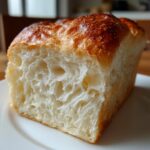
Make unbelievably soft, cloud-like Japanese Milk Bread (Shokupan) at home using the Tangzhong method. This recipe delivers a pillowy crumb that stays moist longer, perfect for sandwiches or toast.
- Prep Time: 45 min
- Cook Time: 35 min
- Total Time: 3 hours 0 minutes
- Yield: 1 loaf (about 12 slices) 1x
- Category: Baking
- Method: Baking
- Cuisine: Japanese
- Diet: Vegetarian
Ingredients
Scale
- 60g Bread Flour (for Tangzhong)
- 240ml Whole Milk (for Tangzhong)
- 350g Bread Flour (for Dough)
- 50g Granulated Sugar
- 1 teaspoon Instant Dry Yeast
- 1 teaspoon Salt
- 40g Unsalted Butter, softened
- 1 large Egg
- 60ml Whole Milk (for Dough)
Instructions
- Prepare the Tangzhong: Whisk the 60g bread flour and 240ml milk in a small saucepan until smooth. Heat over medium-low heat, stirring constantly, until the mixture thickens significantly, reaching about 160°F (71°C). It should resemble a thick paste. Remove from heat, cover the surface directly with plastic wrap, and let it cool completely.
- Mix Dry Ingredients: In the bowl of a stand mixer fitted with the dough hook, combine the 350g bread flour, sugar, yeast, and salt. Mix briefly on low speed.
- Combine Wet Ingredients: Add the cooled Tangzhong, the 60ml milk, and the egg to the dry ingredients. Mix on low speed until a shaggy dough forms.
- Knead: Increase the speed to medium-low and knead for 5 minutes. Add the softened butter. Continue kneading for another 10 to 15 minutes until the dough is very smooth, elastic, and passes the windowpane test. This extended kneading is necessary for the soft texture.
- First Rise (Bulk Fermentation): Place the dough in a lightly oiled bowl, cover, and let it rise in a warm place until doubled in size, about 1 to 1.5 hours.
- Shape the Loaf: Gently deflate the dough. Divide it into three equal pieces. Shape each piece into a tight ball. Let the balls rest for 15 minutes, covered.
- Final Shaping: Roll each rested ball into a smooth oval. Place the three ovals side-by-side in a greased 9×5 inch loaf pan, ensuring the seam side is down.
- Second Rise (Proofing): Cover the pan loosely and let the dough proof in a warm spot until it has nearly doubled and crests about 1 inch over the top of the pan, about 45 to 60 minutes. Preheat your oven to 350°F (175°C) during the last 15 minutes of proofing.
- Bake: Brush the top of the dough lightly with milk. Bake for 30 to 35 minutes, or until the top is golden brown and the internal temperature reaches 200°F (93°C). If the top browns too quickly, loosely tent it with foil.
- Cool: Immediately remove the loaf from the pan and cool completely on a wire rack before slicing to preserve the texture.
Notes
- For an extra glossy crust, brush the top of the baked loaf with melted butter immediately after removing it from the oven.
- This bread stays moist for several days when stored tightly wrapped at room temperature.
- If you do not have a stand mixer, you can knead this dough by hand, but expect the process to take 20 to 25 minutes of continuous work.
Nutrition
- Serving Size: 1 slice
- Calories: 180
- Sugar: 7
- Sodium: 150
- Fat: 5
- Saturated Fat: 3
- Unsaturated Fat: 2
- Trans Fat: 0
- Carbohydrates: 28
- Fiber: 1
- Protein: 6
- Cholesterol: 25
Find it online: https://juliameal.com/japanese-milk-bread-recipe-tangzhong/