

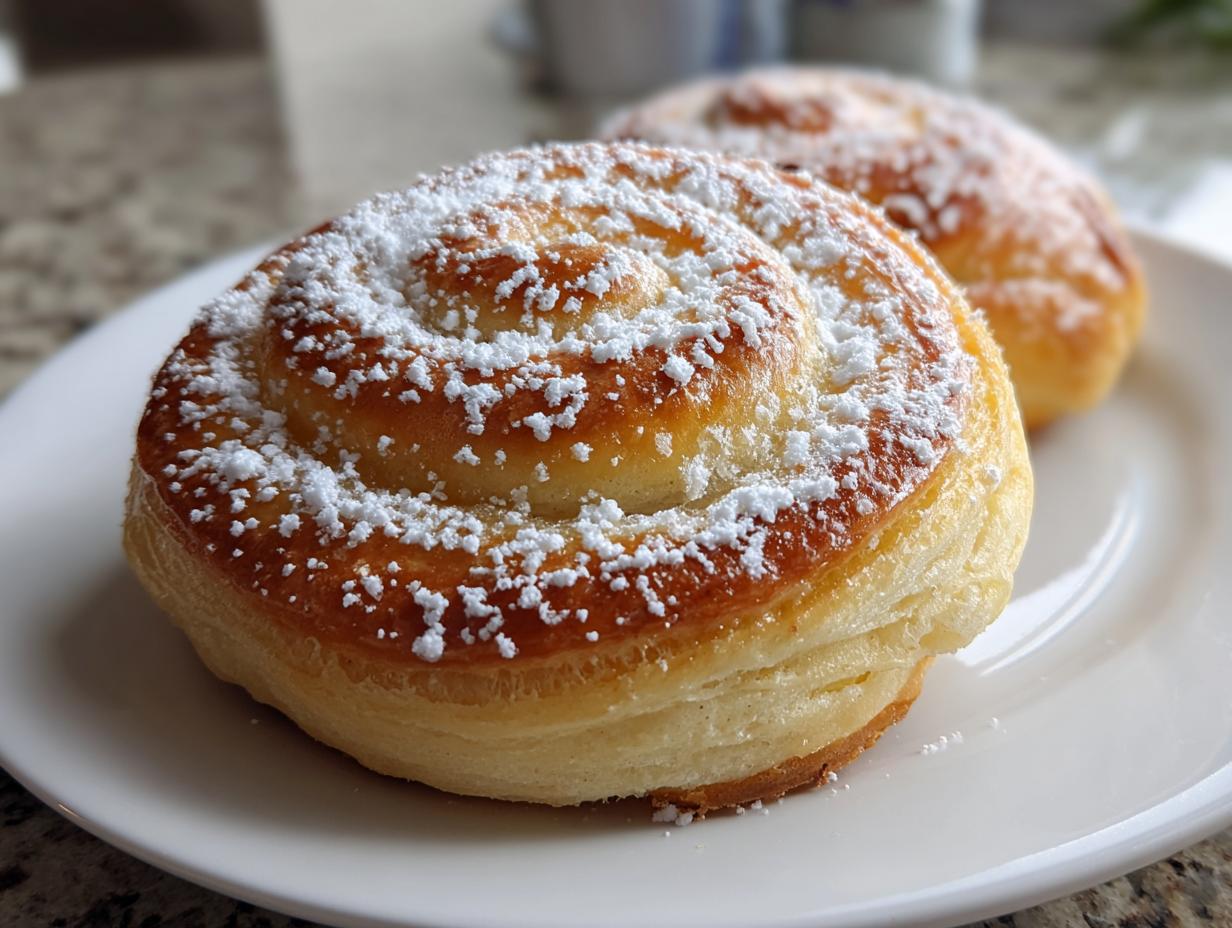
When I started traveling across the States, learning regional American cooking, I realized that the heartbeat of any culture rests in its morning traditions. And let me tell you, there’s nothing quite like gathering around the table for a Caribbean breakfast, especially when those warm rolls are involved. Forget dry, standard bread; we’re talking about the pillowy, subtly sweet magic that is pan de mallorca (puerto rican sweet roll). I spent ages trying to nail the texture—that perfect, slightly yielding softness that characterizes the best homemade Puerto Rican breakfast rolls. This recipe isn’t just about following steps; it’s about honoring the technique that gives you that iconic spiral shape and the ultimate soft sweet rolls baking result. If you’ve ever dreamed of tasting the real deal in your own kitchen, you’re exactly where you need to be. You can read a little more about my journey to finding authentic flavors like this over at our story page.
- Why This Is the Best Pan de Mallorca (Puerto Rican Sweet Roll) Recipe
- Essential Ingredients for Authentic Pan de Mallorca (Puerto Rican Sweet Roll)
- Mastering the Mallorcan Style Bread Dough Preparation
- Shaping Your Pan de Mallorca (Puerto Rican Sweet Roll) into Spirals
- Baking and Finishing the Homemade Puerto Rican Breakfast Rolls
- Tips for Success with Ensaymada Style Bread Preparation
- Serving Suggestions for Pan de Mallorca (Puerto Rican Sweet Roll)
- Storage and Reheating Instructions for Pan de Mallorca
- Frequently Asked Questions About Pan de Mallorca
Why This Is the Best Pan de Mallorca (Puerto Rican Sweet Roll) Recipe
I know everyone thinks their recipe is the best, but hear me out! This technique finally unlocked that airy, melt-in-your-mouth quality I was missing. It’s all about hitting three key markers for truly authentic pan de mallorca (puerto rican sweet roll).
- We nail the subtle sweetness without making them heavy like brioche.
- The method guarantees that signature soft sweet rolls baking texture every single time.
- You get clear steps for shaping the dough into those unmistakable coils, ensuring they look perfect on your breakfast table.
Try these tips alongside our other favorite breakfast ideas for a great start to your day!
Essential Ingredients for Authentic Pan de Mallorca (Puerto Rican Sweet Roll)
Okay, so when we’re talking about a genuine Puerto Rican sweet bread recipe, the ingredient list looks simple, trust me, but the preparation of those basics is everything. This isn’t a highly spiced bread; the flavor comes from quality fat and sugar working together beautifully in the dough. You need patience with your butter and eggs—they absolutely must be at good room temperature to emulsify correctly later on. Don’t even think about popping cold eggs into that creamy mixture, or you’ll end up with curdled butter! We are aiming for that classic, pillowy result, so measure carefully. If you want to see how I handle homemade doughs like this, check out my recipe for easy homemade breadsticks for comparison!
- 1 cup whole milk, warmed to 105-115°F (This is the sweet spot for waking up that yeast!)
- 2 1/4 teaspoons active dry yeast
- 1/2 cup granulated sugar
- 1/2 cup (1 stick) unsalted butter, softened (make sure it’s soft, not melted!)
- 2 large eggs, room temperature
- 1 teaspoon vanilla extract
- 1/2 teaspoon salt
- 4 cups all-purpose flour, plus more for dusting
- 1/4 cup powdered sugar, for dusting (Don’t skip this—it’s mandatory!)
Mastering the Mallorcan Style Bread Dough Preparation
This is where the real magic—and the real work—starts for a perfect Mallorcan style bread dough. First, we have to wake up the yeast. Pour that warm milk—and I mean *warm*, not hot enough to scald the yeast!—into your bowl, sprinkle the yeast on top, and just give it five minutes to see that lovely foam forming. That foam is proof that those little guys are ready to get to work! Next up, tackle the butter and sugar. You need to cream them together until they lighten up significantly; we’re building air here, and that air is what makes these sweet bread for coffee so delicate later on.
Once the eggs are smoothly incorporated, start adding the flour slowly with the salt. You’ll mix until it’s just shaggy, and then, my friends, you get your hands dirty! You need to knead this dough until it’s beautifully smooth and elastic—that’s the gluten developing, which holds everything together. I usually spend a good ten minutes working it over. If you love a good baking challenge, try this technique after you look at my honey pepper chicken recipe—it tests your patience in a totally different way!
First Rise: Creating the Base for Your Pan de Mallorca
Once you’ve got that beautiful, smooth dough, put it in an oiled bowl and cover it tight. This first rise is essential for baking sweet yeast breads properly. You need a warm, cozy spot—think just off the pilot light of your oven, or maybe a slightly sunny kitchen counter. It usually takes about an hour to an hour and a half, but don’t watch the clock, watch the dough! You know it’s ready when it has doubled in size and you can gently poke it with a finger and the indentation stays put, or slowly springs back just a little. If it springs back too fast, it needs more time!
Shaping Your Pan de Mallorca (Puerto Rican Sweet Roll) into Spirals
Okay, listen up, because this shaping step is what separates a generic sweet roll from a genuine Pan de Mallorca traditional masterpiece. When that first rise is done, gently punch the air out—we don’t want to crush the structure, just deflate it a bit. Then, divide that beautiful dough into 12 equal pieces. You want each piece to be roughly the same weight so they bake evenly, which is tough but worth the effort!
Now, take each piece and roll it out gently on a lightly floured surface until you have a long rope, about 12 inches long. This takes patience; don’t worry if it fights you a little! The key is to keep the rope relatively consistent across its length. Once you have your rope, you coil it. Start at one end and gently roll or spiral it inward, just like a snail shell or a cinnamon roll, but usually a bit tighter for the Mallorcan style. Place these coiled beauties on parchment paper.
(Writer’s Note: This is where you absolutely need a good picture! Show the rope next to the coiled finished shape.)
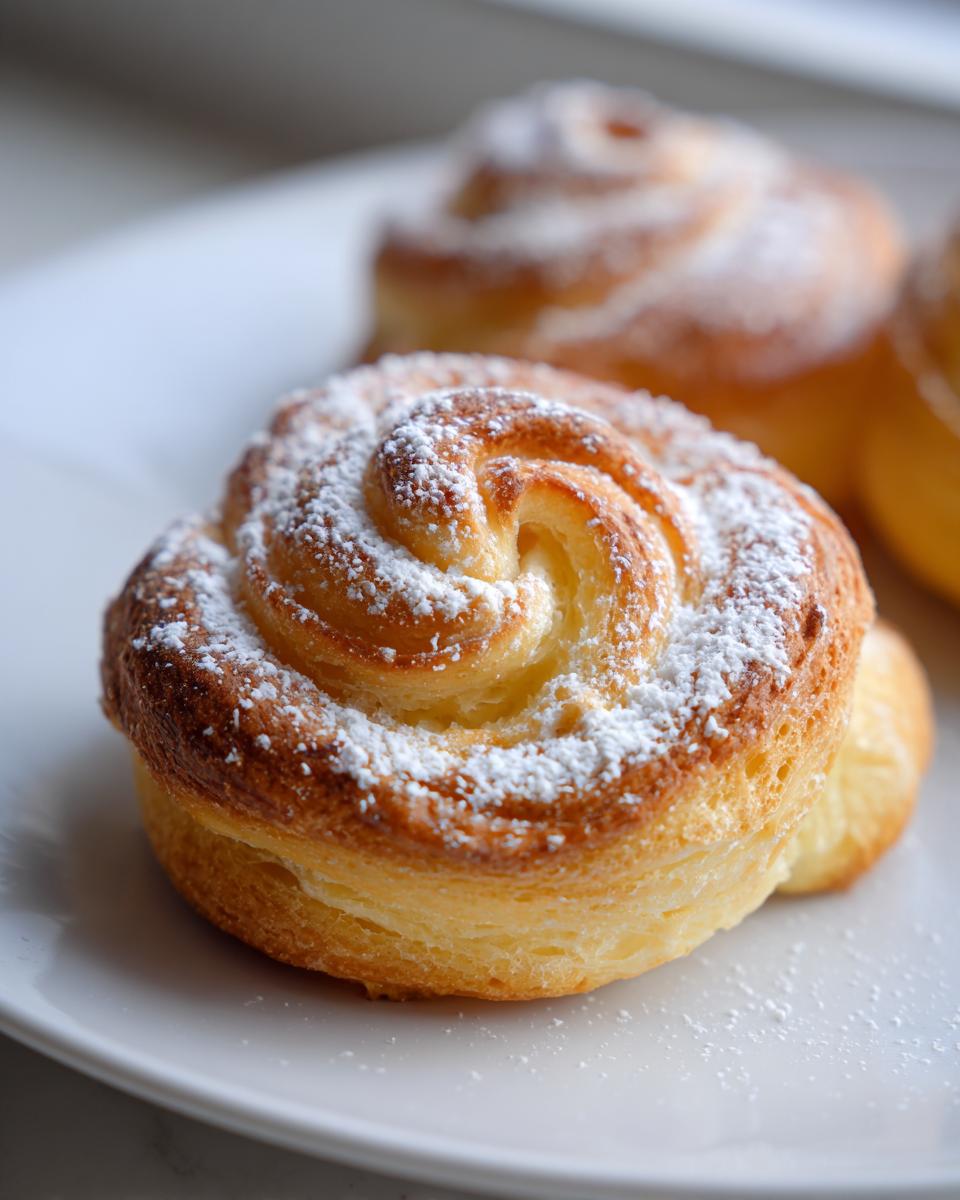
I often look back at my recipe for sourdough discard cinnamon rolls; the rolling technique is similar, but for Pan de Mallorca, we’re looking for that specific flat spiral, not a tall mound.
Proofing and Oven Temperature for Perfect Pan de Mallorca
After all that shaping work, the dough needs a little rest and puff time, which we call the second proof. Cover those shaped rolls loosely so they don’t dry out on top. Let them sit in a warm spot for about 30 to 45 minutes. You’re looking for them to get puffy again—they should look airy and soft. Don’t let them proof for too long, or they might deflate when they hit the oven!
While they’re proofing, get that oven preheated to 375°F (190°C). That medium-high heat is crucial for a quick bake that sets the crust while keeping the inside incredibly soft. We bake them only until they turn a nice, even golden brown.
Baking and Finishing the Homemade Puerto Rican Breakfast Rolls
Once those rolls look puffy and lovely from their second rest, it’s time for the grand finale! Slide them into that preheated 375°F oven. Don’t walk away; watch them closely! They usually only need 15 to 20 minutes, but you’re looking for that gorgeous, even golden brown color on top. That’s the visual sign that the inside is cooked perfectly.
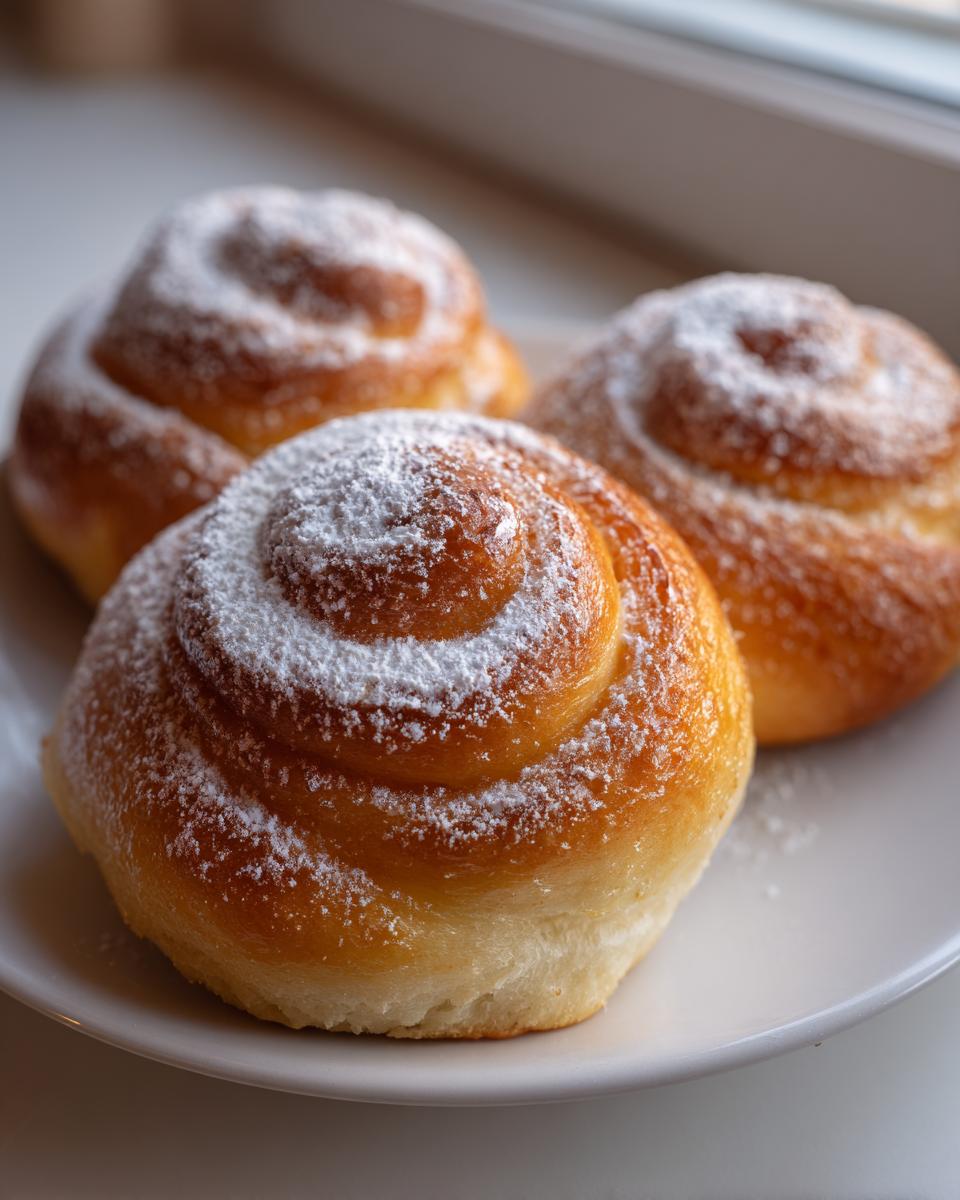
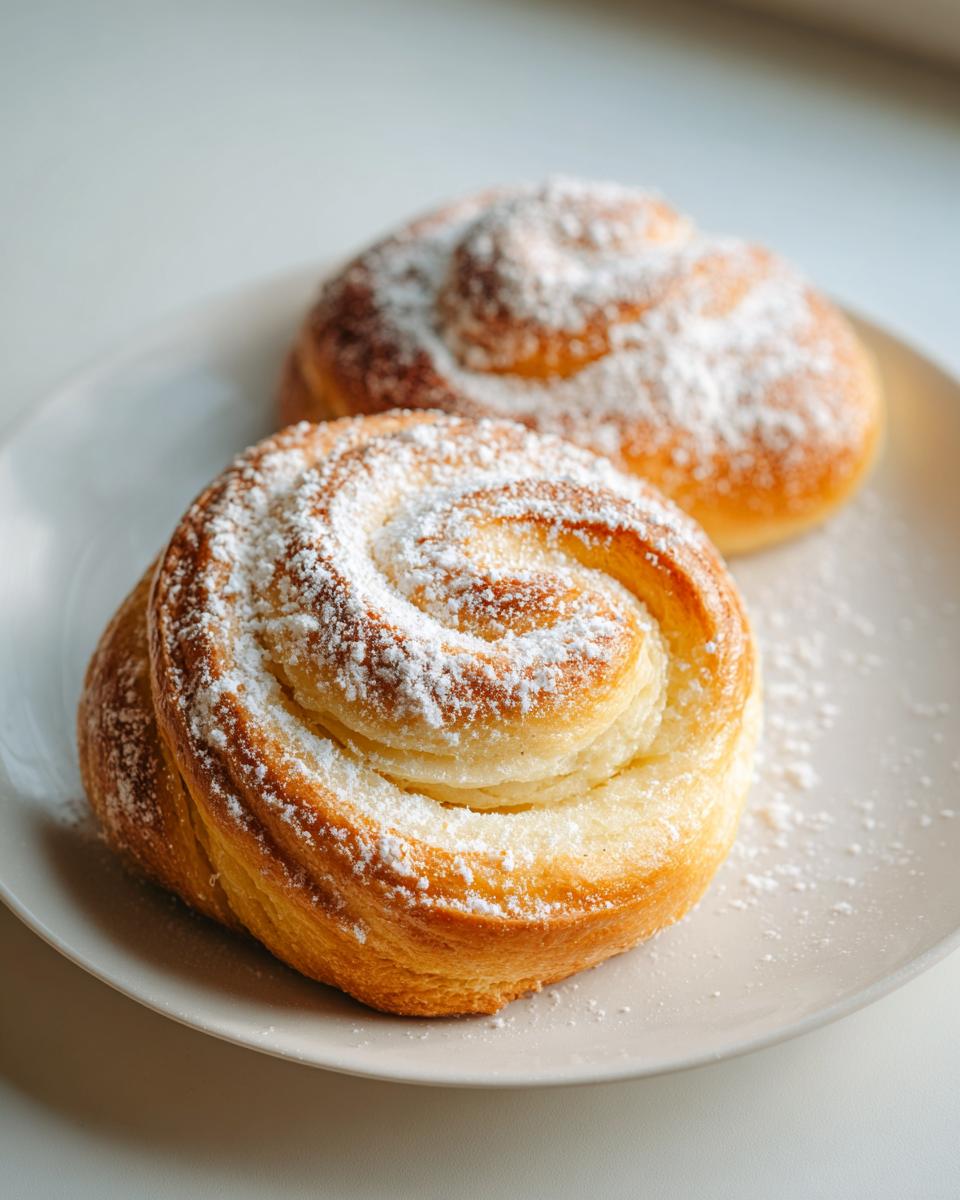
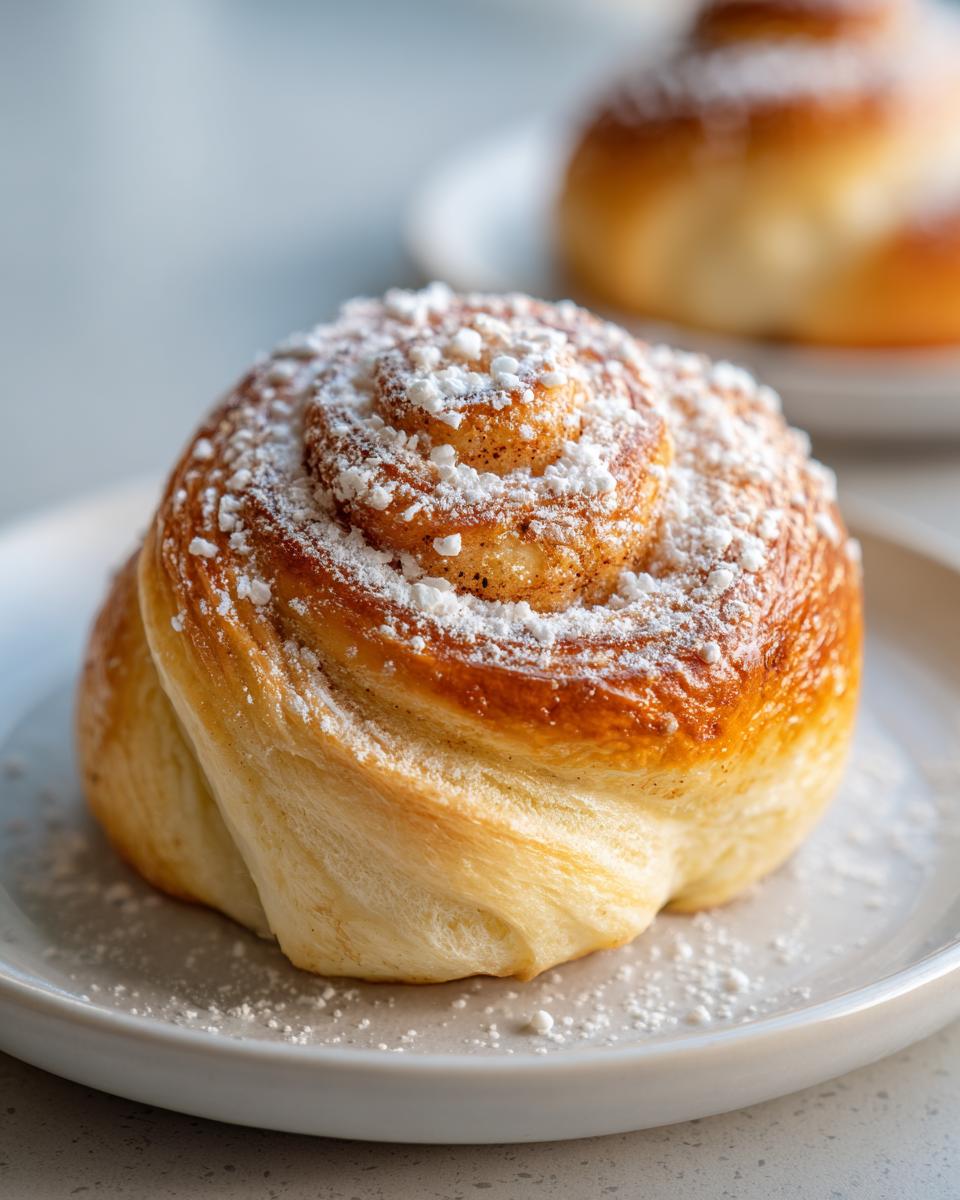
When they come out, let them cool down on a wire rack for just a moment—they are piping hot! Then, and this is the non-negotiable part for that authentic look of the pan de mallorca (puerto rican sweet roll), you have to dust them liberally with powdered sugar. Seriously, dust them until they look like they just caught a fresh winter snowfall. They smell incredible right now!
Tips for Success with Ensaymada Style Bread Preparation
I want these to be the softest thing you’ve ever baked, so let’s talk about those little tricks that elevate this dough beyond just mixing ingredients. Even though this isn’t Filipino Ensaymada style bread preparation, the foundation of a rich, soft dough requires the same respect for temperature. Always, always use room temperature eggs and butter that is truly softened—I mean finger-indent soft, not melted on the counter soft! If your house is cool during the first rise, don’t stress. That little trick of putting the covered bowl inside your turned-off oven with a pan of hot water underneath works wonders for creating that humid, warm environment these yeast doughs crave. It reminds me of trying to make chewy cookies; the fat temperature is everything, like in my chewy oatmeal cookie recipe.
Serving Suggestions for Pan de Mallorca (Puerto Rican Sweet Roll)
Honestly, these rolls are perfect just as they are. They shine brightest when served warm, maybe slightly torn open, with a cup of strong, black coffee. That’s the classic way to enjoy your sweet bread for coffee! They are satisfying enough on their own that they don’t need jam or heavy spreads.
But if you’re putting together a big spread of homemade Puerto Rican breakfast rolls, just slice them open and serve them alongside fresh fruit or maybe some queso fresco. Check out my recipe for a great coffee smoothie if you need a cold option to balance the sweetness!
Storage and Reheating Instructions for Pan de Mallorca
You know, these pan de mallorca (puerto rican sweet roll) are definitely like most yeasted breads—they are absolutely at their peak glory the same day you bake them. That soft, pillowy lightness just fades over time, and we can’t have that, right?
For short-term storage, keep them airtight at room temperature. Seriously, just pop them in a good container or a large zip-top bag. They should be fine for two, maybe three days, but I’d try to eat them sooner. Don’t put them in the fridge; the cold air actually makes them go stale faster. That’s a baking rule I learned the hard way!
If you do have leftovers later in the week, don’t throw them out! To bring back those soft sweet rolls baking qualities, you just need a quick blast of heat. Wrap the roll loosely in foil or even just place it directly on the rack in a 300°F oven for about five minutes. That little bit of warmth reactivates the moisture and makes them taste almost freshly baked again. It makes them perfect for dunking into your morning coffee!
If you’re making a huge batch and know you can’t finish them, I highly recommend freezing them. Once they are completely cool, wrap them individually in plastic wrap, then place them all in a heavy-duty freezer bag. Thaw them overnight on the counter and use the low-heat warming trick above to refresh them. It works wonders, just like reheating my mini meatloaf muffins!
Frequently Asked Questions About Pan de Mallorca
I figured we should cover a few lingering questions that always pop up when people try making their first batch of these famous rolls. Baking bread can be intimidating, but I promise you, once you master the shaping, these homemade Puerto Rican breakfast rolls become second nature. My goal here is always to make those hard-to-find classics accessible for you!
What makes this Puerto Rican sweet bread recipe different from typical sweet rolls?
That’s a great question because you see a lot of incredibly rich, eggy doughs out there! The key difference in this authentic Puerto Rican sweet bread recipe is the balance. Traditional enriched doughs, like brioche, often rely on huge amounts of butter and usually have a tighter, almost cake-like crumb when you overhandle them. Our Pan de Mallorca is subtly sweet, focusing more on that soft, slightly airy texture achieved through the rolling and coiling. Also, the shaping is totally unique—you twist it into a rope and coil it, which gives it those distinct, layered ribbons, unlike the simple rounds of other soft sweet rolls baking.
Can I add a glaze instead of powdered sugar to my pan de mallorca?
You *can*, but I really advise against it if you’re aiming for the traditional presentation. The magic of the classic pan de mallorca (puerto rican sweet roll) is that delicate, lightly sweet dough that just needs a veil of powdered sugar to finish it off. A thick icing or glaze often overwhelms that subtle flavor. If you absolutely must use a glaze, make it very thin and sparse—maybe just a light drizzle of a lemon-water glaze—but my personal recommendation is stick to the powdered sugar. It keeps it true to the Pan de Mallorca traditional method!
If you need some ideas for what to serve alongside your fresh rolls, check out my guide on easy lunch meal prep—sometimes breakfast leftovers make the best speedy lunch!
PrintAuthentic Pan de Mallorca (Puerto Rican Sweet Roll) Recipe
Make soft, slightly sweet Puerto Rican sweet bread rolls at home. This recipe guides you through achieving the signature rolled shape for this Caribbean breakfast favorite.
- Prep Time: 45 min
- Cook Time: 20 min
- Total Time: 165 min
- Yield: 12 rolls 1x
- Category: Breakfast
- Method: Baking
- Cuisine: Puerto Rican
- Diet: Vegetarian
Ingredients
- 1 cup whole milk, warmed to 105-115°F
- 2 1/4 teaspoons active dry yeast
- 1/2 cup granulated sugar
- 1/2 cup (1 stick) unsalted butter, softened
- 2 large eggs, room temperature
- 1 teaspoon vanilla extract
- 1/2 teaspoon salt
- 4 cups all-purpose flour, plus more for dusting
- 1/4 cup powdered sugar, for dusting
Instructions
- Activate the yeast: Pour the warm milk into a large bowl. Sprinkle the yeast over the milk and let it sit for 5 to 10 minutes until foamy.
- In a separate bowl, cream together the softened butter and granulated sugar until light and fluffy.
- Beat the eggs into the butter mixture one at a time, mixing well after each addition. Stir in the vanilla extract.
- Add the salt and half of the flour to the wet ingredients. Mix until just combined.
- Gradually add the remaining flour, mixing until a shaggy dough forms.
- Turn the dough out onto a lightly floured surface. Knead for 8 to 10 minutes until the dough is smooth and elastic.
- Place the dough in a lightly oiled bowl, turning to coat. Cover the bowl with plastic wrap and let it rise in a warm place for 1 to 1.5 hours, or until doubled in size.
- Gently punch down the risen dough. Divide the dough into 12 equal pieces.
- Shape each piece: Roll each piece into a long rope, about 12 inches long. Gently coil the rope into a spiral shape, resembling a snail shell, and place it on a parchment-lined baking sheet.
- Cover the shaped rolls loosely and let them proof for another 30 to 45 minutes until puffy.
- Preheat your oven to 375°F (190°C).
- Bake the Pan de Mallorca for 15 to 20 minutes, or until golden brown.
- Remove the rolls from the oven and let them cool slightly on a wire rack.
- Dust generously with powdered sugar before serving.
Notes
- For a richer flavor, you can substitute half of the all-purpose flour with bread flour.
- If your kitchen is cool, place the covered dough bowl inside your oven (turned off) with a pan of hot water underneath to create a warm, humid environment for rising.
- These soft sweet rolls are best eaten the day they are baked.
Nutrition
- Serving Size: 1 roll
- Calories: 280
- Sugar: 12
- Sodium: 250
- Fat: 10
- Saturated Fat: 6
- Unsaturated Fat: 4
- Trans Fat: 0
- Carbohydrates: 42
- Fiber: 1
- Protein: 6
- Cholesterol: 45