

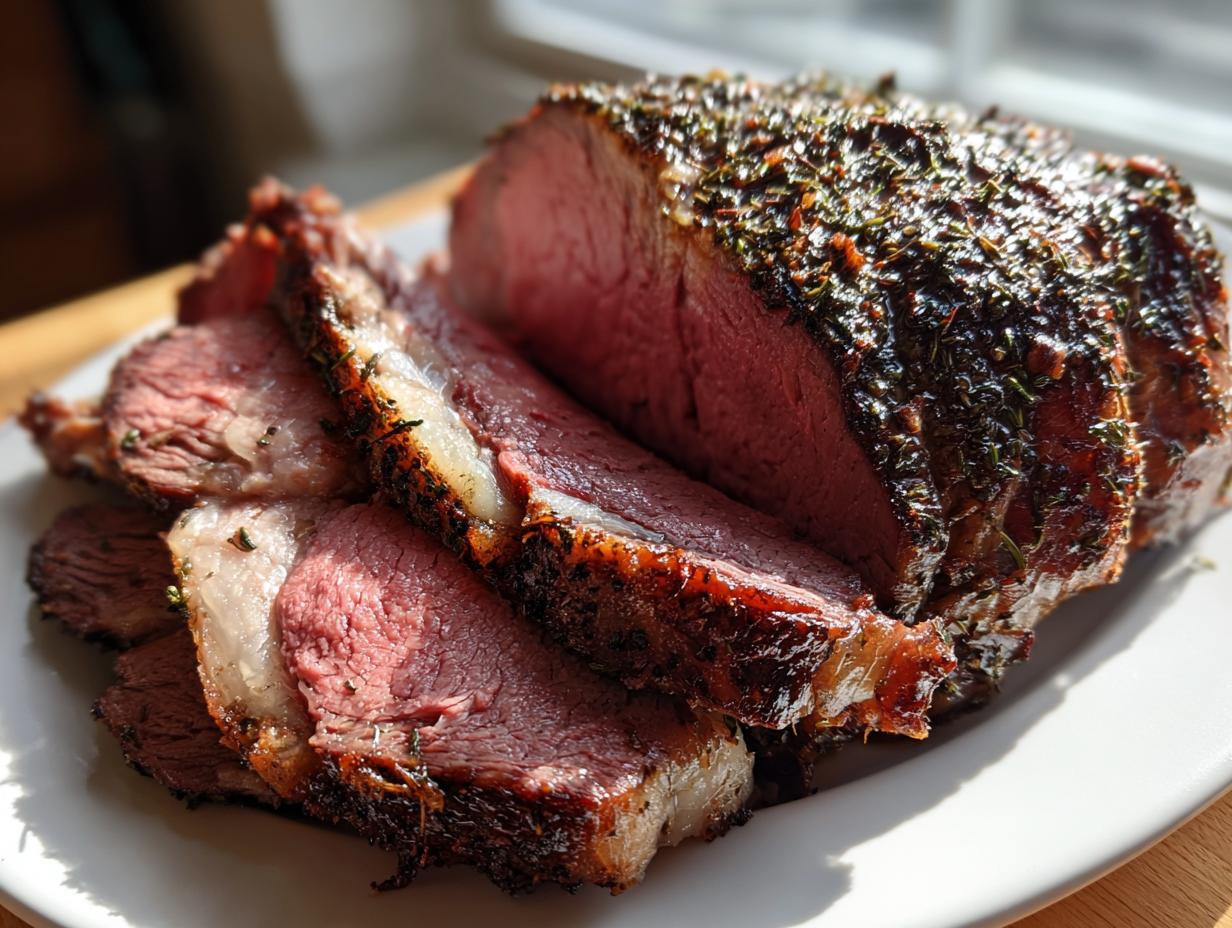
I know that look. You’re staring at that expensive, gorgeous standing rib roast sitting on the counter, and your palms are sweating just thinking about the oven. That’s the holiday centerpiece stress talking, and trust me, I’ve been there, feeling like I might ruin a week’s worth of budget on one giant cut of beef. Forget the anxiety! My go-to solution, the one I bring out when I need an impressive crowd-pleaser without the guesswork, is this Fool-Proof 500 Rule prime rib recipe. It takes a hard, fast blast of heat and then settles down, giving you the juiciest, most tender result every single time. We bridge that gap between expert technique and the comfort of your home kitchen right here. If you’re looking for something speedier later in the week, check out my secret weapon for quick, easy weeknight dinners, but today, we conquer the King of Roasts!
- Why This Fool-Proof 500 Rule prime rib recipe Works
- Ingredients for Your Impressive Holiday Centerpiece prime rib recipe
- Simple prime rib instructions: The Foolproof prime rib method
- Tips for Success with Your prime rib recipe
- Bone In Prime Rib vs. Boneless: Which prime rib recipe cut should you choose?
- Storage & Reheating Instructions for Leftover prime rib recipe
- Serving Suggestions for Your Perfect Prime Rib Cooking Times
- Frequently Asked Questions About This prime rib recipe
- Share Your prime rib recipe Experience
Why This Fool-Proof 500 Rule prime rib recipe Works
The biggest fear people have when making an oven roasted prime rib is overcooking it. We’ve all been there, right? That’s why this recipe centers on the brilliant high-low temperature method. We shock the roast—blasting it at a screaming 500°F for only 15 minutes. That initial blast locks in all those delicious juices and creates that gorgeous, crisp exterior crust we all dream about.
Then, we immediately drop the temperature down to 325°F. This lower, gentler heat coaxes the center of the roast into perfect doneness—usually that beautiful medium-rare—without drying out the outer edges. It’s this combination of aggressive searing followed by slow, careful roasting that makes this the best prime rib recipe for home cooks.
Achieving That Tender Beef Roast Interior
That initial high heat helps the exterior develop flavor fast, but the real magic happens when the heat drops. The slow cook at 325°F means the internal muscle fibers don’t seize up and toughen. They stay relaxed, allowing the juices to redistribute evenly throughout the roast. It’s pure science meeting deliciousness!
Don’t forget, checking out how I handle braised short ribs shows you I’m serious about keeping meat tender at high heat, and this prime rib technique respects that goal!
Ingredients for Your Impressive Holiday Centerpiece prime rib recipe
When you’re dealing with a showstopper like prime rib, you don’t need fifty ingredients. You need the *right* ones handled perfectly. For this recipe, keep things simple so the quality of the beef truly shines through. We’re focusing on creating the best seasoned exterior possible for this prime rib recipe. Here’s the breakdown of exactly what you need sitting on your counter ready to go.
- 1 (5-7 pound) standing rib roast, bone-in or boneless
- 2 tablespoons coarse sea salt
- 1 tablespoon freshly ground black pepper
- 1 tablespoon dried rosemary
- 1 tablespoon dried thyme
- 6 cloves garlic, minced
- 1/4 cup olive oil
- 1/4 cup unsalted butter, softened
Making the Garlic Butter Prime Rib Herb Crust
This mixture is what gives us that incredible flavor against the beef! In one small bowl, you’re going to mash that softened butter together with the minced garlic, salt, pepper, rosemary, and thyme until it forms a thick paste. If you happen to have beautiful fresh rosemary and thyme, absolutely use those instead of dried, chop them fine, and trust me—the aroma when you rub it on is heavenly. This step is crucial for the final flavor of your Garlic Butter Prime Rib, so don’t rush smashing those ingredients together!
Simple prime rib instructions: The Foolproof prime rib method
This is where we put everything together, and I promise you, this is simpler than you think! First thing? Get that roast out of the fridge at least two hours before you plan to cook. A cold center cooks unevenly, and we want that perfect internal temperature, remember? Once it’s been sitting out, pat it bone dry—that equals crust, folks. Next, crank that oven up to 500°F.
Slather that beautiful garlic herb butter all over every surface. Then, you put it in the hot oven and cook it hard for exactly 15 minutes. Don’t peek! After those 15 minutes are up, reduce the heat to 325°F, but here’s the key: don’t open the door when you adjust the temperature. Let it roast slowly until it hits that sweet spot. Because we are aiming for a delicious, tender beef roast, pulling it early is better than overcooking it! If you want even more fantastic oven techniques, you should absolutely bookmark my garlic parmesan chicken bake for later.
How to Cook Prime Rib Medium Rare: Temperature Guide
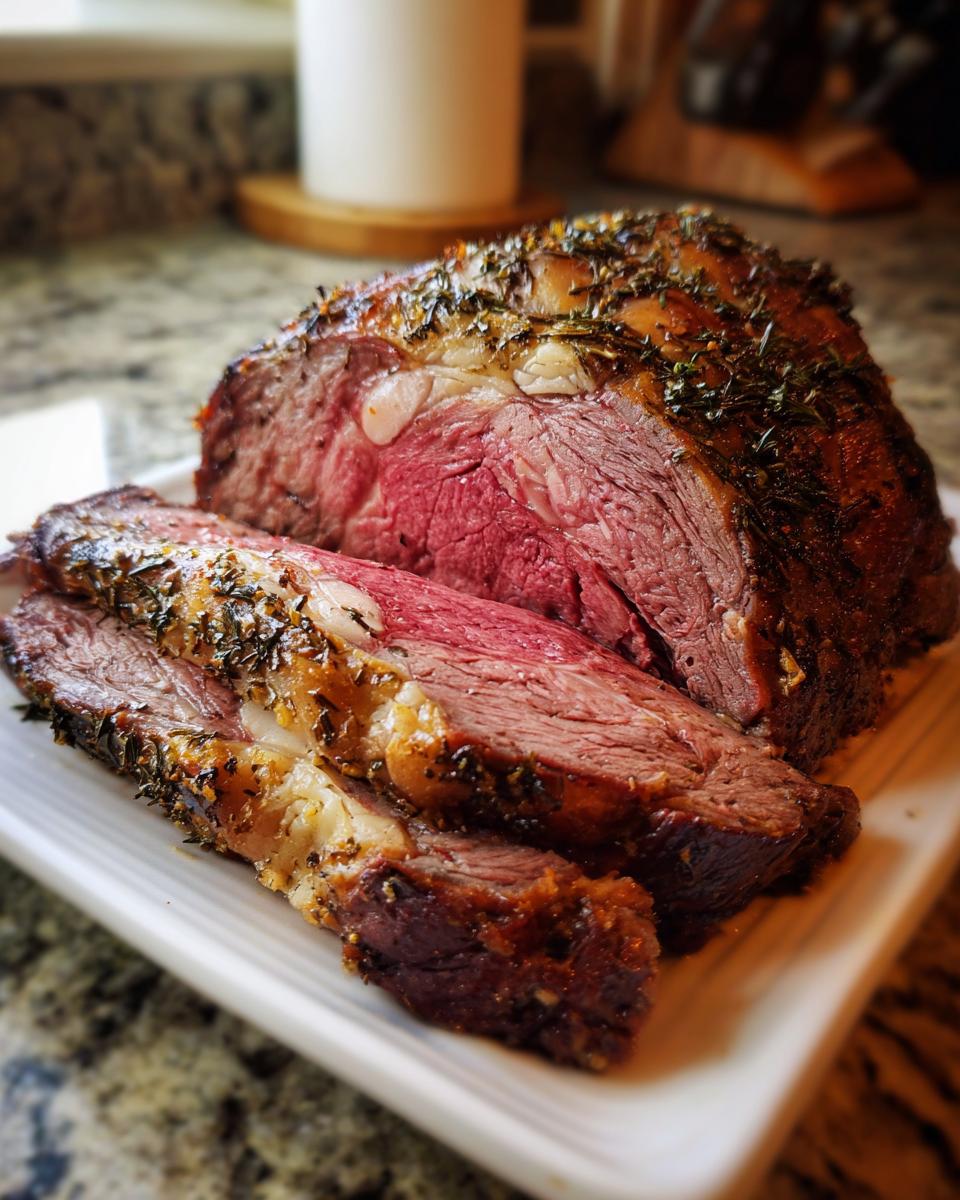
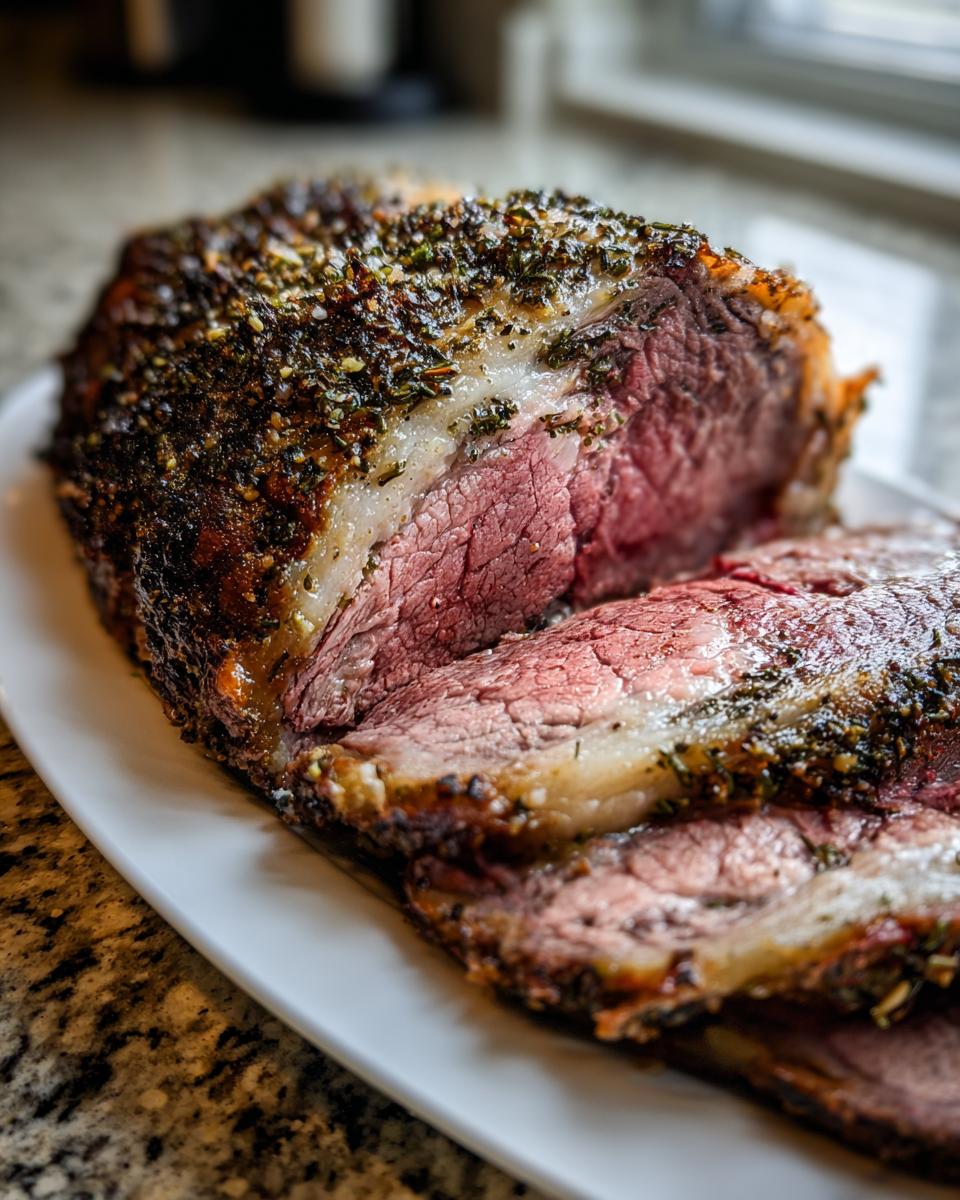
This is the moment of truth, so please, use a good meat thermometer. You want to pull that roast out when the center reads 125°F if you’re aiming for medium-rare—that classic goal for how to cook prime rib medium rare. I know, it seems low! But the roasting pan temperature is still really hot inside that beef, and carryover cooking is strong. If you wait until it hits 130°F in the oven, you end up with medium, maybe even medium-well, and we really want that pink, juicy center for this prime rib recipe.
The Crucial Resting Period for Your Oven Roasted Prime Rib
Once it’s out at 125°F, that roast needs a mandatory time-out. Tent it loosely with foil and walk away for a solid 20 minutes. Don’t guard it, don’t look at it—just let it rest. This resting step is non-negotiable for juice retention. This is how you guarantee a truly juicy roast beef recipe!
Tips for Success with Your prime rib recipe
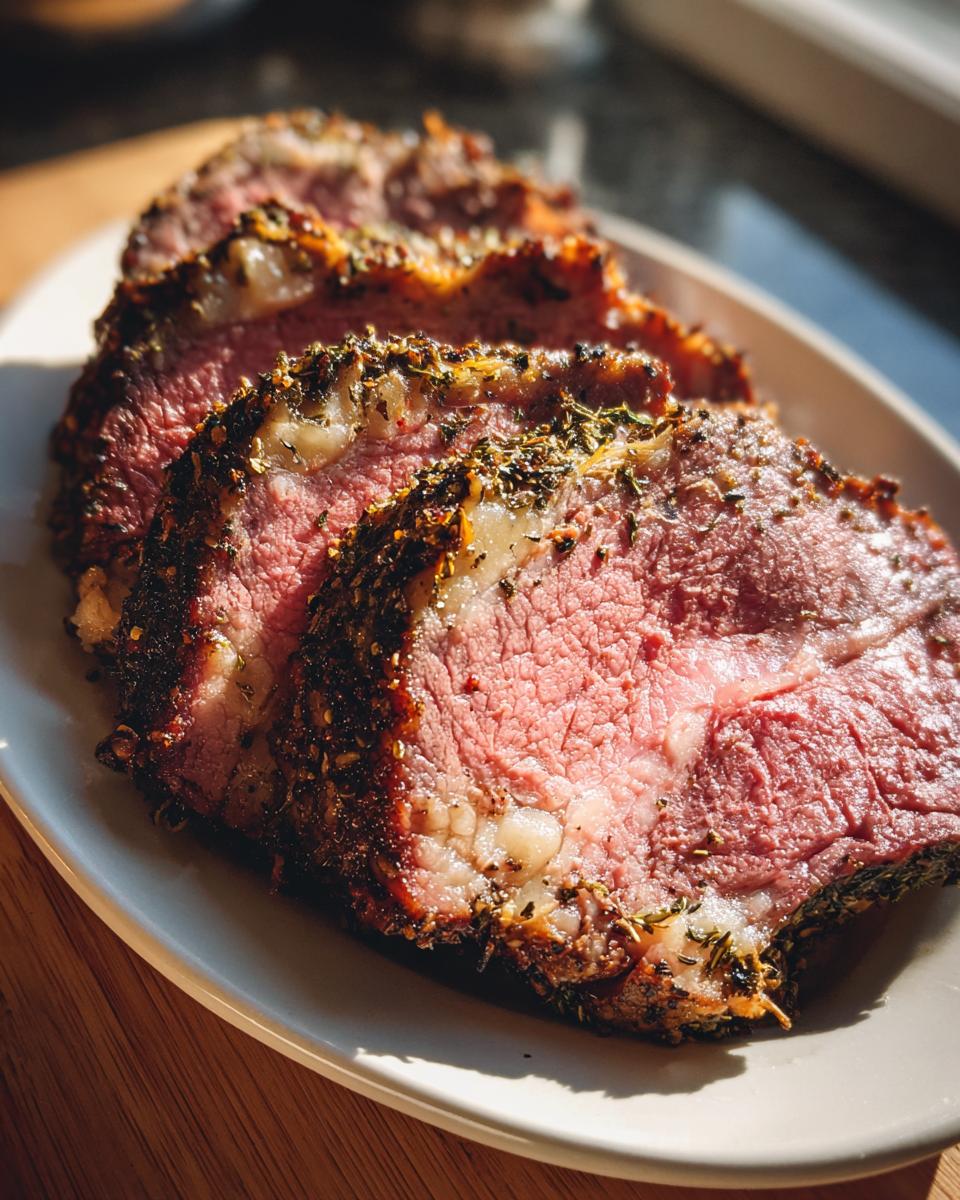
Alright, having mastered the temperature dance, let’s talk technique so you nail this prime rib recipe every single time. The most important tool you own right now is a reliable instant-read thermometer. When you check the temperature, make sure the probe sinks right into the absolute thickest part of the meat, but you must keep it clear of the roasting pan’s bone. If you hit the bone, you’ll get a false high reading, and you’ll pull it too early!
For bone-in roasts, those bones act like little insulation jackets, which is why the 500 rule is amazing for them—the inside cooks a little slower and more evenly. With boneless, you have to watch the edges a tad closer. I learned this the hard way during my first big Christmas when I got distracted chatting and didn’t rest the roast properly; the juices pooled right onto the carving board instead of staying in the meat. Horrifying! That’s why I preach the 20-minute rest—it seals the deal for that incredibly juicy roasted chicken recipe-level tenderness, even in this big beef roast.
If you want to practice some other high-heat roasting secrets before the big day, my tips for getting juicy roasted chicken recipe skin are perfect for practicing that sear!
Bone In Prime Rib vs. Boneless: Which prime rib recipe cut should you choose?
This is a big question people always ask me about the prime rib recipe: Should I get the bone in or go boneless? Honestly, you can’t go wrong with either one when you use that 500 Rule technique, but they cook just a little differently. The standing rib roast, the bone-in version, is my absolute favorite for presentation—it just looks grand on the table!
Those bones aren’t just for show, either. They actually act like little shields, insulating the meat closest to them. This means the meat near the bones tends to stay a touch more tender and moist, which is fantastic for guaranteeing that tender beef roast outcome. However, trimming it off right before serving can be a little tricky!
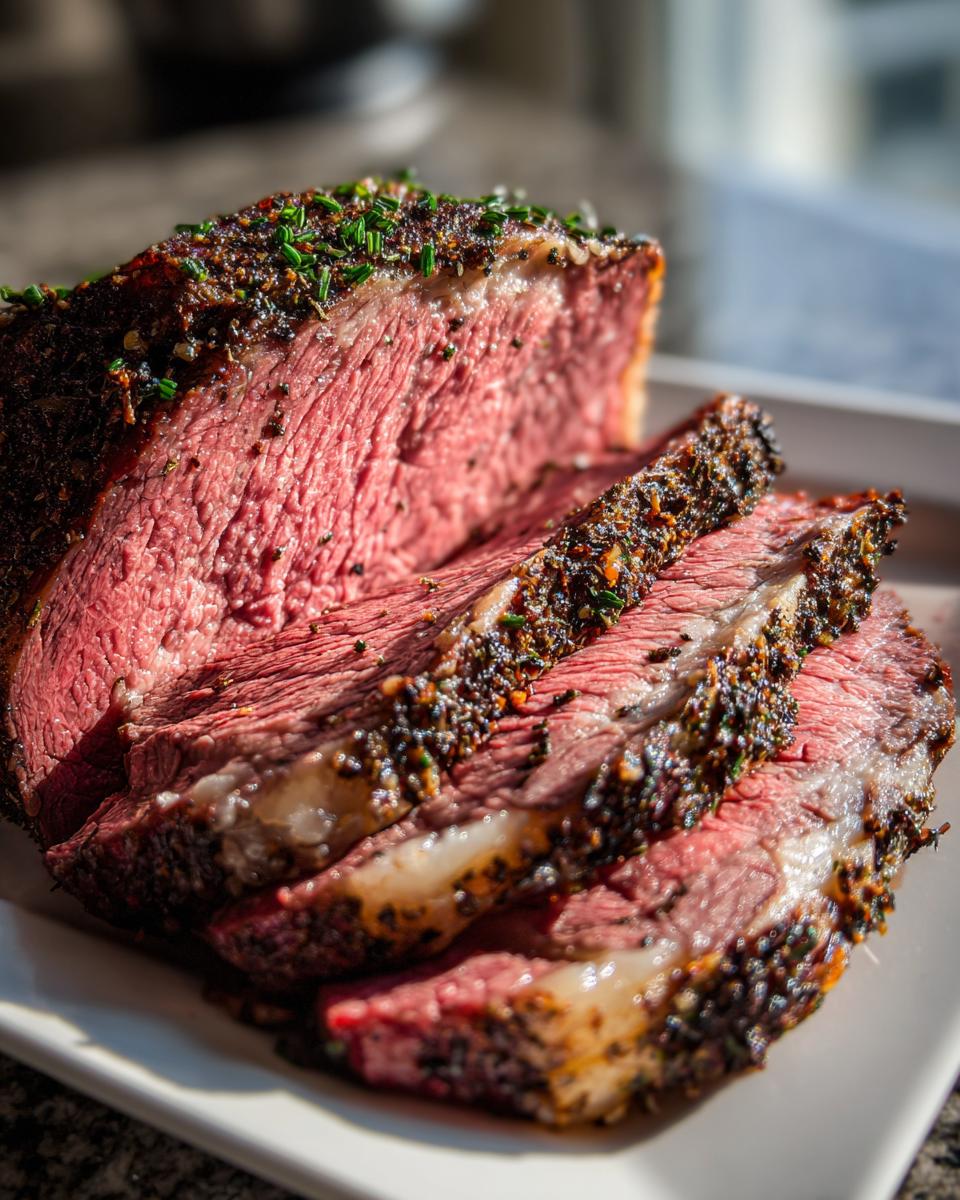
If ease of carving is your biggest concern, go boneless. It’s much easier to slice straight across for serving your guests quickly. But if you want that slight edge in flavor protection and a truly show-stopping appearance, stick with the bone-in cut for your oven roasted prime rib.
Storage & Reheating Instructions for Leftover prime rib recipe
I hope you have leftovers, because that’s always a sign of a successful feast! When storing this glorious prime rib recipe, try to keep the meat in the thickest slices possible. Thinly slicing it before storing dries it out faster. Keep it airtight in the fridge for up to three or four days.
Reheating is where most people mess up, turning that juicy roast into shoe leather! My favorite method is to put the slices in a shallow baking dish, add just a splash of beef broth—not too much, just enough to cover the bottom—cover it tightly with foil, and warm it gently in a 275°F oven. It slowly warms through while steaming itself back to life. It’s perfect before serving alongside my creamy potatoes au gratin!
Serving Suggestions for Your Perfect Prime Rib Cooking Times
Now that you’ve conquered the hard part—getting that perfect medium-rare—we need to talk about what goes next to it on the plate to make this an unforgettable meal. A rich roast like this needs sides that can stand up to it without overpowering that beautiful beef flavor. You absolutely need something creamy to soak up those pan drippings, which is why I always make a huge batch of my creamy roasted garlic mashed potatoes.
The earthy sweetness of roasted root vegetables, like glazed carrots or even some crispy Brussels sprouts, balances the richness of the beef perfectly. And don’t forget the au jus made from the pan drippings! Keep it simple; this roast is the star of the show, so let it shine.
Frequently Asked Questions About This prime rib recipe
What is the best internal temperature for this prime rib recipe?
For that perfect, centerpiece look—what everyone calls how to cook prime rib medium rare—you need to pull it off the heat when the thermometer reads 125°F. Remember what I always say: the meat keeps cooking for about 5 degrees after it comes out of the oven, thanks to carryover cooking. If you’re hosting a big holiday, pulling it early is the secret to keeping everyone happy!
Can I use this as a Christmas Roast Beef Idea?
Absolutely! This entire method was designed as an Impressive Holiday Centerpiece. The Fool-Proof 500 Rule takes the stress out of cooking for a crowd, making it one of the most reliable Christmas Roast Beef Ideas you’ll find. It looks grand and tastes even better. Seriously, it’s easier than baking a full turkey! If you need a sweet finish afterwards, don’t forget to check out the recipe for my easy cinnamon apple cobbler biscuit topping!
Why is the resting period for my Oven Roasted Prime Rib so long?
Resting is non-negotiable, my friend. If you skip it, those beautiful juices you worked so hard to keep inside by using the Foolproof Prime Rib Method will just run out all over your cutting board. Giving it that 20 minutes lets the meat fibers relax and reabsorb the moisture. It’s the final lock-in for a truly juicy roast beef recipe.
What if I check an external guide, like the one from BHG, does that change the 500 rule?
That’s a great question to check multiple sources! I always tell folks to use the thermometer as gospel, no matter what guide you are following, including excellent resources like the one from Better Homes & Gardens. While that guide might suggest slightly different resting times or seasoning ratios, the 500-to-325 temperature switch core to this prime rib recipe ensures consistency for your oven roasted prime rib.
Can I make the herb crust ahead of time?
You sure can! If you want to save precious time right before cooking, mix up the Garlic Butter Prime Rib herb crust a day ahead of time. Just keep it tightly covered in the fridge. Pop it out about 30 minutes before you rub it onto the roast so it softens up enough to spread easily across the cold beef surface.
Share Your prime rib recipe Experience
Now that you’ve got the best prime rib recipe under your belt, I truly want to hear all about it! Did the 500 Rule work its magic? Please leave a rating right here in the comments below so other cooks feel confident trying this Easy Prime Rib Roast. If you snapped a photo of that perfectly pink centerpiece, I’d love for you to share it with me through the contact page!
PrintFool-Proof 500 Rule Prime Rib Roast
Follow this simple oven method to cook a juicy and tender prime rib roast every time. This technique guarantees a perfectly cooked medium-rare centerpiece for your holiday feast.
- Prep Time: 20 min
- Cook Time: 2 hr 30 min
- Total Time: 2 hr 50 min
- Yield: 6-8 servings 1x
- Category: Main Course
- Method: Oven Roasting
- Cuisine: American
- Diet: Low Fat
Ingredients
- 1 (5-7 pound) standing rib roast, bone-in or boneless
- 2 tablespoons coarse sea salt
- 1 tablespoon freshly ground black pepper
- 1 tablespoon dried rosemary
- 1 tablespoon dried thyme
- 6 cloves garlic, minced
- 1/4 cup olive oil
- 1/4 cup unsalted butter, softened
Instructions
- Remove the prime rib roast from the refrigerator at least 2 hours before cooking. Let it sit at room temperature.
- Preheat your oven to 500 degrees Fahrenheit.
- In a small bowl, combine the softened butter, minced garlic, coarse sea salt, black pepper, rosemary, and thyme to create the herb rub.
- Pat the entire surface of the roast dry with paper towels. This helps create a good crust.
- Rub the garlic herb butter mixture evenly over the entire surface of the roast. Drizzle the olive oil over the roast and gently massage it in.
- Place the roast, fat side up, in a roasting pan fitted with a rack. If using a bone-in roast, ensure the bones are facing down if possible, or use the bones as a natural rack.
- Place the roast in the preheated 500°F oven and cook for exactly 15 minutes.
- Reduce the oven temperature to 325 degrees Fahrenheit without opening the oven door. Continue roasting until the internal temperature reaches your desired doneness (see temperature guide below).
- For medium-rare (recommended), remove the roast when the internal temperature reads 125 degrees Fahrenheit.
- Once removed from the oven, tent the roast loosely with aluminum foil. Let the roast rest for 20 minutes before carving. The internal temperature will rise during resting.
- Carve the roast between the bones (if bone-in) or slice against the grain for serving.
Notes
- Use a reliable meat thermometer inserted into the thickest part of the roast, avoiding bone contact, for accurate temperature readings.
- For a standing rib roast, the bones act as insulation, which is why the 500 Rule works well for even cooking.
- If you prefer a crispier crust, you can briefly place the roast under the broiler for 1-2 minutes after resting, watching carefully to prevent burning.
- Serve with a simple au jus made from the pan drippings.
Nutrition
- Serving Size: 6 oz cooked
- Calories: 450
- Sugar: 0
- Sodium: 350
- Fat: 30
- Saturated Fat: 14
- Unsaturated Fat: 16
- Trans Fat: 0
- Carbohydrates: 0
- Fiber: 0
- Protein: 40
- Cholesterol: 140