Fool-Proof 500 Rule Prime Rib Roast
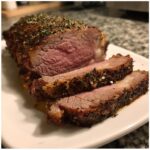
Follow this simple oven method to cook a juicy and tender prime rib roast every time. This technique guarantees a perfectly cooked medium-rare centerpiece for your holiday feast.
- Prep Time: 20 min
- Cook Time: 2 hr 30 min
- Total Time: 2 hr 50 min
- Yield: 6-8 servings 1x
- Category: Main Course
- Method: Oven Roasting
- Cuisine: American
- Diet: Low Fat
Ingredients
Scale
- 1 (5-7 pound) standing rib roast, bone-in or boneless
- 2 tablespoons coarse sea salt
- 1 tablespoon freshly ground black pepper
- 1 tablespoon dried rosemary
- 1 tablespoon dried thyme
- 6 cloves garlic, minced
- 1/4 cup olive oil
- 1/4 cup unsalted butter, softened
Instructions
- Remove the prime rib roast from the refrigerator at least 2 hours before cooking. Let it sit at room temperature.
- Preheat your oven to 500 degrees Fahrenheit.
- In a small bowl, combine the softened butter, minced garlic, coarse sea salt, black pepper, rosemary, and thyme to create the herb rub.
- Pat the entire surface of the roast dry with paper towels. This helps create a good crust.
- Rub the garlic herb butter mixture evenly over the entire surface of the roast. Drizzle the olive oil over the roast and gently massage it in.
- Place the roast, fat side up, in a roasting pan fitted with a rack. If using a bone-in roast, ensure the bones are facing down if possible, or use the bones as a natural rack.
- Place the roast in the preheated 500°F oven and cook for exactly 15 minutes.
- Reduce the oven temperature to 325 degrees Fahrenheit without opening the oven door. Continue roasting until the internal temperature reaches your desired doneness (see temperature guide below).
- For medium-rare (recommended), remove the roast when the internal temperature reads 125 degrees Fahrenheit.
- Once removed from the oven, tent the roast loosely with aluminum foil. Let the roast rest for 20 minutes before carving. The internal temperature will rise during resting.
- Carve the roast between the bones (if bone-in) or slice against the grain for serving.
Notes
- Use a reliable meat thermometer inserted into the thickest part of the roast, avoiding bone contact, for accurate temperature readings.
- For a standing rib roast, the bones act as insulation, which is why the 500 Rule works well for even cooking.
- If you prefer a crispier crust, you can briefly place the roast under the broiler for 1-2 minutes after resting, watching carefully to prevent burning.
- Serve with a simple au jus made from the pan drippings.
Nutrition
- Serving Size: 6 oz cooked
- Calories: 450
- Sugar: 0
- Sodium: 350
- Fat: 30
- Saturated Fat: 14
- Unsaturated Fat: 16
- Trans Fat: 0
- Carbohydrates: 0
- Fiber: 0
- Protein: 40
- Cholesterol: 140
Find it online: https://juliameal.com/prime-rib-recipe-fool-proof-500-rule/